


Veteran Ghanaian actor Majid Michel has weighed in on the long-standing debate between Ghana's film industry and Nigeria's Nollywood, calling the comparison fundamentally unfair and, in his words, "stupid."
Michel made the comments during an interview with Y107.9 FM Accra on October 28, where he argued that the two industries cannot be measured by the same standard given the vast difference in population between the two countries.
Majid Michel on why population makes all the difference
The actor broke down his argument using a straightforward analogy.
He said that if one person has 50 children and another has only five, the larger family will statistically produce more of everything, including criminals, doctors and talented filmmakers.
"The comparison between us and Nigeria is such a stupid comparison to me," Michel said.
"If you have 50 children and I have 5 children, the possibility that you will have more criminals, doctors, good children and filmmakers than me is very high."
He pointed out that Ghana's population sits below 40 million, while Nigeria's exceeds 200 million and is approaching 300 million.
For Majid Michel, the numbers alone settle the argument.
"So how on earth would you compare? Why do they have more doctors than us? Mathematically, you should know why," he added.
Ghallywood still a young industry
Michel extended his argument beyond just the Ghana-Nigeria debate, placing both countries within a broader global context.
He suggested that African nations, including Ghana, are still in the early stages of building the kind of systems that sustain mature industries.
"It is also unfair for us to compare ourselves with any other established nation in the world. When it comes to leadership, we are adolescent," he said.
"There are countries that have been in leadership for over 300 years. They have built systems. We are way behind. So, it is an unfair comparison."
The actor's comments touch on a conversation that has persisted for years among fans and industry insiders across West Africa, with many frequently measuring Ghallywood's output, star power and production quality against its larger neighbour.
Michel's position is that such comparisons ignore basic realities about scale, infrastructure and institutional history.
Entertainment of Saturday, 31 October 2026
Source: www.legit.ng
'It makes no sense' - Majid Michel explains why comparing Ghallywood to Nollywood is unfair
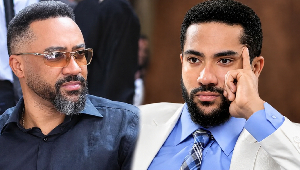 Veteran Ghanaian actor Majid Michel


