The Minister of Finance and Coordinating Minister of the Economy, Prof. Taiwo Oyedele, has stated that statutory federal allocations alone cannot guarantee economic prosperity for Nigeria’s subnational entities.
He instead urged state governments to build sustainable revenue models and boost local production.
Speaking at the 2026 National Council on Finance and Economic Development (NACOFED) conference in Owerri, Imo State, Oyedele pointed out the need for stronger fiscal federalism and economic diversification.
He noted that while monthly Federation Account allocations have surged from between ₦300 billion and ₦600 billion prior to 2023 to over ₦2 trillion today, states must look beyond federal disbursements to achieve long-term growth.
"Nigeria must move from an allocation-dependent economy to one driven by production, investment and job creation," Oyedele stated.
Clarifying public misconceptions surrounding reform-driven windfalls, the minister revealed that Nigeria recorded an estimated ₦15.8 trillion in savings following the removal of the fuel subsidy and the unification of the foreign exchange market between June 2023 and December 2025.
However, he stressed that these savings were shared across all tiers of government and did not leave the Federal Government with a surplus pool of cash.
Of the ₦15.8 trillion total, the Federal Government received ₦5.43 trillion, state governments were allocated ₦6.52 trillion, and local government councils received ₦3.88 trillion.
Addressing critics who question why federal borrowing continues despite subsidy removals, Oyedele explained that the Federal Government's incremental expenditure over the same period reached ₦30.64 trillion, outpacing its total incremental resources of ₦20.4 trillion (comprising its ₦5.43 trillion subsidy share, ₦3.12 trillion in other revenues, and ₦11.85 trillion in incremental borrowing).
"The figures tell a financing story, not simply a savings story. Subsidy removal, therefore, did not create one large pool of cash available to the federal government. It simply reduced a major fiscal burden and the amount of borrowing that would otherwise have been required," he explained.
To illustrate the fiscal pressure, Oyedele noted that the Federal Government's wage bill alone reached ₦9.39 trillion during the review period, driven by the implementation of the new national minimum wage, wage awards, and personnel allowances. External debt servicing accounted for ₦9.37 trillion due to currency depreciation, while ₦3.14 trillion was spent on electricity subsidies to cushion consumer costs.
Despite these commitments, the minister highlighted key investments made with the available resources, including ₦6.47 trillion allocated to strategic infrastructure, funding for the Nigerian Education Loan Fund (NELFUND), and major projects such as the Lagos, Calabar coastal highway (₦2.23 trillion), the Sokoto–Badagry superhighway (₦1.11 trillion), and the Trans-Sahara superhighway (₦489.2 billion).
ID
General News of Thursday, 20 August 2026
Source: www.mynigeria.com
Federal allocations alone cannot guarantee state prosperity - Oyedele warns
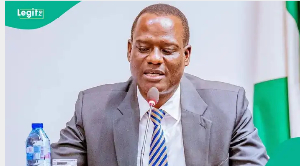 Minister of Finance and Coordinating Minister of the Economy, Prof. Taiwo Oyedele