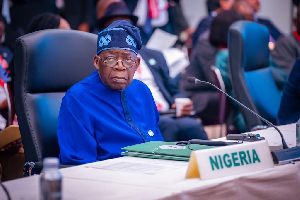
President Bola Tinubu has firmly ruled out any return to Nigeria's fuel subsidy regime, even as Kenya moves in the opposite direction by seeking to reinstate subsidies it dropped in 2022. Tinubu made his position known while receiving Osun State Governor Ademola Adeleke at the Presidential Villa in Abuja.
He said calls for Nigeria to restore fuel subsidies showed a poor grasp of governance and economic management, arguing that the old subsidy regime had drained government finances and left many states unable to pay workers and pensioners without support from the Federal Government.
He added that money once spent on subsidies should now go towards infrastructure, housing, healthcare and education, Vanguard reports.
Atiku's rival plan
The president's remarks came directly in response to a proposal by former Vice President Atiku Abubakar, who recently unveiled what he called the AERP 2027 economic recovery plan.
Rather than restoring the import subsidy, Atiku proposed a production subsidy that would supply domestic refineries with crude oil at a preferential price in return for verified output and guaranteed local supply.
Under Atiku's model, refinery operators that divert products, falsify records or fail to pass savings on to consumers would lose access to the subsidy, be required to repay what they received, and face prosecution.
The plan also includes an annual spending cap approved by the National Assembly and independent audits, with the subsidy designed to shrink as Nigeria's refining capacity grows.
"We will move subsidy from importation to production, from middlemen to Nigerian refineries, and from unverifiable claims to verifiable barrels. The principle is simple: the subsidy will follow the barrel," Atiku said.
Presidency Tinubu pushes back on fuel subsidy
Bayo Onanuga, Special Adviser to the President on Information and Strategy, rejected Atiku's proposal outright. He said it amounted to reviving a system long associated with waste, corruption and heavy financial losses.
Onanuga explained that under the old arrangement, the Nigerian National Petroleum Company Limited sold petrol below what it cost to acquire, creating under-recovery that eventually became government debt.
The Presidency warned that restoring any form of subsidy without a clear legal and fiscal framework would put further pressure on the naira and reduce public spending.
Kenya eyes a U-turn
While Nigeria holds firm against subsidies, Kenya's Treasury is actively looking for funding to restore the fuel support it withdrew in 2022. The proposed reversal is driven by concern over the effect of high retail fuel prices on households and businesses, though the government has not yet disclosed how the subsidy would be funded or which petroleum products it would cover.
The policy shift carries potential consequences beyond Kenya's borders. The Port of Mombasa is a key fuel import and distribution hub for landlocked East African countries including Uganda, Rwanda and South Sudan, meaning any significant change in Kenya's fuel pricing could affect petroleum costs across the region.
Petrol prices go up as depots, Dangote release new rates
Nigerian motorists could soon pay more at the pump after petroleum depots, including the Dangote Refinery, announced fresh increases in their Premium Motor Spirit (PMS) prices.
Market data released this week shows that depot prices for petrol have shifted across multiple locations in Nigeria, with some recording rises of as much as N30 per litre.
The changes are now putting pressure on filling station operators, who are likely to review their retail prices to cover higher acquisition costs.
Business News of Friday, 21 August 2026
Source: www.legit.ng
Petrol Price: Tinubu announces decision on fuel subsidy return as Kenya moves to reinstate it
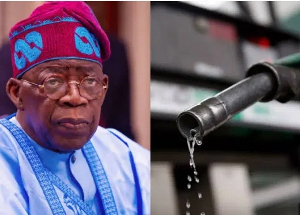 President Bola Tinubu rules out return of fuel subsidy