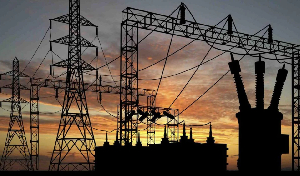
The Federal Government of Nigeria is seeking increased private sector investment in the electricity industry after spending more than ₦10tn on the sector since its privatisation in 2013.
Managing Director of FGN Power Company Limited, Kenny Anuwe, said government interventions had helped keep the industry operational but acknowledged that public funding alone could not deliver the reliable electricity supply Nigerians need.
He called for alternative financing arrangements and greater private sector participation to accelerate infrastructure development and address the sector’s persistent challenges.
Anuwe made the remarks on Thursday at the sixth annual conference of the Power Correspondents Association of Nigeria in Abuja, held under the theme, ‘$1tn Economy: Nigeria’s Roadmap to Reliable and Affordable Power Supply’.
He noted that despite more than a decade of privatisation and significant government spending, the electricity sector continued to struggle with inadequate generation, gas shortages, weak transmission and distribution infrastructure, mounting debts and insufficient investment.
According to him, the Federal Government accounts for more than 95 per cent of new infrastructure investment in the sector, a situation he described as unsustainable.
“Government has invested over N10tn in the electricity sector since the advent of privatisation. But is it enough? How much money is enough? If government didn’t invest that money, the industry would not be standing today,” he said.
However, Anuwe argued that the continued reliance on public funding was contrary to the objectives of privatisation, stressing that the government could not be expected to finance every aspect of the industry.
He said Nigeria needed simpler investment structures, predictable regulations, clearly defined institutional responsibilities and commercially viable projects to attract private capital.
Anuwe further disclosed that FGN Power Company was pursuing an investment framework capable of attracting $18bn from financiers. The company is also targeting at least $1bn in capitalisation, with the Africa Finance Corporation expected to provide a matching amount.
On infrastructure development, he said ongoing projects under the Presidential Power Initiative were expected to increase transmission capacity, with a target of 5,540 megawatts by 2029 and at least a 60 per cent improvement in grid reliability.
The projects include a second batch of 12 Siemens substations and special interventions involving Omotosho substations, which are expected to deliver nearly 3,400MW collectively.
Meanwhile, Minister of Power Joseph Tegbe said the government had developed a four-pronged roadmap to tackle the sector's challenges.
The strategy focuses on grid stabilisation, improving the sector's liquidity and sustainability, optimising existing assets, and expanding and strengthening the national grid.
Tegbe disclosed that the government had raised N1.23tn under its N3.3tn programme to settle verified legacy debts owed to electricity generation companies.
He also revealed that more than 2.8 million electricity customers had been metered under the Presidential Metering Initiative, while over 15,000 megavolt-amperes (MVA) of additional transmission capacity had been added to the national grid between 2023 and October 2026.
The minister further said newly installed substation equipment at several locations, including Kumbotoso, Dankata, Mashi, Dan-Agundi, Apapa, Ijora, Ikeja, Biliri and Walalambe, had added more than 1,300MVA to Nigeria's transmission capacity in the preceding two months.
According to him, the improvements had made more electricity available to distribution companies for onward supply to industrial and residential consumers.
Business News of Friday, 13 November 2026
Source: www.mynigeria.com
₦10tn Spent, Yet Unstable Power: FG turns to private investors
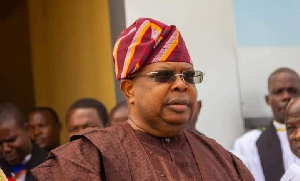 Minister of Power Joseph Tegbe