As the August 8, 2026 Osun governorship election inches closer, there is open political dynamics, drama, intrigues, betrayals as Senator Ademola Adeleke, Bola Oyebamiji, Najeem Salaam, others test their popularity at the polls, writes FRANCIS EZEDIUNO, our Osun reporter.
Political actors are once again repositioning, reopening old rivalries while forging new alliances ahead of the decisive contest.
The forthcoming poll is unfolding against the backdrop of two previous elections, 2018 and 2022 governorship elections, that reshaped the state’s political trajectory and entrenched deep divisions among the major political parties and contenders.
In 2018, Senator Ademola Adeleke of the Peoples Democratic Party, PDP, narrowly lost to then All Progressives Congress, APC, candidate, Adegboyega Oyetola, in an election that was declared inconclusive by the Independent National Electoral Commission, INEC.
The rerun that followed produced Oyetola as governor, a process that sparked protests and prolonged legal battles, with the PDP insisting the outcome did not reflect the will of the electorate.
Four years later, the political pendulum swung sharply in the opposite direction as Adeleke defeated Oyetola in the 2022 rematch, unseating the incumbent and returning the PDP to the Osun State Government House in Osogbo.
INEC figures from the 2022 poll showed a wide margin in favour of Adeleke, a result that PDP leaders described at the time as “a clear verdict of the people.”
However, the aftermath of that election marked the beginning of fresh scheming, as both the Adeleke and Oyetola camps began quiet but intense manoeuvring for relevance and control ahead of 2026.
Sources within the APC say the party never accepted the 2022 loss as final, instead viewing it as “a temporary setback that required strategic recalibration.”
On the other hand, PDP insiders acknowledge that internal cohesion became fragile after the victory, with competing interests emerging within the ruling camp.
A major flashpoint in the post-2022 period has been the struggle for control of local governments, which many analysts see as critical to the 2026 electoral arithmetic.
While APC-backed elected officials popularly tagged “Yes or No”, have continued to assert authority in several councils through court-backed arrangements, PDP-aligned officials, tagged “Seat at home”, elected on the platform of the ruling party have largely operated from outside the councils.
An APC chieftain, who spoke on condition of anonymity, said, “Local government structures will play a decisive role in mobilisation, logistics and voter contact in 2026.”
PDP officials counter this position, insisting that grassroots loyalty, rather than physical occupation of council secretariats, will determine voter behaviour.
The local government dispute has thus become a proxy battlefield, shaping narratives of legitimacy and influence across Osun’s 30 local government areas and area office, Modakeke.
In 2025, political tension heightened following reports of Governor Adeleke’s intended defection to the APC, a move that sent shockwaves through both political parties.
Senior APC figures in Osun publicly opposed the plan, with party leaders stating that “there was no consensus or structure to accommodate such a move.”
Negotiations reportedly collapsed amid resistance from entrenched APC blocs loyal to Oyetola, effectively stalling the proposed defection.
Adeleke’s eventual switch to Accord on December 10, 2025 altered the political map, introducing a new variable into an already complex contest.
Osun Chairman of Accord Party, Pastor Victor Akande described the governor’s entry as “a strategic partnership aimed at expanding democratic choices in Osun.”
The defection triggered further intrigue, with the whole state cabinet, political appointees and some PDP members defecting alongside Adeleke, while others remained to rebuild the party’s structure.
Within the APC, the focus shifted to candidate consolidation, culminating in the affirmation of Bola Oyebamiji as the party’s flag bearer on December 13, 2025.
The Osun APC maintained that Oyebamiji’s emergence reflected “a consensus rooted in experience, party loyalty and statewide acceptability.”
Meanwhile, the Osun African Democratic Congress, ADC, confirmed former Speaker Najeem Salaam as its candidate, positioning him as an alternative voice in the race.
Salaam, speaking after his affirmation, said, “Osun voters deserve credible options beyond the dominant parties.”
With three prominent candidates now in the field, political observers are debating whether the 2026 contest constitutes a genuine three-horse race.
Adeleke’s camp maintains that his previous electoral strategy, which delivered victory in 2022, remains intact despite his party switch and this stance has been maintained in several fora by his Special Adviser on Politics, Munirudeen Raji.
Supporters of Oyetola argue that the former governor’s enduring influence within the APC could translate into broader acceptance for Oyebamiji.
ADC officials, however, insist that voter fatigue with established parties could work in Salaam’s favour on election day.
INEC has reiterated its commitment to a transparent process, with an official noting that “lessons from past elections will guide preparations for 2026”.
As campaigns gradually gather momentum, Osun State stands at another political crossroads, with history, alliances and grassroots calculations set to converge at the polls.
Regional News of Wednesday, 28 January 2026
Source: www.dailypost.com
Osun 2026 guber race reopens old rivalries, new alliances
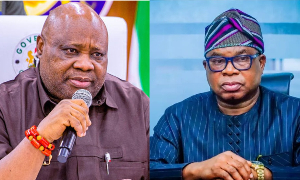 A photo collage of Governor Ademola Adeleke and Bola Oyebamiji