Gbenga Olawepo-Hashim, the presidential candidate of the Accord Party, has said that no Nigerian should pay above ₦610 per litre for petrol under his administration, with a longer-term target of bringing the pump price down to as low as ₦200 per litre.
Hashim described ₦605 per litre as his proposed starting sustainable price, one he said would not rely on a return to the kind of opaque subsidy system that has historically burdened Nigeria's public finances.
"₦605 per litre is our starting sustainable price for petrol. Nobody will buy petrol above ₦610 under our government. It could be as low as ₦200," he said.
Why Hashim rejects the current pricing logic
The Accord candidate has long opposed the way Nigeria's petroleum subsidy removal was justified, calling the reasoning behind it "accounting magic." His argument is that the country has consistently measured domestic petrol prices against international benchmarks rather than calculating what it genuinely costs Nigeria to produce, refine, transport and distribute fuel to local consumers. He said this approach creates a false impression of loss whenever Nigerians pay below a global market rate.
Channels TV reported that Hashim is proposing an independent forensic audit covering every stage of the petroleum value chain, from crude production and contracting through to pipeline operations, storage, insurance and retail distribution. The goal, he said, is to determine the true cost of delivering each litre of petrol to Nigerian motorists.
He also questioned why Nigeria's production costs remain comparatively high, pointing to contracting practices, procurement inefficiencies, insecurity and possible cost inflation as areas requiring closer scrutiny. His view is that Nigerians are effectively paying twice: once through inflated production costs built into the system, and again through high prices at filling stations.
The exchange rate and economic case
Central to Hashim's pricing framework is exchange-rate reform. He said his administration would target a naira-to-dollar rate of between ₦525 and ₦700, arguing that currency stability would significantly reduce the naira cost of inputs across the petroleum sector and the broader economy.
He was firm that the proposed price reductions would not be achieved by cutting what flows into government coffers or the Federation Account Allocation Committee. The objective, he said, is to reduce underlying production costs rather than simply shift financial burdens between government and consumers.
Hashim said cheaper energy would lower transportation and manufacturing costs, increase household purchasing power and ultimately grow the tax base from which government draws its revenue. He positioned the ₦200 to ₦300 per litre figure as a realistic medium-term outcome of correcting Nigeria's economic fundamentals, not a political promise made without foundation.
The policy, he added, would be supported by faster domestic refining, greater transparency across the petroleum supply chain and concrete measures to eliminate waste and financial leakages. He argued that the 2027 election should be a contest between competing economic visions rather than competing personalities.
Politics of Thursday, 27 August 2026
Source: www.legit.ng
'₦605/ltr is our starting price for petrol' — Popular presidential candidate vows
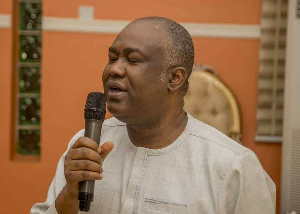 Gbenga Olawepo-Hashim is the presidential candidate of the Accord Party