A handful of major parties have long dominated Nigeria’s political history, but relatively new political movements have occasionally disrupted the established order and reshaped electoral conversations. The most significant example in recent years was the Labour Party’s (LP) performance in the 2023 general elections. Before the election cycle, LP was widely regarded as a minor party with limited national reach.
However, the presidential candidacy of Peter Obi transformed its fortunes, attracting widespread support from young voters, urban professionals and first-time participants in the electoral process. The party went on to win millions of votes nationwide, secure governorship and legislative seats, and emerge as a formidable force in several states, marking one of the biggest political upsets in Nigeria’s Fourth Republic.
The LP’s showing in the 2023 presidential election challenged the long-standing dominance of the All Progressives Congress (APC) and the People’s Democratic Party (PDP). LP secured victories in key states, including Lagos, traditionally considered a stronghold of the APC, while also recording strong performances across parts of the Southeast, South-South and major urban centres.
Although the party did not win the presidency, its ability to rapidly build a nationwide support base demonstrated that newer political platforms could compete effectively against more established parties when driven by a compelling message and a popular candidate. Political analysts have described the development as a watershed moment that broadened Nigeria’s democratic space and altered future electoral calculations.
Another relatively new party that has made notable strides is the Allied Peoples Movement (APM). While it hasn’t reached the national breakthrough the LP achieved in 2023, the APM has built a presence in parts of the Southwest and other regions through participation in local, state, and national elections. The party gained public attention during the 2019 election cycle and has continued to field candidates across various contests. Though its electoral successes have been limited compared to the larger parties, APM’s continued involvement in Nigeria’s political process reflects the growing role of smaller parties in expanding voter choice and challenging the traditional two-party dominance that has characterised much of the country’s democratic era.
As 2027 beckons
The conversation around next year’s presidential election has already begun to drift beyond the familiar APC and PDP axis. In political circles from Ibadan to Abuja, two unexpected names are being mentioned in the same breath: Governor Seyi Makinde and the APM. One is a serving second-term governor with a reputation for pragmatic governance in Oyo State. The other is a minor party that barely registered on the presidential ballot in 2023. The pairing sounds improbable, yet it captures a broader question shaping 2027: whether a subnational politician with regional popularity can force his way into national contention without the machinery of the two dominant parties.
Makinde’s political capital
Next year, Makinde will complete his constitutionally permitted two terms as Oyo governor in 2027, which means he will be politically unemployed at exactly the moment the presidential field opens. At 59, he would be younger than many likely frontrunners, and he carries a record his team can package for a national audience. His administration has invested heavily in road infrastructure across Ibadan, resolved the decades-long LAUTECH ownership dispute with Osun State, and maintained a relatively clean record on salary payments to civil servants. In a political culture where state-level delivery is rare, those achievements give him a narrative that goes beyond ethnic or religious sentiment.
His positioning inside the PDP is more complicated. Makinde was a visible member of the G5 group of governors who broke ranks with Atiku Abubakar’s 2023 campaign. That move alienated him from the party’s Abuja establishment but reinforced his image among supporters as a politician willing to defy party orthodoxy. During that election, he also openly supported Bola Tinubu, the APC candidate, while remaining a PDP member. The decision earned him goodwill in some APC structures and deep suspicion among PDP loyalists. It leaves him as a bridge figure who can talk to both camps, but also as a man without a fully reliable base in either. FamousQuotations
Name recognition remains his clearest limitation. Outside the Southwest and parts of the North Central, Makinde is not yet a household name. Presidential campaigns in Nigeria require a presence in all six geopolitical zones, which means state chapters, ward coordinators, and polling unit agents across more than 176,000 locations. The PDP has that network, the APC has it, but Makinde, as an individual, does not. Any attempt to run without one of the two majors immediately runs into the logistics problem that has ended third-force ambitions for two decades.
The APM factor
The APM entered national consciousness in 2019 when allies of former Ogun Governor Ibikunle Amosun used it as a platform after falling out with the APC. Since then, it has served as a special-purpose vehicle for aggrieved politicians who need a registered party but do not want to go through the Independent National Electoral Commission’s process of forming a new one. During the last general election in 2023, the APM presidential candidate secured 66,116 votes; roughly 0.27 per cent of the total. It did not win any governorship, senatorial, or House of Representatives seat. It only won a handful of state House of Assembly seats.
So, why does it keep appearing in discussions about Makinde? The logic is procedural rather than electoral. If Makinde loses out in the PDP structure and reconciliation with the party’s power blocs fails, he already has a platform to stay on the ballot. Forming a new party is legally difficult under INEC’s timelines. The LP and the New Nigeria People’s Party already have presidential candidates with their own ambitions. The ADC and others are also not different. The APM is small enough to be taken over through its national executive committee, yet it holds a certificate of registration and a place on the ballot. For a politician seeking leverage, that is valuable.
The APM’s electoral weakness remains stark. Peter Obi’s 2023 run showed that a third party can galvanise millions of voters if it captures the mood of urban youth and has support from organised groups like the Nigeria Labour Congress (NLC). APM has neither a social movement behind it nor a labour structure. It does not have funding. Its state chapters are skeletal. Without a dramatic injection of resources and personnel, the party cannot compete in the basic tasks of electioneering: rallies in every state, television advertising, and most critically, deploying agents to protect votes on election day.
Paths and obstacles
As political alignments gradually take shape ahead of the 2027 general election, discussions about Makinde’s presidential ambition continue to generate interest within political circles. While Makinde remains a prominent figure within the PDP, speculation about alternative political platforms has fueled debate over the viability of an APM-backed presidential bid. Such a move would present both opportunities and significant challenges, particularly in a political environment still largely dominated by the APC and the PDP. Makinde’s reputation for governance, fiscal discipline, and infrastructure development in Oyo State has enhanced his national profile, providing a foundation on which a broader political movement could be built.
One of the major pathways available to Makinde would be to leverage his growing influence beyond Oyo State and position himself as a consensus candidate for voters seeking an alternative to the country’s dominant political parties.
His role in national political debates, relationships with influential political actors across regions, and appeal among sections of the youth and professional class could help expand the reach of a smaller platform such as the APM.
However, translating personal popularity into a viable national political structure remains a formidable task. Unlike the LP’s surge in 2023, which was driven by a unique political movement and unprecedented voter enthusiasm, the APM currently lacks the nationwide organisational presence, electoral strength and visibility required to mount a serious presidential challenge. Building structures across Nigeria’s six geopolitical zones would require substantial financial resources, strategic alliances and sustained grassroots mobilisation.
Before announcing a kind of partnership between his faction of the PDP and the APC at a grand rally held in Ibadan recently, Makinde had brought together leading opposition figures at a summit in Ibadan, the Oyo State capital. A key takeaway from the event was the opposition’s decision to present a joint presidential candidate to challenge the APC, led by President Bola Tinubu, who is seeking a second term. FamousQuotations
The electoral calendar had barely started rolling in when it became clear that such an ambition would be a tall dream. Even the major opposition parties that attended the event are still writhing in various forms of leadership tussle, legal battles, and factionalisation, with some of them having two individuals bearing the party ticket to contest the same election.
However, observers believe that the last may not have been heard about the plan, even in the face of personal ambition and the determination of some individuals who do not want anyone but themselves to clinch the presidential ticket.
Retaining Oyo or pursuing the presidency?
Within Oyo State, Makinde would likely remain the strongest political asset available to any platform he chooses to represent. His administration’s record in infrastructure, agribusiness, education and security has earned him significant political capital, making Oyo a potential launchpad for any future national ambition. Yet the transition from state-level popularity to national competitiveness is far from automatic. APM’s electoral footprint remains relatively modest, and any presidential project would need to overcome concerns about party strength, voter perception and the challenge of attracting influential political figures capable of delivering votes across diverse regions.
While Makinde could conceivably secure substantial support in Oyo State and parts of the Southwest, the broader obstacle would be building a national coalition capable of competing with the entrenched networks, resources, and political machinery of the APC, ADC, and PDP. Consequently, the prospects of an APM presidential ambition would depend less on Makinde’s personal popularity and more on the party’s ability to evolve into a credible national alternative before the next electoral cycle.
However, political analysts believe Makinde is only holding on to the APM while using the PDP’s oxygen to keep it alive. Analysts think the Oyo State governor is using the APM platform to hold together his faction of the PDP to have a basis for possible negotiation, collaboration, partnership, or any other term that can describe a joint effort that might come to the table in a bid to pull strength and resources together, going into the elections against the ruling APC.
More interestingly, observers believe that a key negotiating factor for Makinde may be to sacrifice his presidential ambition to retain his political influence in the state. In other words, a key condition that Makinde may put on the table to shelve his ambition and support any other candidate may be to insist on being given the governorship seat for his anointed APM successor, Bimbo Adekanmbi, as well as some National Assembly and maybe state assembly seats.
Politics of Monday, 29 June 2026
Source: www.thenationonlineng.net
2027 race: What’s Makinde up to?
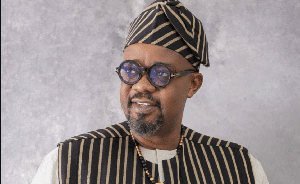
 Oyo State Governor, Seyi Makinde