The President of the All Farmers Association of Nigeria, Mohammed Magaji, has attributed rising food prices across several states to increased transportation costs, despite the ongoing harvest season.
Food inflation in September 2026 pointed in two directions across Nigeria. Lagos, Imo and Ondo recorded the sharpest year-on-year rises in food prices, while Taraba, Yobe and Borno posted the mildest, with Taraba’s food prices actually lower than a year earlier.
That is according to the National Bureau of Statistics’ Consumer Price Index report for September 2026, released on 15 October, which breaks food inflation down state by state.
The NBS said food inflation in Lagos rose 34.40 per cent year-on-year, the highest of any state. Imo followed at 33.79 per cent, and Ondo at 31.49 per cent. Lagos also had the highest food price level in the country, with its food index standing at 178.0 against a base period of 2024 equal to 100.
Rivers and Oyo, at 168.1 and 165.5, were the next most expensive.
At the other end, Taraba recorded a food inflation rate of negative 7.47 per cent, meaning food prices there are lower than they were in September 2025. Yobe stood at negative 0.37 per cent, and Borno at 2.18 per cent. Even so, the NBS cautioned that the consumption baskets used to measure inflation differ from state to state, so comparing states directly can be misleading.
Speaking with the PUNCH via phone call, Magaji attributed the increase in food prices to rising transportation costs, saying the impact varies depending on where the food is produced.
He explained that food prices might remain relatively stable in states where the commodities are produced, as transportation costs would have less impact on prices.
He said most food production was taking place in Taraba State and other parts of northern Nigeria, noting that neighbouring states also depended on supplies from Taraba.
“I said this is because the cost of transportation has increased. That’s the only reason, nothing more than this. Nothing more than this,” he said.
He added that food prices might not rise significantly in states where the commodities were produced because of the shorter distances involved in moving them to markets.
“Most of the production is being made in Taraba and other states here in the North. So, if it is being made in your state, the price may not increase. If there’s any increase in transportation, the increase will just be very minimal. That’s the reason,” Magaji said.
The AFAN president cited Gombe, Bauchi and other locations in the North as areas that received food supplies from Taraba, which he said typically harvested certain crops earlier than other states.
Business News of Monday, 19 October 2026
Source: www.punchng.com
Transport costs fuel food inflation despite harvest — AFAN
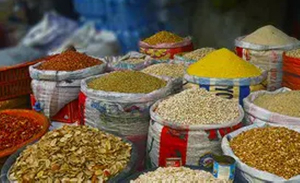 File photo: Foodstuff