Several major Nigerian banks have increased the amounts customers can spend internationally on naira cards, as improved foreign exchange conditions give lenders more room to expand access to dollar transactions.
GTBank, FirstBank, Zenith Bank, UBA and Stanbic IBTC all announced higher limits in recent months.
The adjustments walk back curbs that were put in place between 2023 and 2025, when a period of severe dollar scarcity forced banks to slash cross-border card limits and, in some cases, suspend offshore transactions altogether.
Bank-by-Bank Limit Changes
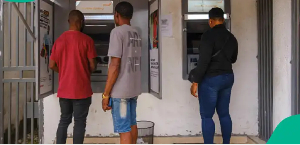
GTBank recorded one of the sharpest increases, pushing its quarterly international spending limit on naira cards to $40,000. That figure is 566.7% above the $6,000 quarterly limit the bank set in May 2026, and double the $20,000 ceiling that was in place as recently as August 10.
FirstBank's Naira Mastercard now carries a cumulative quarterly limit of $10,000 across point-of-sale and online channels, up from a previous cap of $1,000.
The bank also lifted its international ATM withdrawal ceiling to $1,000 per day, compared with $500 before, Nairametrics reports.
Zenith Bank allows up to $50,000 in annual international transactions on its naira cards. UBA permits up to $20,000 on POS transactions via its World USD card and up to $10,000 for online payments.
Stanbic IBTC raised its quarterly international card limit to $8,000, from below $5,000 previously.
For travellers, students and businesses, the higher thresholds make it easier to pay for school fees, airline tickets, accommodation and other foreign obligations through the formal banking sys-tem rather than the parallel market.
Nigeria's Reserves at a Multi-Year High The banks' decisions coincide with a sustained rise in Nigeria's external reserves.
Central Bank of Nigeria data showed reserves crossed the $53 billion mark on August 24, climbing steadily through the end of the month before reaching $54.08 billion on September 3.
Central Bank of Nigeria data showed reserves crossed the $53 billion mark on August 24, climbing steadily through the end of the month before reaching $54.08 billion on September 3.
That is roughly $8.52 billion, or 18.7%, above the $45.56 billion recorded on January 2 this year. The figure also sits about $3.04 billion above the CBN's own 2026 reserve projection of $51.04 billion.
The last time reserves stood around the $54 billion level was December 22, 2008, when they reached $54.21 billion, making the current position the highest in nearly two decades.
Naira gains against pound, dollar, euro
Earlier, Legit.ng reported that the Nigerian naira recorded gains against the British pound, the US dollar, and the euro in the official foreign exchange market, continuing a run of positive per-formance that analysts say could mark the currency's best annual showing in nearly a decade.
At the NFEM, the naira appreciated by N2.74, or 0.21%, against the dollar to close at N1,326.69 per dollar, compared with N1,329.43 recorded in the previous session. Against the pound sterling, the naira gained N9.02 to settle at N1,791.16 per pound, down from N1,800.18 the day before.
Business News of Monday, 7 September 2026
Source: www.legit.ng
Banks increase international card limits as Nigeria’s reserves climb to $54bn
 GTBank has raised its quarterly international spending limit to $40,000