The Federal Government has called for increased local manufacturing of renewable energy technologies, saying Nigeria must reduce its dependence on imported solar panels, batteries, inverters and related equipment.
The Senior Special Assistant to the President on Climate Technology and Operations, Prof Olamide Fagbuji, made the call recently at a Lagos Solar Forum put together by the Global Initiative for Food Security and Environmental Protection in collaboration with Nigeria Climate Information Centre, Solar Power Nigeria and Greenfaith Nigeria.
Speaking on the topic, ‘Improving Energy Access: The Role of Solar and Renewable Energy’, Fagbuji said Nigeria must move beyond consuming imported renewable energy technologies and develop the capacity to manufacture them locally.
“Nigeria must therefore position itself as a producer, assembler and exporter of renewable energy technologies through deliberate industrial policy,” he said.
He stated that the country’s youthful population presented an opportunity to build a globally competitive green workforce through investments in technical education, capacity building, apprenticeships and research.
“Local manufacturing of solar panels, batteries, inverters and related technologies will create jobs, reduce import dependence and support the President’s Nigeria First industrialisation agenda already being championed by NASENI,” Fagbuji said.
The presidential aide said the push for local manufacturing was coming against the backdrop of a huge renewable energy investment opportunity, noting that global investment in clean energy had already exceeded $2tn annually.
According to him, the International Energy Agency estimates that achieving global net-zero emissions by 2050 would require annual clean energy investment to rise to approximately $4.5tn by 2030, with solar photovoltaic accounting for the single largest share of investment.
He said Africa currently attracted only about two to three per cent of global clean energy investment, despite being home to around 20 per cent of the world’s population and possessing some of the world’s richest solar resources, saying the continent will require over $200bn per year by 2030 across the energy sector,” he said.
Fagbuji also said Nigeria had significant solar potential, with solar irradiation averaging between five and seven kilowatt-hours per square metre per day across much of the country.
“The question before us is therefore no longer whether renewable energy is technically feasible. The question is how quickly we can mobilise the right policies, investments, institutions and partnerships to translate this enormous potential into tangible improvements in the lives of ordinary Nigerians,” he noted.
Also speaking, the Executive Director of GIFSEP, Dr Michael David, said Nigeria must be cautious about imposing a blanket ban on imported solar equipment, arguing that the country was not yet ready for such a policy.
David said the number of Nigerians without access to electricity stood at about 86 million, according to a 2025 World Bank report, describing energy poverty as a major obstacle to economic and human development.
“The good news is that many Nigerians are now turning to solar as a lifeline. Solar energy offers Nigeria a real chance to close its energy gap to clean, affordable, and accessible power for millions left behind by the grid,” David said.
He disclosed that nearly all solar panels and accessories were currently imported, warning that banning their importation at this stage could worsen the country’s energy crisis.
“No! Banning solar imports now would be like removing lifelines in a crisis,” David said. “Such a policy, if implemented now, would likely worsen energy poverty, slow renewable energy adoption, and hurt households and businesses. We must therefore balance local manufacturing and energy access,” he stressed.
David called for incentives for local solar production, promotion of local assembly and manufacturing, as well as affordable financing for clean energy systems. “Slow the Ban, let’s get some basic things right before a blanket ban,” he said.
During a presentation on Nigeria’s energy investment landscape, policy evolution and the future of decentralised energy, Daniel Awolaja said the country’s electricity challenge remained severe despite its installed generation capacity.
He said Nigeria had approximately 14 gigawatts of installed generation capacity, but only about 5GW was consistently delivered through the national grid, while millions of Nigerians lacked reliable access to electricity.
Awolaja said Nigeria attracted approximately $100bn in disclosed energy investments over the past decade across 422 tracked projects, making it the second-largest recipient of disclosed energy investments in Africa after South Africa, according to Afrienergytracker.
He added that about 92 per cent of disclosed investments over the past decade went into oil and gas, while only a comparatively small proportion went into renewable energy technologies, grid infrastructure and energy storage.
According to him, about 3GW of new electricity generation capacity was added in 2025, one of the highest annual additions recorded on the continent.
However, Awolaja said the increase in installed capacity had not translated into reliable electricity access, as electricity demand continued to outstrip available supply.
He also argued that greater attention must be paid to transmission, distribution and energy storage, saying increased generation without corresponding investment in those areas would continue to constrain electricity delivery.
Awolaja said Nigeria had already developed strong policy and regulatory frameworks for decentralised energy but had struggled with implementation.
He said the country’s challenge was not in policy design but in implementation and execution. He added that over 800MW of solar electricity were added in 2025 alone, showcasing the country’s improved adoption of renewables.
Meanwhile, the Senior Director of Secure Energy Project, Chris Kif, stressed the need for greater collaboration among government agencies, development partners, private sector players and civil society organisations working in Nigeria’s renewable energy space.
Kif said many organisations were already implementing valuable initiatives but often operated independently, limiting their collective impact. He said the dialogue should provide a platform for stakeholders to identify existing efforts, share experiences and explore opportunities for greater coordination under a common framework.
He added that stronger networks across the renewable energy ecosystem would enable stakeholders to identify areas for partnership and develop shared solutions to common challenges.
Business News of Sunday, 9 August 2026
Source: www.punchng.com
FG pushes local production to cut renewable imports
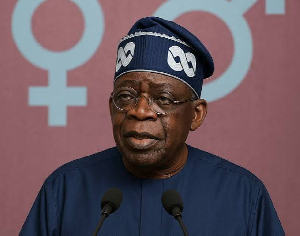 President Bola Tinubu