


Nigeria is undermining its drive for food security, job creation and foreign exchange conservation through inconsistent fish import policies that continue to favour imported fish over locally farmed varieties, a fisheries expert, Dr. OlukayodeOlubiyi, has warned.
The policy inconsistency, he said, is discouraging investment in aquaculture, weakening domestic fish production and forcing the country to rely heavily on imports despite its vast production potential.
Olubiyi, Chief Lecturer at the Federal College of Fisheries and Marine Technology, Lagos, stated this in an interview with Vanguard, arguing that Nigeria has the capacity to produce a significant proportion of the fish consumed locally but continues to frustrate local producers by permitting the importation of fish species that can be cultivated within the country.
According to him, the continued importation of species such as tilapia, catfish and pangasius places Nigerian fish farmers at a serious competitive disadvantage.
He stated: “When government allows the importation of fish species like tilapia, catfish and pangasius that we can produce locally, local farmers cannot compete. It takes six to seven months to raise fish, while importers bring in large quantities within weeks and sell at cheaper prices.”
Olubiyi blamed the country’s inconsistent import policy for creating uncertainty that discourages investment and expansion in the aquaculture industry.
“Today, government encourages local production; tomorrow, it opens the market to imports. That uncertainty frustrates producers. When you discover that we are no longer producing enough locally, it is largely because of this inconsistency in government policy.”
He maintained that Nigeria should only import fish species that cannot be produced under its tropical climatic conditions, such as salmon and cod, while prioritising local production of species in which the country has a comparative advantage.
Olubiyi further warned that continued dependence on imported fish fuels capital flight and exports jobs that could otherwise be created within Nigeria.
Business News of Tuesday, 21 July 2026
Source: www.vanguardngr.com
Nigeria losing jobs, forex to inconsistent fish import policy — Expert
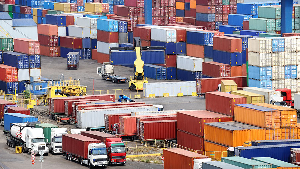 The photo used to illustrate the story







Opinions
