


Nigeria’s persistent electricity crisis is costing the economy more than ₦48 trillion annually, according to a new economic brief released by financial expert and Director of Arthur Group, Martins Itua.
The report attributed the staggering losses to chronic power shortages, widespread reliance on self-generated electricity, disrupted business operations, damaged equipment, and post-harvest losses across key sectors of the economy.
According to the brief, the broader economic cost of unreliable electricity now exceeds ₦48 trillion yearly, representing more than $35 billion at current exchange rates.
The report noted that the figure is close to the federal budget of approximately ₦55 trillion, underscoring the scale of the economic challenge.
Itua argued that the country’s power deficit has become a more significant constraint to economic growth than inflation, public debt, or exchange rate volatility.
“The biggest obstacle to national prosperity remains the fact that millions of Nigerians must wake up every morning and generate their own electricity before they can begin creating value,” he said.
The report stated that Nigeria’s national grid typically supplies between 4,500 and 5,500 megawatts of electricity daily to a population exceeding 220 million people, leaving businesses and households heavily dependent on alternative power sources.
Citing data from the African Development Bank, the brief noted that more than 70 per cent of Nigerian businesses own or share fossil-fuel generators to sustain operations.
Itua estimated that if five million households and small businesses consume an average of four litres of petrol daily, their combined fuel expenditure would exceed ₦26 billion every day.
“When diesel consumption by large-scale manufacturers, banks, supermarkets and other commercial enterprises is included, the country’s daily spending on self-generated electricity rises to nearly ₦60 billion,” he said.
The report said this translates to approximately ₦1.8 trillion monthly and about ₦22 trillion annually in direct energy costs alone.
“Nigeria has created a system in which millions of people spend a significant portion of their time and income generating electricity before they can begin creating value,” Itua stated.
Beyond fuel expenses, the report highlighted additional losses resulting from interrupted production schedules, reduced industrial output, damaged machinery and spoilage of agricultural products, all of which contribute to the estimated ₦48 trillion annual economic burden.
Drawing comparisons with other African economies, the report cited Egypt’s electricity infrastructure, which has more than 60,000 megawatts of installed generation capacity, enabling industries to focus on production and expansion rather than power generation.
“Before producing a single item, the Nigerian factory is already carrying capital and operating costs that its Egyptian competitor does not bear,” Itua said.
According to him, these additional operating costs are eventually passed on to consumers through higher prices, contributing to inflation and reducing the competitiveness of Nigerian products in international markets.
The Arthur Group director urged policymakers to prioritise electricity infrastructure as a key driver of economic growth, arguing that resolving the power crisis would have a more immediate impact on poverty reduction, job creation and economic expansion than many conventional fiscal measures.
“A nation cannot industrialise in darkness. A country cannot become globally competitive when millions of its citizens spend productive hours solving an infrastructure problem that should have been resolved by the state,” he said.
Business News of Monday, 8 June 2026
Source: www.nationsonlineng.net
Nigeria loses ₦48tn annually to power crisis, says economic brief
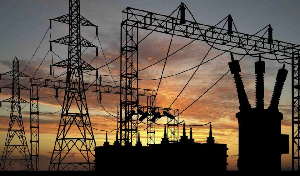 The photo used to illustrate the story


