The Governor of the Central Bank of Nigeria, Mr Olayemi Cardoso, on Thursday, cautioned that the growing adoption of stablecoins and private digital payment platforms could heighten foreign exchange volatility and weaken monetary policy transmission in emerging economies.
Cardoso spoke at the opening ceremony of the G-24 Technical Group Meeting in Abuja, where he delivered a plenary address titled “Digital Cross-Border Payments, Global Finance, and Economic Transformation – Opportunities and Risks.”
He said, “The expansion of private digital payment platforms and stablecoins raises concerns about currency substitution and weakened monetary transmission, increased FX volatility and capital flow pressures, systemic importance of non-bank payment providers, and regulatory arbitrage and fragmentation.”
According to him, while digital innovation presents a historic opportunity to address inefficiencies in cross-border payments, it must be approached with caution to preserve macroeconomic stability.
“Without coordination, digital cross-border payments risk becoming fragmented across jurisdictions, entrenching dominant currencies and platforms, reducing interoperability, increasing costs and undermining the ability of Emerging Market and Developing Economies to safeguard monetary sovereignty,” Cardoso said.
The CBN governor noted that cross-border payments remain slow, costly and fragmented, particularly for developing economies.
“Today, cross-border payments remain too slow, too costly, and too fragmented, especially for developing economies. With global remittance corridors costing over 6.0 per cent, settlement lags of several days, and compliance burdens that exclude MSMEs, millions remain disconnected from global opportunity,” he stated.
He explained that inefficiencies in payment systems translate into higher remittance costs, expensive foreign exchange transactions and barriers to small and medium-sized enterprises seeking access to global markets.
Cardoso said digital infrastructure such as instant payment systems, interoperable platforms, distributed ledger technology and digital identity frameworks could reduce transaction costs, shorten settlement times and strengthen monetary policy transmission if designed with resilience and strong governance.
He said Nigeria had taken deliberate steps to modernise its payment ecosystem, including strengthening oversight of switching and payment infrastructure providers, enhancing agent banking regulations to address anti-money laundering and counter-terrorism financing risks, and improving interoperability across payment channels.
The governor disclosed that the apex bank was concluding work on a new Payment System Vision 2028 aimed at boosting innovation, strengthening resilience and advancing financial inclusion, with a strong focus on improving the cross-border payments environment.
He said that in June 2025, Nigeria launched the National Payment Stack, a next-generation real-time payment system built on ISO 20022 messaging to support multi-currency and cross-border transactions.
Cardoso also highlighted reforms in the remittance space, including the introduction of the Non-Resident Nigerian Ordinary Account for remittances and family support, the Non-Resident Nigerian Investment Account for diaspora investments, and the Non-Resident BVN platform to enable Nigerians abroad open and service accounts digitally.
“As a result of these reforms, remittance inflows now average about $600m per month, and we are confident of reaching a $1bn monthly milestone in the near term,” he said.
He stressed that central banks must safeguard monetary and financial stability while modernising payment and settlement systems.
“The task before us is clear: To shape the future of global finance, rather than be shaped by it,” Cardoso added.
He reaffirmed Nigeria’s commitment to working with G-24 members, the IMF and the World Bank Group to build a more inclusive, resilient and development-oriented global financial system.
PUNCH Online earlier in September 2025 reported that President Bola Tinubu directed financial and capital market authorities to monitor the increasing use of stablecoins and digital currencies in Nigeria, cautioning that the shift away from traditional banking systems presents emerging challenges that must be proactively managed.
Speaking at the 18th Annual Banking and Finance Conference of the Chartered Institute of Bankers of Nigeria in Abuja, Tinubu, represented by the Minister of Finance and Coordinating Minister of the Economy, Wale Edun, acknowledged the global financial system’s rapid transformation.
Business News of Thursday, 19 February 2026
Source: www.punchng.com
CBN warns stablecoins could fuel FX volatility
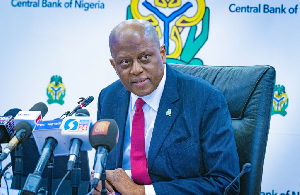 Governor of the Central Bank of Nigeria, Olayemi Cardoso