Fresh concerns have emerged in Nigeria’s aviation sector as industry experts warn that rising airport and ticket charges could further strain already struggling operators.
A former Commandant of the Murtala Muhammed International Airport, Grp. Capt. John Ojikutu (retd), cautioned that the introduction of new levies by the Federal Airports Authority of Nigeria could shorten the lifespan of many aviation companies.
It will be recalled that both operators and stakeholders have been lamenting multiple taxation in the industry, expressing fears that if such continues, the industry may be brought to its knees.
Speaking in Lagos, Ojikutu argued that before imposing additional charges, FAAN must critically evaluate its existing revenue streams from passenger traffic, flight operations and cargo movements across its 22 airports.
“Unless all these are factored rationally into FAAN earnings before new charges are introduced, unnecessary and irrational charges will be shortening the lifespans of many aviation operators,” he said.
He estimated that based on 2024 traffic figures alone, revenue from Passenger Service Charges, aircraft landing and parking fees should not be less than N400bn annually, excluding earnings from cargo terminals, car parks, toll gates, land rentals and airport concessions.
Ojikutu also faulted FAAN’s spending priorities, saying, “Most of the earnings are not used on the critical services in airports, especially the perimeter and security fences.” The FAAN management since 2004 has not been able to separate the security fence from the perimeter fences, as the International Civil Aviation Organization indicated in its 2004 audit report.
“There are no regular checks or reviews on background checks on airport staff, particularly those working in security control areas.”
He described as excessive the recent capital expenditure figures, including N712bn for the reconstruction of MMIA Terminal One and N535bn for the Abuja second runway.
“These capital expenditures are not just a complete waste but fraudulent spending,” he said, questioning the sharp rise from earlier runway estimates.
Ojikutu advocated structural reforms, including concessioning non-aeronautical services, transferring runways and landing aids to the Nigerian Airspace Management Agency and restructuring FAAN into a holding company model to avoid regulatory overlaps with the Nigeria Civil Aviation Authority.
Similarly, the President of the Aircraft Owners and Pilots Association of Nigeria, Dr Alex Nwuba, criticised what he described as non-transparent passenger and cargo charges.
He pointed to the five per cent Ticket Sales Charge, Value Added Tax on domestic tickets and multiple security and passenger service charges embedded in airfares.
“Although consultations were eventually held on the new cargo charges and the fee was reduced to N15 per kg, the charge still remains arbitrary because no cost study or operational breakdown has been presented to show what specific service the N15 actually pays for,” Nwuba said.
“The argument that the fee has not been increased from the old N7 per kg collected decades ago does not satisfy ICAO’s requirement for cost-relatedness. Historical pricing is not a valid basis for aviation charges. Even with stakeholder engagement, a fee without a transparent cost foundation is treated by ICAO as a tax, not a legitimate service charge,” he added.
Nwuba noted that under ICAO principles, aviation charges must be directly linked to the cost of providing defined services, with transparency and stakeholder consultation.
He referenced a recent resolution by the Economic Community of West African States aimed at reducing non-cost-based aviation charges across the sub-region from January 2026 but expressed doubts about its implementation.
According to him, publishing detailed cost studies and clear service allocations would help restore confidence and ensure that aviation fees reflect service delivery rather than revenue generation.
Business News of Wednesday, 18 February 2026
Source: www.punchng.com
Aviation experts again raise concerns over charges
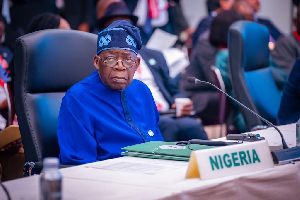
 The photo used to illustrate the story