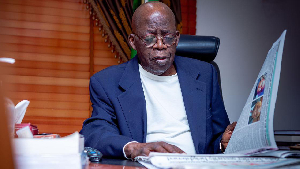
Economic experts have cautioned that the success of ongoing reforms under Bola Ahmed Tinubu will depend largely on reducing reliance on debt and prioritising productive sectors of the economy.
The position was canvassed at an international conference organised by the Department of Political Science, Lagos State University, in collaboration with the West Africa Academy of Science.
A Professor of Political Science at LASU, Sylvester Odion Akhaine, warned that “Tinubunomics” must not be driven by debt if it is to achieve meaningful and sustainable results.
Akhaine, who described Financialism as a form of economic Pan-Africanism centred on self-reliance, expressed concern over Nigeria’s rising debt profile, which he put at over N144 trillion. According to him, such a trajectory contradicts the principle of economic independence and could undermine long-term growth.
He stressed that for the reform agenda to succeed, there must be a deliberate shift towards boosting domestic productivity, strengthening local industries, and reducing dependence on external borrowing.
The conference, themed “Tinubunomics: An ideological perspective and its philosophical components,” examined key policy measures introduced by the Tinubu administration, including fuel subsidy removal, exchange rate unification, and fiscal consolidation.
The conference, themed “Tinubunomics: An ideological perspective and its philosophical components,” examined key reforms introduced by President Bola Ahmed Tinubu, including fuel subsidy removal, exchange rate unification, and fiscal consolidation.
Ekpo noted that major economic transformations are often driven by strong ideological foundations rather than technical policy adjustments alone, stressing that debates around the concept of “Tinubunomics” highlight the need for deeper intellectual engagement in policymaking.
He, however, criticised the approach adopted in implementing some of the reforms, stating that broader consultation with experts could have produced alternative strategies before execution.
According to him, the government is now focused on mitigating the impact of the reforms through palliative interventions such as food distribution and cash transfers.
Ekpo said while it may be too early to assess the full impact of the reforms, their success would depend on a shift from structural adjustment policies to long-term industrial transformation.
He also pointed to a disconnect between President Tinubu’s 2013 publication, Financialism: Water from an Empty Well, and current policy direction, questioning the extent to which the ideas in the book are reflected in ongoing reforms.
Citing World Bank projections, he said positive outcomes from the reforms may take up to 15 years to materialise, with only marginal gains expected in the short term.
He emphasised that sustainable economic growth would depend on strengthening the real sector rather than focusing mainly on fiscal restructuring.
Also speaking, Director-General of the Bureau of Public Procurement, Adebowale Adedokun, called for greater emphasis on sectors where Nigeria has comparative advantage, alongside improved utilisation of local resources.
Similarly, Jimoh Saka of LASU underscored the importance of policy consistency in driving backward integration and industrial growth. He urged the government to protect small and medium-scale enterprises and emerging industries to bridge supply gaps.
Participants at the conference agreed that Nigeria’s long-term economic growth would depend on structural transformation anchored on industrialisation, rather than short-term fiscal interventions or debt-driven strategies.
Business News of Monday, 30 March 2026
Source: www.dailytrust.com
‘Tinubunomics must not be debt-driven to achieve results’
 President Bola Ahmed Tinubu