Business News of Wednesday, 11 March 2026
Source: www.dailytrust.com
Reps order FAAN to recover foreign airlines’ N18.9bn debt

The House of Representatives Committee on Finance on Tuesday gave the Federal Airports Authority of Nigeria (FAAN) two weeks to recover the over N18.98billion debt foreign airlines owed the country.
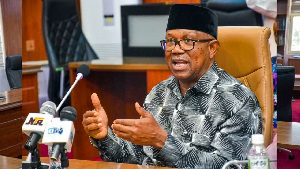
Chairman of the Committee, Hon. James Abiodun Faleke, gave the directive when FAAN officials led by its Managing Director, Olubunmi Kuku, appeared before the committee during its ongoing revenue monitoring exercise.
Lawmakers during the session raised concerns over the growing debt profile of several international airlines operating in Nigeria, describing it as unacceptable.
Faleke expressed concern that foreign airlines continue to accumulate debts for airport services despite strict payment timelines.
Earlier in her presentation, FAAN’s MD said airlines were expected to settle charges within two weeks, but noted that several operators have exceeded that period, with some debts stretching beyond 30 days, 90 days, and in certain cases over a year.
During the session, Kuku presented a breakdown of debts owed by several foreign airlines.
Kuku, while addressing the committee, explained that the figures represent service charges collected through the International Air Transport Association (IATA) settlement platform.
She, however, noted that the debt profile is dynamic because airline liabilities are often “rolling balances,” meaning new charges can accumulate while older debts are being settled.
According to her, for instance, Qatar Airways currently owes about N1.5 billion, while Lufthansa’s outstanding debt stands at approximately N1.5 billion.
She added that Virgin Atlantic owes about N1.35 billion, while KLM, EgyptAir, and Ethiopian Airlines each owe over N1 billion in varying categories of current and outstanding payments.
Other airlines listed in the debt profile include Air France, Royal Air Maroc, Turkish Airlines, and Africa World Airlines, with debts ranging between N700 million and N1 billion.
The FAAN boss told lawmakers that the total outstanding amount from airlines currently stands at N18.98 billion.
Lawmakers, however, questioned the FAAN MD on why airlines were allowed to accumulate such liabilities despite the two-week payment window.
A member of the committee asked FAAN why airlines that fail to settle their charges within the stipulated timeframe are not sanctioned or grounded from operating in Nigerian airports.
“Why would you allow an airline to owe beyond the two weeks allowed?” the lawmaker queried.
The committee also demanded to know whether airlines that eventually pay after the deadline are made to settle their debts with interest, warning that continued delays could amount to negligence.
Members further questioned why certain airlines were allowed to operate despite carrying debts beyond 90 days or even one year, stressing that such practices could undermine revenue enforcement.
Responding, the FAAN Managing Director explained that international airline payments are processed through a global clearing system managed by IATA, which sometimes introduces settlement delays.
She noted that the arrangement allows airlines to make payments through a centralised financial platform used worldwide in aviation ticketing and settlement.
According to her, FAAN monitors the ageing of debts and begins stricter engagement with airlines once liabilities exceed 30 days, while debts above 90 days attract more serious attention.
She also revealed that FAAN has, in some instances, grounded airlines that failed to meet payment obligations, particularly among domestic operators that do not operate under the same global credit structures as international carriers.
Despite the explanation, lawmakers insisted that stronger enforcement mechanisms must be implemented to prevent the accumulation of large debts.
The committee directed FAAN to provide detailed addresses and documentation for all airlines listed as debtors, stating that the operators will be formally invited to appear before the House to explain the outstanding liabilities should they fail the clear the debt.



Opinions