Nigerians face yet another controversy surrounding the country’s tax laws amid Lagos Internal Revenue Service’s notice on the tax law implementation.
LIRS, in a notice seen by DAILY POST at the weekend, disclosed that the tax institution has power enshrined to it by Section 60 of the Nigeria Tax Act Administration to recoup unpaid tax through direct bank debit.
The Nigeria Revenue Service and the Presidential Fiscal Policy and Tax Reforms Committee have not debunked the report.
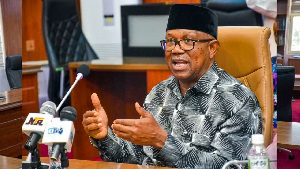
The chairman of the committee, Taiwo Oyedele, referred DAILY POST to his X statement, which noted that the move is the last resort for the tax authority.
“The power of substitution is a tax recovery mechanism that permits the tax authority to issue a directive to a third party (a ‘substitute’) to remit funds belonging to a defaulting taxpayer to settle a final, established, and unpaid tax liability.
“This power is only exercised after all legal and administrative processes, including appeals to the courts, have been exhausted,” he said in a reply to a frequently asked question on X.
He further explained that the power of arbitrary substitution is neither arbitrary nor discretionary, stressing that its use is strictly governed by due process.
Meanwhile, the latest clarification falls short of his earlier position, which states that the new tax laws did not empower anybody, federal, state, or local government councils, to debit personal accounts.
Meanwhile, economists and financial experts poured out their thoughts on the development.
Speaking, the Chief Executive Officer of the Centre for the Promotion of Private Enterprise, Dr Muda Yusuf noted that there is a need to reconcile the conflicting positions.
Reacting to the development, Yusuf said while tax reforms were necessary, the issue of tax authorities directly accessing bank accounts required clearer explanations to avoid creating fear and confusion among Nigerians.
He noted that apprehension over the policy has already triggered panic in some quarters, with reports of individuals withdrawing funds from banks due to fears of arbitrary debits.
According to him, such reactions underscored the need for better communication by authorities championing the reforms.
Yusuf warned that debiting bank accounts over tax liabilities raises critical questions about ownership of funds in such accounts.
He explained that money held in an individual’s account may not necessarily belong to that person, as it could be funds from contractors, suppliers, or third parties.
He stressed that these concerns, if not properly addressed, could undermine public confidence in the tax reform agenda and negatively affect financial inclusion.
According to him, fear of account debits could drive people to keep cash at home or convert their savings into foreign currencies, thereby weakening trust in the banking system.
Dr. Yusuf added that from his understanding, such drastic enforcement measures should only occur with a clear court order authorizing the action, describing judicial oversight as essential in managing such sensitive matters.
He said, “I think it’s important that we reconcile those two positions. Because I know that, because of the apprehension that people have, one of the apprehensions was about the fact that the tax authorities can have access and begin to tamper with people’s accounts.
“You know that fear was expressed by a lot of people. It was so bad that some people were even taking their money away from the bank.
“But I’m not sure he did not address this aspect of the fact that if there is a liability, the tax authorities can go and be, you know, debiting people’s accounts. That, of course, requires a lot more clarification, especially from those who are championing tax reform.
“Because these are the kinds of things that are making people apprehensive about tax reform. Because if you say you want to debit people’s accounts, what is the guarantee that the amount in the person’s account is the person’s money?
“You know? It could be other people’s money. It could be a contractor. It could be a supplier.
“Somebody put money in your account, and you now have a tax authority saying because you are owing money, you have an asset.
“It is not your asset. It may not be your asset. That’s the point I’m making.
“So these are some of the challenges. Because when people begin to accept fiat and are concerned about it, these are part of the issue.
“It’s not helping the whole idea of promoting tax reform. I mean, this is not the kind of thing to be amplifying. It’s not good for what the federal government is trying to do, trying to push the reform.
“Otherwise, you scare people away. People could begin now to take their money out.
“People could begin now to convert their money into other currencies and take it, keeping it at home. And you know, all these financial inclusion issues could lead to it.
“It could create a financial inclusion problem. So this is why some of us feel that we have to manage this process very, very carefully. Because these are very sensitive issues.
“And I think I heard one time that this kind of action cannot take place unless there is a clear court order that gives that kind of approval. That is what I heard them say. That it is to be authorized by the court.
“We have to go to court, and the court will take a position that this is it. And that is when some of these extreme actions can be taken,” he told DAILY POST in an interview on Monday.
On his part, the former president of the Chartered Institute of Bankers of Nigeria, Mazi Okechukwu, described the move as dangerous, warning that it could create long-term instability in the financial system.
Unegbu also questioned the legal basis for the action, stating that, from his interpretation of existing laws, government agencies are not empowered to arbitrarily debit bank accounts without due process.
He warned that if unchecked, such practices could damage the credibility of both the tax system and the financial sector.
Both experts urged authorities to manage the tax reform process carefully, emphasizing that enforcement strategies must balance revenue generation with the need to protect public confidence and financial stability.
“We are creating a monster here.
“I think they are doing the wrong thing. They are doing it, and that’s why I think the law has to stop them,” he told DAILY POST.
DAILY POST recalls the new tax laws have been trailed with controversies, including claims that their gazetted version was altered.
Business News of Tuesday, 27 January 2026
Source: www.dailypost.ng
Panic as Nigerian authorities move to debit personal bank accounts over unpaid taxes
 The chairman of the committee, Taiwo Oyedele