Business News of Wednesday, 21 October 2026
Source: www.mynigeria.com
Nigeria could have faced 1000% inflation without reforms - Taiwo Oyedele says

Nigeria could have experienced inflation rates soaring up to one thousand percent if the federal government had not implemented sweeping economic reforms, including the removal of the petrol subsidy and the unification of foreign exchange markets.
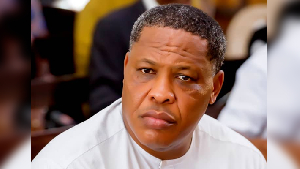
The Minister of Finance and Coordinating Minister of the Economy, Taiwo Oyedele, made this known on Tuesday during the fifty-sixth Annual Accountants Conference of the Institute of Chartered Accountants of Nigeria in Abuja.
Defending the administration's policies despite the current economic hardship faced by citizens, the minister pointed out that the country was sliding toward a severe financial collapse driven by foreign exchange shortages and excessive money printing.
According to him, the past printing of about ₦30tn played a major role in the rising cost of goods and services across the country.
"The inflation we are dealing with today, the reason why your bread is more expensive, is the ₦30tn showing up," Oyedele stated.
He explained that the consequences of money creation took time to manifest, noting that the government's current strategy focuses on boosting household earnings rather than artificially controlling market prices.
"We are putting all our effort towards raising the income of the Nigerian people faster than inflation," the minister said.
Oyedele further disclosed that the federal government channelled twice the amount saved from the petrol subsidy removal into wage awards and salary adjustments for workers.
The federal government spent twice what is saved from subsidy in adjusted salaries, he added.
Addressing concerns regarding transparency in social intervention programs, the minister maintained that publishing the personal details of vulnerable beneficiaries could compromise their dignity, noting that verification processes have been streamlined using the National Identification Number system with backing from the World Bank.
Also speaking at the event, Lagos State Governor Babajide Sanwo-Olu supported the federal economic measures, stating that the reforms have successfully bolstered public finances and driven economic expansion.
Governor Sanwo-Olu noted that Nigeria recorded a gross domestic product growth rate of 4.43 percent in the second quarter of 2026, while headline inflation dropped to 14.63 percent by September.
He added that gross external reserves climbed to $54.93bn, and federation account distributions rose significantly during the period.
ID