The Nigerian naira posted its most significant single-day depreciation in recent months, weakening sharply against the US dollar across foreign exchange markets.
At the official window, the currency fell by N34.48, closing at N1,388.38 per dollar on Monday, March 23, 2026, compared to N1,353.90 recorded in the previous trading session before the public holiday.
This represents a 2.48 per cent decline, highlighting renewed pressure in the foreign exchange market after a brief period of relative stability.
The sudden drop underscores persistent demand for dollars and ongoing vulnerabilities in Nigeria’s currency dynamics.
Parallel market mirrors decline
The pressure was not limited to the official market. In the parallel market, commonly referred to as the black market, the naira also weakened, shedding N15 to close at N1,415 per dollar, down from N1,400 recorded last Wednesday.
Despite the depreciation in both segments, the gap between the official and parallel market rates narrowed significantly to N27, compared to N47 previously.
This shift suggests changing dynamics between the two markets, possibly reflecting improved price alignment or reduced speculative pressure.
External reserves extend decline
Nigeria’s external reserves have continued their downward trend, falling for six consecutive sessions.
Latest figures showed reserves dropped to $49.78 billion as of March 18, 2026, down from $50.02 billion recorded a week earlier.
The decline has been largely attributed to sustained outflows linked to heightened geopolitical tensions in the Middle East, which have impacted global financial flows and investor sentiment.
Previous gains prove short-lived
The naira’s recent slump comes just days after it recorded modest gains across both markets.
According to a market report by Coronation Merchant Bank, the currency appreciated by 0.90 per cent week-on-week at the official window, gaining N12.33 to close at N1,353.90.
Similarly, the parallel market saw a 0.71 per cent appreciation, with the naira closing at N1,405 per dollar.
However, despite these gains, the spread between both markets widened during that period, reflecting persistent demand pressures in the informal segment.
Analysts linked the earlier appreciation to rising global oil prices, sustained interventions by the Central Bank of Nigeria, and improved foreign exchange inflows, according to a BusinessDay report.
Reforms reshape FX market structure
Recent policy reforms by the Central Bank of Nigeria have continued to influence market operations and investor confidence.
A key development was the introduction of the Electronic Foreign Exchange Matching System (EFEMS), powered by Bloomberg BMatch, which enhanced transparency and price discovery.
The apex bank also launched the Nigerian Foreign Exchange Code to promote ethical conduct and standardised practices among market participants.
Another major milestone was the clearance of a longstanding backlog of foreign exchange obligations across critical sectors such as aviation and manufacturing. This move helped restore confidence and improve Nigeria’s credibility among investors.
Outlook remains cautiously optimistic
Despite the latest volatility, analysts remain cautiously optimistic about the naira’s near-term outlook. Expectations of sustained foreign portfolio investment inflows and increased participation from exporters could provide some support to the currency.
However, Monday’s sharp depreciation highlights the naira’s continued sensitivity to external shocks and demand pressures.
Maintaining stability will depend on consistent policy direction, stronger inflows, and sustained investor confidence in Nigeria’s foreign exchange market.
Business News of Tuesday, 24 March 2026
Source: www.legit.ng
Naira records highest depreciation in a single day, external reserves decline
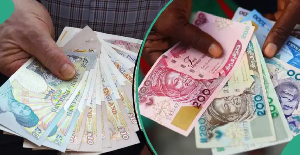 More woes as the naira hits its lowest level amid reserves decline


Opinions