The International Monetary Fund (IMF) has ranked the African countries with the largest outstanding debts to the global lender, with Egypt maintaining its position at the top while Nigeria does not feature among the continent’s 10 biggest IMF debtors.
The ranking, based on IMF data for August 2026, highlights the varying levels of financial obligations African governments have accumulated through lending programmes designed to support economies facing foreign exchange shortages, fiscal pressures and other external financing challenges.
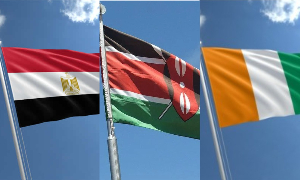
Egypt tops the list with an estimated $7.25 billion owed to the IMF.
The North African country recently secured an additional $1.8 billion disbursement after the IMF executive board completed its seventh review under the Extended Fund Facility and second review under the Resilience and Sustainability Facility.
The latest disbursement further underscores Egypt’s heavy reliance on international financing as it continues to navigate economic pressures. Côte d’Ivoire, Kenya and Ghana follow Côte d’Ivoire ranks second among Africa’s largest IMF debtors, with approximately $3.57 billion outstanding.
Kenya follows with about $2.87 billion, while Ghana ranks fourth with an estimated $2.73 billion in IMF obligations. Angola occupies fifth place with approximately $2.30 billion, followed by the Democratic Republic of Congo with about $2.20 billion.
Ethiopia, Tanzania, Zambia and Cameroon complete the top 10, with estimated outstanding IMF debts of $1.76 billion, $1.34 billion, $1.27 billion and $1.15 billion, respectively.
Africa’s top 10 IMF debtors
1. Egypt: About $7.25 billion
2. Côte d'Ivoire: About $3.57 billion
3. Kenya: About $2.87 billion
4. Ghana: About $2.73 billion
5. Angola: About $2.30 billion
6. DR Congo: About $2.20 billion
7. Ethiopia: About $1.76 billion
8. Tanzania: About $1.34 billion
9. Zambia: About $1.27 billion
10 Cameroon: About $1 15 billion
Why IMF debt matters
Borrowing from the IMF can provide critical funding when countries face balance-of-payments difficulties, dwindling foreign exchange reserves or major financing gaps. Such programmes can also support economic reforms intended to stabilise an economy and restore investor confidence.
However, large IMF obligations can become a source of pressure when debt servicing costs rise alongside weak economic growth, declining revenues or currency depreciation, according to a report by Business Insider Africa. This is particularly important because IMF liabilities are denominated in Special Drawing Rights (SDRs).
When a country’s currency weakens, the local-currency cost of servicing its external obligations can increase. High external debt can also reduce a government’s fiscal flexibility.
Money directed towards debt servicing may otherwise have been available for infrastructure, healthcare, education and other development priorities.
Nigeria missing from the top 10
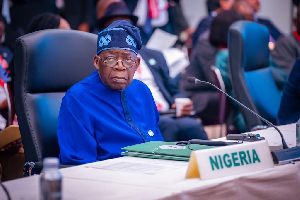
Despite being one of Africa’s largest economies, Nigeria does not appear among the 10 African countries with the highest outstanding IMF debt in the August 2026 ranking.
The absence places Nigeria outside the continent’s leading group of IMF debtors, even as the country continues to manage broader domestic and external debt obligations. The ranking, therefore, offers a snapshot of IMF exposure rather than a complete picture of each country’s overall debt burden.
A country’s total public debt, debt-service costs, foreign reserves, economic growth and currency stability all remain important when assessing its wider financial position.
Forbes names Africa’s 10 strongest currencies Legit.ng earlier reported that a strong and stable currency remains one of the biggest indicators of an economy’s resilience, helping to curb inflation, lower import costs, attract foreign investment and strengthen consumer purchasing power.
Against a backdrop of global economic uncertainty, Forbes has released its ranking of Africa’s 10 strongest currencies for July 2026. While Nigeria’s naira recorded a modest recovery during the month, it failed to secure a place among the continent’s strongest currencies.
Business News of Thursday, 20 August 2026
Source: www.legit.ng
IMF names Africa’s 10 most indebted countries in 2026, Nigeria missing from list
 Egypt leads Africa's biggest debtors with over $7 billion