Nigeria’s dependence on imported refined petroleum products has long placed pressure on foreign exchange and left the economy vulnerable to global supply disruptions. With the Dangote refinery operating at scale, stakeholders say its impact could span fuel prices, industrial growth, energy security and exports.
For decades, Nigeria’s status as a major global crude oil producer contrasted sharply with its heavy dependence on imported refined petroleum products. The country produced crude for export but relied heavily on foreign refineries to meet domestic demand for petrol, diesel and aviation fuel.
The arrangement placed pressure on the nation’s foreign exchange market, exposed consumers and businesses to international supply disruptions and left a major part of the value chain outside the country. For decades, Nigerians endured excruciating fuel scarcity, wasting productive days and nights in queues at filling stations.
However, experts argue that the emergence of the Dangote Petroleum Refinery and Petrochemicals is changing that equation. With its processing capacity now reaching 700,000 barrels per day, above its original 650,000 bpd nameplate capacity, the Lekki-based refinery is said to have moved beyond being simply a large industrial project. Its growing production and export activities are increasingly putting Nigeria in a different position within the global petroleum products market.
The transformation is not limited to the availability of petrol. It touches foreign exchange, manufacturing, logistics, employment, industrial investment, regional trade and the ability of Nigerian businesses to obtain critical petroleum products without depending entirely on international supply chains.
Energy expert, Professor Emeritus Wumi Iledare, said the refinery had already made an important contribution to Nigeria’s energy security by reducing the country’s dependence on imported petrol.
“The Dangote refinery has significantly improved the availability of petroleum products by reducing Nigeria’s dependence on imported PMS. That alone makes the country less vulnerable to disruptions in international supply chains and enhances supply reliability.”
The distinction Iledare draws between supply security and price security is important. While domestic refining can reduce the risk of shortages when international supply routes are disrupted, it does not completely remove Nigeria from the global oil market because crude remains internationally priced.
“This is why I would say that Dangote Refinery can shield Nigeria more effectively from supply shocks than from price shocks. Domestic refining improves energy security, but it cannot completely insulate Nigeria from global petroleum market dynamics because crude oil still has an international opportunity cost, whether it is refined in Lagos, Rotterdam, or Houston,” he stated.
That distinction has become increasingly relevant as the refinery expands its footprint in both the domestic and international markets.
The refinery’s growing influence was recently reflected in the European jet fuel market. More than 400,000 tonnes of jet fuel produced by the refinery were delivered into Europe in July, accounting for about 20 per cent of the continent’s jet fuel imports during the month, according to Kpler data contained in information supplied by the company. This followed 466,000 tonnes exported to Europe in June.
The development means Nigeria is increasingly participating in the international trade of high-value refined petroleum products rather than simply exporting crude oil.
That shift has implications for the country’s balance of payments. Instead of exporting crude and subsequently spending foreign exchange importing products derived from crude, more value can be retained within the domestic economy when crude is processed locally.
The refinery has expanded beyond supplying Nigeria, with petroleum products moving into markets in Europe, Africa and other destinations.
For Nigeria, the potential economic impact extends beyond the barrels processed at the Lekki facility. Large-scale refineries require a network of supporting businesses. Crude has to be transported, stored and handled. Refined products have to be moved through terminals, pipelines, vessels, trucks and other logistics systems. Banks finance transactions, insurance companies provide cover, engineering firms provide technical services and ports facilitate international trade.
The refinery therefore creates an ecosystem around its core operation. This is one of the reasons the Federal Government has linked the project to its broader industrialisation plans and the targeted $1tn economy.
Minister of State for Industry, Senator John Enoh, made the point after leading a delegation from the Ministry of Industry on a tour of the refinery, petrochemicals complex and Dangote Fertiliser Limited.
“This facility matters because of what it represents for Nigerian industry, for our people and for the realisation of President Bola Tinubu’s vision of a one trillion-dollar economy.”
For Enoh, the importance of the refinery lies partly in its ability to demonstrate what value addition can mean for a resource-rich country, saying, “The more a country adds value to its products, the more respect it earns globally. The Dangote refinery stands today as one of the strongest demonstrations of that principle.”
The minister also pointed to the refinery’s growing ability to supply international markets as evidence of a shift in Nigeria’s industrial position, especially during the US-Iran crisis in the Middle East.
“When global supply disruptions occurred, Nigeria was able to export petroleum products to markets in the Middle East and beyond. That is an extraordinary achievement and one that deserves recognition,” he added.
The change is significant because Nigeria’s historic petroleum challenge was not a lack of crude oil. It was the country’s inability to consistently transform its crude into finished products at home. That failure created a peculiar economic structure in which the country earned dollars from crude exports and then needed more foreign exchange to bring refined products back into the country.
The Dangote refinery does not, by itself, resolve every challenge associated with Nigeria’s petroleum sector. However, its scale changes the economics of the downstream market and provides the country with an industrial asset capable of processing crude on a scale that can serve both domestic and export markets.
The Managing Director and CEO of the Dangote refinery, David Bird, posited that the potential influence of the refinery extends into the petrochemical industry. He said at a briefing that a modern refinery is not only a source of petrol and diesel. Its integration with petrochemicals and fertiliser production creates opportunities for other industries that depend on petroleum derivatives as feedstock. That could support manufacturing activities and encourage the development of businesses further down the value chain.
According to analysts, the wider economic implications become clearer when viewed against Nigeria’s current struggle with production costs. Energy is a major expense for manufacturers, other businesses and homes. Where petroleum products are scarce or dependent on imported supply, companies are exposed to international prices, freight charges, foreign exchange movements and disruptions to shipping routes.
Higher energy costs increase the cost of producing and transporting goods. Manufacturers may reduce output or delay investment, while consumers face higher prices. The presence of large-scale domestic refining creates another option.
The Independent Petroleum Marketers Association of Nigeria has argued that imported petrol is now more expensive than products supplied by the Dangote refinery and has urged the Federal Government to reconsider the continued issuance of import licences.
Speaking with The PUNCH, IPMAN National Publicity Secretary, Chinedu Ukadike, said the policy of allowing imports was not producing the expected price competition.
“The recent import licences, which were expected to serve as a guide and a check on the prices of petroleum products refined locally, are not yielding the results we expected. We were shocked that the licences issued to depot owners to import petroleum products are resulting in prices far higher than what Dangote has been selling to us,” Ukadike noted.
He argued that the continued importation of petrol could undermine the advantages of domestic refining, saying, “What is the essence of importing products from Lomé when they are more expensive than Dangote’s? It does not make any sense. It is putting unnecessary pressure on the dollar and the naira.”
According to Ukadike, the Strait of Hormuz crisis provided an illustration of the importance of domestic refining capacity.
“One of the biggest gains Nigeria recorded during the crisis in the Strait of Hormuz was the uninterrupted supply of petroleum products from Dangote. If we already have continuous supply, then our challenge is pricing.
“Is it not better to address pricing than continue issuing unnecessary import licences that will only inflate fuel prices? Nigeria should put Nigeria first. Let us maintain and support the refineries we have,” he stated.
That experience reinforces Iledare’s distinction between price and supply shocks: that even when domestic prices remain influenced by international crude values, having a refinery capable of producing large volumes locally can reduce the risk that disruptions elsewhere will immediately translate into physical shortages at home.
For a country that has spent years grappling with foreign exchange shortages, that has important implications. The refinery’s expansion plans could make the impact even larger.
In June, the refinery raised its processing capacity to 700,000bpd and the company said it was targeting 1.4 million barrels per day within 30 months.
Stakeholders maintained that the scale of the proposed expansion means the facility could increasingly operate as an export-orientated industrial complex rather than merely a domestic fuel supplier.
President and Chief Executive of Dangote Industries Limited, Aliko Dangote, has repeatedly linked industrialisation to job creation and economic prosperity.
“There is no way to create jobs and prosperity without industrialisation. The greatest attraction for foreign investors is the success of domestic investors. When local investors thrive, they send a powerful signal that the environment is conducive for investment,” the billionaire businessman said.
His argument places domestic investment at the centre of the debate about attracting foreign capital.
The company has announced plans for an initial public offering, with Reuters reporting last week that the refinery is targeting about $5bn from the proposed October listing. The funds are expected to support expansion and other projects. If successful, the listing could broaden participation in one of Africa’s largest industrial assets and bring the refinery further into the capital market.
Outside Nigeria, Dangote is planning to build a refinery in Kenya. The company’s activities in Tanzania also illustrate the potential for the industrial model to extend beyond Nigeria. Tanzanian Minister of State in the President’s Office responsible for planning and investment, Prof. Kitila Mkumbo, recently led a delegation to the Dangote refinery in Lagos as part of efforts to deepen cooperation with the group. He said Tanzania was interested in further investments in fertiliser, energy and industrial infrastructure.
“We have come here to make a follow-up on what they deliberated with our president in terms of further Dangote investments in Tanzania,” Mkumbo said.
It was said that instead of individual African countries importing most of their petroleum products from outside the continent, increased refining capacity in countries such as Nigeria could support intra-African trade and reduce the continent’s exposure to distant supply chains.
For Nigeria, the opportunity is therefore not limited to becoming self-sufficient in petrol. The bigger possibility is to become a regional supplier of refined products, petrochemicals and associated industrial services. But the extent to which that opportunity translates into broader economic gains will depend on the wider business environment.
Reliable crude supply, efficient ports and transport networks, stable regulation, access to long-term financing and competitive energy infrastructure will be important to ensuring that refining capacity translates into sustained industrial growth.
Enoh acknowledged the financing challenge during his visit, saying the government would continue engaging Dangote Industries Limited through the Industrial Revolution Work Group and ministerial roundtables, particularly on access to affordable long-term financing.
If Nigerian manufacturers can access competitively priced energy, if local companies can supply goods and services to the refinery, if petrochemical feedstocks stimulate new industries, and if refined products can be exported competitively, the economic impact could extend far beyond the refinery’s immediate operations.
As Iledare noted, the refinery cannot completely protect Nigeria from global price movements because crude retains an international opportunity cost. Its significance lies elsewhere as well: in reducing exposure to physical supply disruptions, retaining more value within the domestic economy and creating an industrial platform from which Nigeria can participate more actively in regional and global refined petroleum markets.
That is the transformation now taking shape around the Dangote refinery, from a facility built to refine crude oil into an industrial platform with the potential to influence Nigeria’s energy security, foreign exchange position, manufacturing base and place in Africa’s emerging economic order.
Business News of Thursday, 13 August 2026
Source: www.punchng.com
How Dangote refinery will transform Nigeria’s economy
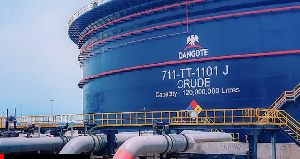 Dangote Refinery