The Nigeria Labour Congress has threatened to revolt against plans to commence the implementation of the newly enacted tax reform laws from January 1, 2026.
The NLC said it was not aware of the tax laws, as it was not carried along in their drafting, nor after they were passed and assented to by the National Assembly and President Bola Tinubu.
While raising concerns about the timing, lack of clarity and the likely impact of the implementation on workers and businesses, the NLC warned that the reforms would not only worsen the burden on citizens but also hurt small businesses and slow economic activity.
However, the Manufacturers Association of Nigeria declared support for the laws, saying they would be friendly and beneficial to its members.
This is even as small and medium-scale business operators and the Employers Association for Private Employment Agencies of Nigeria called for the suspension of the implementation of the laws, citing poor awareness and inadequate stakeholder engagement.
But the Chairman of the Presidential Committee on Fiscal Policy and Tax Reforms, Taiwo Oyedele, defended the laws, warning that delaying the reforms could push up the prices of basic goods and services, including food, healthcare and education, while keeping workers and small businesses overtaxed.
Oyedele warned that delaying the reforms would mean retaining the current tax regime, which he said placed a heavy burden on workers and small businesses.
The controversial tax regime became law on June 26 when President Bola Tinubu signed the four major tax reform bills into law, marking what the government has described as the most significant overhaul of Nigeria’s tax system in decades.
The laws include the Nigeria Tax Act, the Nigeria Tax Administration Act, the Nigeria Revenue Service (Establishment) Act and the Joint Revenue Board (Establishment) Act, all operating under a single authority, the Nigeria Revenue Service.
However, the laws came under intense scrutiny last week when a member of the House of Representatives, Abdussamad Dasuki (PDP, Sokoto), alleged discrepancies between the tax laws passed by the National Assembly and the versions gazetted and released to the public.
Dasuki, who made the allegations during plenary last Wednesday, insisted that the content of the gazetted tax laws did not reflect what members debated, voted on and passed.
Labour threatens revolt
Speaking with Sunday PUNCH, the spokesperson for the NLC, Benson Upah, said the union had rejected the laws.
He said organised labour remained in the dark about the substance of the laws, despite workers being the largest tax-paying group in the country.
“At the level of the congress, we do not even know what these laws contain, yet we are the largest tax-paying community in the country. There has been no sensitisation or public enlightenment directed at the NLC or the labour community. This is an affront and a clear disrespect to the citizens. The right to know what is going on is not a privilege; it is a right. Nobody is doing us any favour.
“We are asking for certain things to be done: public enlightenment, public education on what these tax reform laws are all about, who they are meant to benefit, and all of that, before they are implemented,” Upah said.
He also raised concerns about reports of the introduction of tax agents, noting that it remained unclear and unacceptable.
“There are other issues, too. We have also heard that there are going to be tax agents for the enforcement of the laws; these issues are totally opaque, and they are unacceptable.
“The processes of tax accumulation or collection, warehousing of tax proceeds and utilisation of those proceeds should be transparent; if not, we will revolt, not just us, but the people, the citizenry will revolt,” Upah added.
He also faulted the exclusion of labour from the tax reform committee, despite repeated demands for representation.
“We are the largest tax-paying community in the country. How can anybody shave our head in our absence? I think at that level, our input was necessary. Since the tax committee finished its job, it went to the National Assembly, and the Bill became an Act, nobody has deemed it fit to invite us for our input or enlighten us. This is a big snub.
“When taxes are low and transparent, more people will pay, but when taxes are high and their use opaque, people avoid paying. It is in this context that people will revolt, and even the NLC will revolt, unless there is a certain transparency around the process of collection and use of taxes being collected. All of that has to be made very plain to the people of this country and to us, because it is our right,” Upah said.
Also speaking, a top official of the NLC, who spoke on condition of anonymity because he was not authorised to talk to journalists, said organised labour had called for the total scrapping of the laws, accusing the Federal Government of sidelining workers and other critical stakeholders in the process that produced the legislation.
He warned that organised labour would resist any attempt to impose policies that would worsen the economic hardship Nigerians are already facing.
Private sector demands suspension
Similarly, the President of the Association of Small Business Owners of Nigeria, Femi Egbesola, said enforcing the law without sufficient understanding among micro, small and medium enterprises could lead to failure.
According to him, pushing ahead with the policy could result in poor outcomes.
“The implementation should be suspended. The majority of the MSME space does not even understand it. You do not implement what people do not understand. If you force yourself to implement it, there will be a mismatch, and you will not get the kind of result you want. Along the line, it may be a colossal failure,” Egbesola added.
He also expressed doubts about the capacity of the proposed Nigeria Revenue Service, which is expected to replace the Federal Inland Revenue Service, to effectively monitor transactions nationwide.
The ASBON president noted that sensitisation efforts around the tax reform were still insufficient, stressing that many questions remained unanswered.
“The majority of the SMEs do not really understand the tax reform and law. You can only align with what you understand,” he stated.
Egbesola referenced data from the Small and Medium Enterprises Development Agency of Nigeria, which shows that micro and small businesses account for about 87 per cent of Nigeria’s estimated 40 million MSMEs.
“These 87 per cent are micro businesses, and for you to interpret things to them, it must be different. Those in charge of sensitisation need to do more,” he said.
The ASBON president warned that inadequate awareness could trigger resistance.
“If those that are supposed to align with it are not yet aware of the modalities, how do you implement them? You may not get full compliance, and you may even see some form of revolt or protest,” he said.
Egbesola also called for a pilot phase before the full enforcement of the law.
“When you are bringing in a reform that cuts across the board, you should allow time for a pilot phase of two or three months before full compliance,” he said.
Similarly, the Executive Secretary of the Employers Association for Private Employment Agencies of Nigeria, Jide Afolabi, also supported the call for the suspension of the implementation of the tax laws to allow for the verification of the alleged alteration of the legislation.
“EAPEAN aligns with the view that a temporary suspension of implementation would be beneficial. Given the reported discrepancies between the passed bill and the gazetted law, it is important to first reconcile the two versions to avoid confusion, misinterpretation and unintended compliance challenges.
“A brief pause would also allow for wider stakeholder engagement, enlightenment and the issuance of clear implementation guidelines. This approach will ultimately lead to better compliance and acceptance of the reforms,” he said.
MAN backs tax laws
The Director-General of MAN, Segun Ajayi-Kadir, however, expressed support for the implementation of the new tax laws, saying manufacturers are looking forward to a more business-friendly tax regime.
He said manufacturers anticipate relief from what he described as nuisance and irritant taxes imposed by sub-national authorities, adding that the reforms would put an end to the harassment of businesses.
“We anticipate liberation from what I would call nuisance and irritant taxes from the sub-nationals. It should finally come to an end, and the economy and all of us will be net beneficiaries. I can anticipate with joy my members operating without any roadblocks for the purpose of collecting official and unofficial taxes and levies.
“My position is that we are looking forward to the implementation of the tax laws from January 1, 2026. We fully participated in stakeholder engagement, and we know that the law is excellently positioned to help businesses, particularly small-scale industries and even big businesses,” he told Sunday PUNCH.
Ajayi-Kadir said the tax reforms would provide relief for small businesses, noting that companies with turnovers below N100m would be exempted from company income tax, value-added tax and withholding tax.
“Our members, especially the small ones whose turnover is less than N100m, will not pay CIT, VAT and WHT. As it is, they are struggling and need to be encouraged.”
According to him, the reduction in company income tax would align Nigeria with global trends and create room for reinvestment and the attraction of investment. He added that low-income earners would be exempted from tax, while middle-income earners would pay less due to more generous reliefs.
Ajayi-Kadir said the introduction of a tax ombuds would be a major relief for taxpayers.
“The institution of the tax ombuds will be a welcome relief from the current situation of near hopelessness in the hands of the tax man. I don’t really see any cadre of earners that will be worse off from January 1, 2026.
“Even the upper two per cent of earners who are going to pay the highest 25 per cent have their companies well benefited from the tax regime and therefore are adequately compensated,” the MAN DG said.
Business News of Sunday, 28 December 2025
Source: www.punchng.com
Four days to tax reform: Manufacturers excited, Labour, SMEs threaten revolt
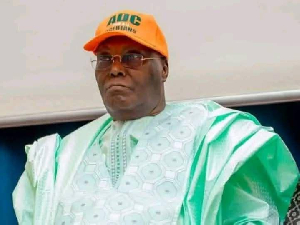
 Taiwo Oyedele, Chairman of the Presidential Fiscal Policy and Tax Reforms Committee