The Dangote Petroleum Refinery and Petrochemicals said it has commenced a direct delivery of aviation fuel to Ethiopian Airlines amid the tightness caused by the US-Iran crisis.
The Managing Director of Dangote Refinery, David Bird, said the company has begun supplying jet fuel, diesel, and petrol to international customers, extending its operations beyond Nigeria.
He disclosed this while speaking at the NAEE conference in Lagos, where he addressed issues around fuel supply, refining capacity and export strategy.
According to him, the refinery is now producing enough to meet domestic demand, with surplus volumes being exported to African and global markets. Since the Middle East crisis started on 28 February, the refinery has shipped fuels to 11 African countries.
“Alhaji Aliko Dangote is absolutely unequivocal that it is Africa first. And we’re proud to have done a direct delivery to Ethiopian Airlines. And we will continue to export our product in surplus to Nigeria’s requirements and to our neighbouring African countries. And we have done that to more than 11 African countries to date since the war began,” Bird said.
He explained that the export push is being driven by excess production capacity, noting that the refinery is currently operating at full capacity after completing maintenance earlier in the year.
Speaking on jet fuel availability and the high prices, he said the refinery is contributing to supply stability at a time when several markets are experiencing shortages, stressing that supply challenges are not limited to Nigeria.
Bird blamed the high cost of aviation fuel on the rising oil prices, which were $112 per barrel as of Wednesday morning.
“Right now, there is a scarcity of product. And what is worse than 100 or 120 dollar oil is no oil at all. That is being faced by both developed and developing import-dependent countries. Whether that’s Australia, wholly reliant on imports, or developing countries like Bangladesh, Sri Lanka, or the Philippines,” Bird stated.
He, however, maintained that Nigeria currently has sufficient supply, attributing this to domestic refining capacity.
“Right now, in Nigeria there remains fuel abundance. And that is a good thing. Obviously, our commodity is exposed to the global price variations. We can’t insulate ourselves from that, but at least we have the product. We have the fuel. We have the fertiliser. As a result of the Dangote investment. So that’s something that we should be incredibly proud of,” he stated.
The refinery executive added that products are sold to a wide range of counterparties on a free-on-board basis, with deliberate efforts to prioritise African markets where possible.
“We sell on an FOB basis to a wide variety of counterparties, but we have, where we could, tried to direct and ensure that those surplus molecules are given to African countries as a product,” he explained.
A report by Reuters said the Dangote refinery is benefiting from record margins for producing jet fuel that it is mostly selling abroad, while the domestic airlines it also supplies have threatened to stop flying because of the surge in fuel prices.
The refinery, the largest on the continent, was built to turn Africa’s biggest oil-producing country into a net exporter of refined products, end Nigeria’s reliance on fuel imports, and shield its economy from global energy shocks.
According to Reuters, Dangote, as a new, highly efficient refinery, has been able to take advantage of record margins for producing jet fuel from crude.
Dangote Group Vice President Devakumar Edwin said Dangote imported most of its crude from the US as well as some from other African producers and Brazil. He did not give precise figures.
He said the bulk of the 24 million litres of jet fuel it produces daily was shipped to Europe, although he also said the refinery largely supplied the needs of Nigerian airlines, which the aviation industry estimates at about 2.1 million litres per day.
“As European buyers are willing to pay a premium ahead of the peak demand summer travel season, European imports from Nigeria have averaged 78,000 to 96,000 barrels per day in April so far,” Reuters quoted data from Kpler and LSEG, calling it the highest on record.
While European refiners earned about $15 per barrel, analysts estimated Dangote’s margins at more than double that as a result of access to Nigerian crude and the plant’s scale and sophistication.
Business News of Thursday, 30 April 2026
Source: www.punchng.com
Dangote supplies jet fuel to Ethiopian Airlines, others
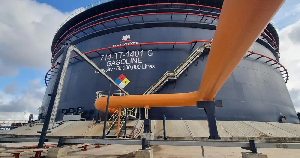 Dangote Refinery

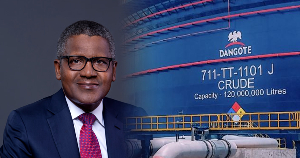




Opinions