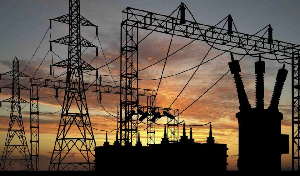
Many parts of Lagos and its environs were thrown into darkness during the Eid-el-Fitri celebration and throughout the weekend because of lack of electricity supply.
It was learnt that all the tiers in the chain of electricity supply failed to deliver.
Ten distribution companies (DisCos), including Eko Distribution Company (EKEDC) and Ikeja Electric (IE), which supply electricity to the nation’s commercial nerve centre, received zero allocation of electricity as of 19:22 hours yesterday.
Only the Abuja Electricity Distribution Company (AEDC) received 509 megawatts (MW) from the Nigerian Independent System Operator (NISO).
The Electricity Consumer Protection Advocacy Centre (ECPAC) raised the alarm about the scant allocation.
Findings by The Nation from NISO’s distribution profile showed that the other 10 DisCos recorded zero allocation at the time under review.
Data from the NISO generation profile indicated that total electricity generation rose marginally to 1,861.49MW at 18:00 hours, up from 1,579.50MW recorded at 17:00 hours.
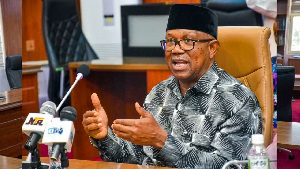
Speaking with The Nation on the phone, ECPAC Executive Director, Chief Princewill Okorie, lamented the worsening crisis in the Nigerian Electricity Supply Industry (NESI).
He described the challenges in the sector as multifaceted, alleging that the distribution companies were structured to exploit consumers.
According to him, the operations of the DisCos have remained largely unchecked, allowing them to collect revenue despite inadequate power supply.
Okorie said the absence of strict regulatory enforcement has emboldened the companies, leaving them unperturbed by poor performance.
He said: “There are multiple causes. The sector is designed to extort Nigerians. It is characterised by lawlessness.
“The consumer protection provisions of the Electricity Act are not enforced, so the DisCos operate above the law.
“On the other hand, the GenCos say they are owed. …”
Strategies for power, energy and security
A source at NISO, who pleaded anonymity, attributed the drop in allocation to system fluctuation management aimed at stabilizing grid frequency.
The source explained that supply had to be reduced to prevent a total system collapse.
“You know that in the grid there are fluctuations, up and down movements. To check them, they have to lower generation,” the source said.
In recent times, most gas-fired power plants have been operating at less than 20 per cent of their installed capacities.
A February 2026 factsheet by the Nigerian Electricity Regulatory Commission (NERC) indicated that generating companies were dispatching only about 32 per cent of their installed capacity.
Industry operators say a debt burden of over N6.2 trillion owed to generation companies has significantly constrained their operations.
With many gas plants operating below capacity, the system operator has increasingly relied on hydroelectric power plants to sustain supply.
Last week in his Eid-el-Fitri message, Minister of Power Adebayo Adelabu said: “Concrete measures are being implemented to ensure more reliable and sustainable electricity for homes, businesses, and industries.
“The reforms initiated by President Bola Tinubu are beginning to take root, and Nigerians will soon witness the full benefits.”
According to the minister, maintaining strong public trust and cooperation is essential for the success of the administration’s reform agenda.
He said the president is actively working to reposition Nigeria on the global stage in order to attract investment and promote national development.
“As we celebrate, we take pride in the strides being made under Mr President’s leadership, including his recent engagements in the United Kingdom, which promise significant gains in investment, bilateral relations, and economic cooperation,” Adelabu said.
“These milestones underscore a new direction for our nation. I urge all Nigerians to continue supporting these efforts, so that the gains can be consolidated for the benefit of all.”
Business News of Monday, 23 March 2026
Source: www.thenationonline.ng
10 Discos got 0mw allocation
 Illustrative photo