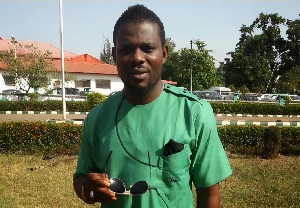
The presidential candidate of the Social Democratic Party, SDP, Prince Adewole Adebayo, has warned Nigerians against re-electing President Bola Tinubu in 2027, saying such an action would be akin to drinking poison. He argued that Nigerians will not survive another four years of what he described as Tinubu’s broken promises.
He stressed that Nigeria's greatest problem was not the magnitude of its challenges but the failure of successive leaders to accept responsibility and demonstrate the capacity to address them.
Speaking during an interactive question-and-answer session with Nigerians on X (formerly Twitter), Adebayo argued that the country was at a crossroads, but insisted that its present difficulties were neither unprecedented nor beyond the capacity of competent leadership to overcome.
During the discussion, he unveiled his vision for rescuing Nigeria and urged citizens to embrace difficult choices, warning against electoral apathy and ignorance. He also promised to provide a new pathway out of poverty and insecurity.
Many Nigerians feel the country is at its lowest point and that its problems are beyond fixing. Do you agree that Nigeria is at a crossroads?
There are two categories of people who should be interested in the future. The first are those who will actually be part of that future, particularly the youths. The second are those who may not be around to witness it but care about their posterity, their grandchildren and the generations coming after them.
For us in the SDP, we have a few suggestions. First, we must embrace the crossroads. We should not be frustrated by them.
It is like a student who wants to become a lawyer. He must embrace law school and the examinations that come with it. You cannot become a lawyer without going through the process.
Nothing on earth is as dangerous and hazardous as childbirth. A woman giving birth is taking a risk involving both her life and that of her child. In cases of multiple births, she may be responsible for her life and those of two or three additional babies.
I become concerned when Nigerians approach every national challenge as though this country is uniquely burdened with problems. A little study of world history and the experiences of other nations will show that Nigeria has actually faced some of the easiest crossroads in the world.
The problem is that our leaders appear incapable of handling challenges that should ordinarily be manageable.
A little child may struggle to pick up a small block of ice from the floor. An adult, however, can carry two bags of cement, put them in a wheelbarrow and still carry a baby on his back while making a telephone call. The difference is capacity, experience and strength.
The same thing applies to leadership. A challenge that appears insurmountable to an inexperienced or incapacitated person may be easily handled by someone with the necessary knowledge and ability.
During Nigeria's struggle for independence, the worst that could happen to some of our freedom fighters was that the British colonial authorities might take them to court for defamation or sedition, arrest them and lock them up at Broad Street Prison or another prison for some time.
Compare that with countries such as Kenya and South Africa, where freedom fighters were killed or subjected to brutal repression.
Throughout Nigeria's struggle for independence, one could hardly hear of freedom fighters losing their lives on the scale witnessed in those countries.
That is why, on our Independence Day, we do not have the same kind of graves and monuments commemorating thousands of freedom fighters killed during the Mau Mau uprising in Kenya or the struggles against apartheid in South Africa.
This is not to diminish the sacrifices of our nationalists. It is to show that our historical experience was different.
We need the rule of law, a system that works, a police force that performs its duties professionally, and an army that is strong, united, patriotic and committed to defending the country.
We need schools that deliver quality education and a healthcare system that works.
Look at our infrastructure. Nigeria is not an archipelago like Indonesia or Japan, where geographical separation by water makes transportation particularly challenging. We have a relatively straightforward landmass, yet we struggle to provide sufficient bridges and maintain our roads.
We have very few major bridges across our important rivers. If a major truck blocks one of those bridges, the consequences can affect transportation across large parts of the country.
These are basic infrastructure problems that competent engineering and proper planning should be able to address.
Our founding fathers dreamed of a continent that would become a global force, a launching pad for the aspirations of the black race and a symbol of African renaissance.
When independence came, many believed that the black man had finally demonstrated that he could govern himself and compete with the rest of the world. But today, we are struggling with basic necessities. We are celebrating the photograph of a president on a bag of rice as though that were a major achievement. That is not what our founding fathers envisioned.
Nigeria has crossroads, and there are thousands more ahead. Every civilisation faces crossroads. The question is: how do we respond to them?
We can only save our future by being wise in the present. The choices we make today will determine the future.
If you arrive at a six-way junction but are only allowed to see two roads, you will miss the other four. You cannot make the best decision when you are not adequately informed.
That is why citizens must educate themselves, remain open-minded and understand the available alternatives.
You are comparing voting for the APC with drinking poison. What exactly do you mean?
First, we all agree that drinking poison is dangerous. It is a useful reference point because everybody understands that nobody should willingly consume poison.
However, when you make a wrong electoral choice, the consequences can affect everybody around you. Your neighbours may be kidnapped. People who did not vote for that government may be killed by Boko Haram or other criminal groups. Thousands of citizens may end up in internally displaced persons' camps or lose their lives to insecurity. Elections do not affect only the person who votes; they affect the entire society.
No matter how intelligent you are or how correct your personal choices may be, if the majority of citizens make the wrong choices, you will eventually suffer the consequences. They must realise that their deaths will not affect them alone. Their children may become fatherless, their wives may become widows, and their mothers may be heartbroken. That is why democracy requires collective responsibility. That is the sense of responsibility Nigerians must develop when making electoral choices.
The people who formulated the topic did not ask who will save the future; they asked who will save our future. That means it is a collective responsibility.
We are all in one boat. If somebody on a ship decides to commit suicide in a manner that brings the entire vessel down, you cannot say it is his personal decision. Everybody on board will suffer.
That is why we must be interested in how our neighbours vote, what choices they make and what they understand.
In a democracy, bad ideas are dangerous. Ignorance is dangerous. Apathy is dangerous. Intolerance is equally dangerous because it prevents the exchange of ideas necessary for making informed decisions.
You referred to the biblical Wall of Jericho and suggested that many Nigerian leaders fail because they are not prepared for the challenges they encounter after assuming office. Can you explain further?
The Wall of Jericho is a useful illustration of how people respond to challenges. When the Israelites left Egypt and spent years in the wilderness, they eventually approached the land they believed was their destination.
That is what happens in Nigeria. People campaign for office and promise heaven and earth, but when they assume responsibility, they suddenly discover that there are challenges. They begin to tell Nigerians that the problems are too difficult and that they need another four years. We have seen this pattern repeatedly.
In 1982, the Shagari administration introduced austerity measures. Economists and other knowledgeable Nigerians warned that the measures would hurt the economy and weaken the capacity of citizens to take care of themselves. The government presented the measures as temporary, asking Nigerians to be patient.
Nigerians were told that Ibrahim Babangida’s Structural Adjustment Programme (SAP) would fix the economy, but the expected transformation did not materialise.
Now, we have another administration that came into office with promises. President Tinubu told Nigerians that removing the fuel subsidy would provide the resources to address the country's problems. There were promises of electricity, jobs, improved living conditions and economic prosperity. We are approaching the end of the four-year period, and Nigerians are still waiting for the promised transformation.
The lesson is that leaders must not ask for time indefinitely. They must demonstrate that they understand the challenges and have practical solutions.
General News of Friday, 27 November 2026
Source: www.dailypost.ng
Nigerians won't survive another four years of Tinubu govt - Adebayo
 Prince Adewole Adebayo