


As the dry season approaches, millions of Nigerian households and businesses face the prospect of worsening electricity supply, with falling water inflows into hydroelectric reservoirs, gas supply constraints and persistent infrastructure challenges threatening to deepen the country’s power crisis.
The warning is coming amid an already declining electricity supply, with the national grid generating about 3,180 megawatts on November 19, leaving the 11 electricity distribution companies with a combined allocation of 2,885MW, according to data published by the Nigerian Independent System Operator.
The latest decline has renewed concerns about the ability of the power sector to sustain supply in the coming months, particularly as hydroelectric plants depend on water availability while gas-fired power stations continue to grapple with fuel supply constraints.
Although the dry season does not automatically translate into reduced electricity generation, the combination of declining water inflows, unreliable gas supply, ageing transmission infrastructure and distribution challenges could further limit the amount of electricity available to consumers.
Speaking in an interview with Saturday PUNCH, Professor of Energy, Dayo Ayoade, warned that declining water levels at hydroelectric dams, combined with unreliable gas supply to thermal power plants, could worsen electricity supply to Nigerian households.
The National Secretary of the Nigeria Electricity Consumer Advocacy Network, Uket Obanga, also expressed concern about the country’s preparedness for seasonal changes in water availability, stating that inadequate water management infrastructure could worsen electricity generation during periods of reduced rainfall.
Obanga also accused electricity distribution companies of concentrating available supply in urban centres and among customers considered more commercially viable, leaving residents of semi-urban communities struggling with inadequate electricity.
Supply already under pressure
On November 5, NISO attributed the decline in electricity generation to constraints in gas supply to thermal power plants and reduced water inflows into hydroelectric reservoirs.
The operator said limited gas availability had prevented affected thermal plants from operating at their available capacity, while reduced water inflows had affected hydroelectric generation.
The combined constraints, it said, had reduced electricity allocated to distribution companies, resulting in shorter hours of supply and increased load shedding across their networks.
The situation was reflected in the November 18 allocation figures, when the 11 distribution companies received a combined 2,885MW.
Abuja Electricity Distribution Company received 551MW, followed by Ikeja Electric with 366MW, Ibadan Disco with 340MW and Eko Disco with 339MW. Yola Disco received the lowest allocation of 74MW.
By the following morning, generation had fallen to about 3,180MW, according to a report published by The Guardian, indicating the extent of the supply constraints confronting the national grid.
The development has left households and businesses with fewer hours of electricity, forcing many to rely on generators, inverters and solar systems to meet their daily energy needs.
The power sector’s problems, however, extend beyond seasonal water levels. They involve the availability of fuel to generate electricity, the operational condition of generating plants, the capacity of the transmission grid to evacuate available power and the ability of distribution companies to deliver electricity to consumers.
Gas supply controversy
Gas supply constraints have remained a major challenge for Nigeria’s electricity generation, with thermal plants depending on adequate fuel deliveries to operate.The Nigerian Midstream and Downstream Petroleum Regulatory Authority’s September 2026 sector fact sheet showed that average daily gas utilisation by power plants fell by four per cent to 518 million standard cubic feet per day, compared with August.
The decline raised further concerns about the ability of gas-fired plants to sustain generation at a time when hydroelectric stations may also face seasonal pressure from reduced water inflows.
However, the gas supply situation has attracted conflicting explanations from operators.
In a November 7 statement, NNPC Limited disputed claims that its gas transportation network was responsible for the generation decline, saying the network operated by its subsidiary, NNPC Gas Infrastructure Company Limited, remained available to support deliveries to power plants without transportation constraints.
The national oil company said gas production had increased by about 10 per cent year-to-date in 2026, emphasising that the availability of gas transportation infrastructure was not the problem.
The NNPC, however, acknowledged that gas production, commercial supply arrangements and actual deliveries to individual power plants were separate issues that needed to be assessed alongside generating plant availability, maintenance schedules and gas offtake.
The financial challenges confronting the electricity market may also complicate gas supply.
Power generation companies and gas suppliers depend on payments for electricity and fuel delivered, while outstanding obligations within the electricity value chain have repeatedly raised concerns about the sustainability of supply.
Hydro generation and the weather factor
Nigeria’s generation mix makes the seasonal concern significant. Hydroelectric plants account for a substantial share of electricity supplied to the national grid, meaning reduced water inflows could affect their output.
The Nigerian Electricity Regulatory Commission’s 2025 annual report showed that hydroelectric plants generated 12,804.18 gigawatt-hours, representing 32.66 per cent of total grid electricity generated during the year.
Historical figures also show that hydroelectric generation can fluctuate with seasonal conditions.
NERC’s second-quarter 2024 report recorded a 28.09 per cent decline in average hourly generation from Kainji, Jebba and Shiroro, from 1,030.88 megawatt-hours per hour in the first quarter to 741.28MWh/h in the second quarter.
The commission attributed the decline partly to seasonal variation, alongside operational constraints affecting some generating stations.
The Nigerian Meteorological Agency’s 2026 Seasonal Climate Prediction also identified potential implications of rainfall patterns for hydropower generation.
NiMet predicted that below-normal rainfall and shorter rainy seasons in parts of Borno, Yobe, Ogun, Oyo and Niger could reduce water levels in rivers Niger and Benue, potentially affecting water availability at Kainji Dam and hydropower generation, particularly towards the end of the rainy season.
The agency also warned that early cessation of rainfall in parts of Kogi, Niger and Rivers could shorten the operational hours of hydroelectric plants, create dry-season energy deficits and increase dependence on alternative sources of power.
It recommended climate-resilient energy planning, improved hydropower systems and increased investment in solar energy, particularly in areas with strong solar potential.
However, Professor of Energy and Electricity Law at the University of Lagos, Yemi Oke, disagreed with the suggestion that the dry season would necessarily worsen electricity supply, arguing that gas-fired plants should be able to sustain generation irrespective of rainfall, provided gas supply remained stable.
He said, “In the dry season, we should expect stabilised supply because most of the power plants are gas-fired and gas has nothing to do with whether there is a dry or wet season. So, if we have stable supply of gas, the DisCos should have something to distribute, provided they are able to get money.”
Oke said the dry season could affect hydroelectric plants because their operations depended on water flow, but stated that the impact should not automatically translate into reduced electricity supplied to homes and offices.
The professor also noted that transmission limitations, poor distribution infrastructure and commercial considerations could prevent consumers from receiving electricity even when generating plants have available capacity.
Oke added that affordability was another challenge, particularly in northern Nigeria, where some consumers struggled to pay for electricity despite government subsidies.
He also said distribution companies could prioritise customers who pay higher tariffs and generate better returns for their businesses over households whose consumption and payment capacity are lower.
Oke said, “The DisCos know how to segregate. For instance, DisCos that have 500 megawatts and, during the dry season, have like 250 megawatts, will serve the highest stakeholders.”
Oke said the dry season should also provide an opportunity for households, businesses and
communities, particularly in northern Nigeria, to expand their use of solar energy.
He stated that the country’s energy planning should reflect regional differences in electricity demand, geographical conditions and economic activities rather than relying on a uniform model of power supply.
According to him, northern communities with strong solar potential could benefit from mini-grids and standalone solar systems, particularly in rural areas where households may require electricity for lighting, small appliances and basic economic activities.
He said the South, with its concentration of industrial activities and businesses requiring substantial electricity, would continue to need a dependable grid supply.
Oke noted that electricity planning should be tailored to the needs of individual communities, with solar energy complementing the national grid rather than leaving all consumers dependent on centralised generation and transmission.
He also expressed optimism that the decentralisation of the electricity market under the Electricity Act 2023 could attract more investors and operators, allowing states and other participants to develop electricity systems suited to their local needs.
General News of Sunday, 22 November 2026
Source: www.punchng.com
Dry season: Fear mounts over worsening power crisis
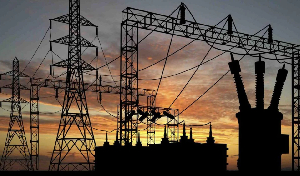 Illustrative photo


