Nigeria must accelerate economic growth significantly to achieve its ambition of becoming a $1tn economy by 2030, the AIESEC Alumni Nigeria has said.
The organisation said the country’s current growth trajectory remained insufficient to deliver the target, stressing that Nigeria needed sustained investment, higher productivity, stronger infrastructure and consistent economic policies to change its trajectory.
The warning came at the 42nd Omolayole Management Lecture organised by AIESEC Alumni Nigeria and hosted by the Nigeria Employers’ Consultative Association in Lagos, where President and Chairman of the Governing Council, Chartered Institute of Directors Nigeria, Adetunji Oyebanji, presented a paper titled, “One Trillion Dollar Economy: What It Will Take Nigeria to Achieve the Goal?”
Oyebanji said Nigeria’s nominal GDP stood at about $290.79bn in 2025 and would require a compound annual growth rate of about 28.02 per cent between 2026 and 2030 to reach $1tn.
He said historical trends showed that the country would fall far short of the target if it continued on its current trajectory.
“Both produce declining GDP projections because they extend recent historical US dollar GDP trends. Method A gives us an outcome of $223bn in 2030, while Method B gets us to $173bn, showing that continuing historical trends—if we do the things we were doing where we have been doing them, and we have the same volatility—means going nowhere,” Oyebanji said.
He added that the $1tn ambition required a fundamental shift in the country’s economic trajectory rather than business as usual.
“The important conclusion is sobering. If we simply continue along historical trends, the economy does not naturally arrive at $1tn by 2030. In other words, business as usual is not sufficient. The ambition, therefore, requires a fundamental change in the trajectory of the economy,” he said.
Oyebanji said the required growth rate represented an exceptionally demanding benchmark, noting that Nigeria had no historical precedent for achieving such expansion at its current economic size.
He said the illustrative pathway would require the economy to grow from about $290bn in 2025 to $372bn in 2026, $477bn in 2027, $610bn in 2028, $781bn in 2029 and $1tn in 2030.
He said the figures demonstrated the scale and consistency of expansion required, adding that Nigeria could not afford to achieve strong growth in one year and return to weaker performance the next.
“The message from the numbers is very clear. Bridging the gap requires more than cyclical recovery. Nigeria must accelerate investment, strengthen infrastructure, maintain fiscal and monetary discipline, expand exports, improve industrial competitiveness, deepen the digital economy, mobilise domestic revenue, and maintain policy consistency,” Oyebanji said.
The CIoD president also warned that dollar-denominated GDP depended on both real economic expansion and exchange-rate stability.
He said increases in domestic production could be undermined by currency depreciation, making macroeconomic stability critical to achieving the $1tn target.
“Therefore, reaching a $1tn nominal GDP requires attention to both real economic expansion and macroeconomic stability,” Oyebanji said.
He said Nigeria needed to move through three broad phases of economic transformation: stabilisation, growth and shared prosperity.
Oyebanji said recent reforms, including foreign exchange market unification, fuel subsidy removal, fiscal consolidation and expenditure controls, were laying the foundation for greater stability, but warned that stability alone would not deliver the desired economic transformation.
“The lesson is simple: stability is the foundation, not the destination,” he said.
The AIESEC Alumni Nigeria, which coordinates the Omolayole Management Lecture, said the 42-year-old platform remained important to Nigeria’s economic and management discourse.
AIESEC President, Marcel Mba, said the organisation would continue to sustain the lecture as a platform for generating ideas that could influence national development.
He said the lecture provided an opportunity for business leaders and professionals to examine critical issues affecting Nigeria and contribute to the country’s economic direction.
Also speaking, the President of NECA, Richard Ayibiowu, said Nigeria needed significantly higher growth, investment, productivity, infrastructure, innovation and stronger institutions to achieve the $1tn ambition.
Ayibiowu said the private sector remained central to converting investment into production, jobs, incomes and improved living standards.
He said government reforms in exchange rates, fuel subsidies and taxation must ultimately translate into higher production, investment and job creation.
“However, reforms must ultimately translate into increased production, investment, and job creation,” Ayibiowu said.
Oyebanji said government, businesses and citizens had complementary roles to play in achieving the ambition, urging the government to pursue reforms with consistency, discipline, transparency and accountability.
He urged businesses to invest patiently and build globally competitive enterprises, while calling on Nigerians to embrace innovation, entrepreneurship, productivity and excellence.
“The $1tn economy is, therefore, not simply an economic target; it is a national mobilisation project,” Oyebanji said.
Business News of Friday, 9 October 2026
Source: www.dailypost.ng
Nigeria needs faster growth to hit $1tn GDP - AIESEC
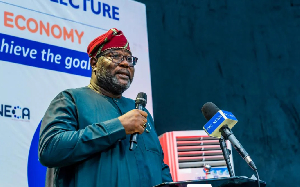 President and Chairman of the Governing Council, Chartered Institute of Directors Nigeria, Adetunji