Investigative journalist Fisayo Soyombo has issued a caution to Nigerians about choosing the Libya route in their quest for better opportunities abroad.
In an interview with ARISE News on Sunday, Soyombo shared the difficulties he encountered during an undercover trip from Kano through Niger to Tripoli, where he adopted the disguise of a migrant travelling along the Sahara Route.
“You know, when you are trying to escape economic deprivation, you think that any other option is good. The options in Libya are worse,” Soyombo said.
He mentioned that most Nigerians who reach Libya often take on specific jobs solely to earn money for their journey to Europe.
“What happens a lot of time is, they get to Libya, they realise they can’t cross. They are stuck. They run out of funds. Then they have to go into many jobs to at least be able to eat. Then they start saving to cross,” he said.
Soyombo reports that in Libya, migrants face the risk of theft because their illegal status restricts them from opening bank accounts to safeguard their funds.
“But don’t forget, you’ve gone into Libya illegally because Libya already criminalised irregular migration. You can’t open a bank account. So you keep cash. Anyone can rob you,” he said.
He expressed sorrow over the plight of agricultural workers, highlighting their exposure to severe environmental challenges and the danger of unpaid wages.
“The Nigerians who are in Libya are farming. Do you know the temperatures in Libya? It’s a desert. The hottest Nigerian state I’ve been to is probably Yobe,” Soyombo said.
He added, “The Agadir that was the start of the desert was like 20 degrees centigrade to 32 degrees centigrade. In the desert, you are talking temperatures of 40 and more as you go to farm.”
“We were stopped at a village. One Arab man came. And you know, again, because I was on a mission, my eyes were everywhere. Once I saw him approaching, I took to my feet,” he added.
“The guys that were not fast, he conscripted them to the farm. They worked for like three hours in this scorching sun. And he didn’t pay them a dime,” Soyombo said.
He stated that the migrants were subsequently robbed of their money and forced back into work.
“The following day, he came back, went to a nearby hut, passed them and said, why would you be a migrant and you have money? No migrant, if you want money, go and work on the farm.”
“Robbed them, took their cash, took them to the farm and he didn’t pay them a dime. Who were they going to complain to? He robbed them and then he enslaved them,” he said.
Soyombo remarked that he does not hold Nigerians who have migrated to Libya responsible, highlighting that some migrants he met confided they would have chosen not to undertake the trip if they had been aware of the hardships awaiting them.
“I don’t blame them, I will never sit anywhere and blame anyone who has gone to Libya. Because on that trip, a lot of migrants told me, oh, if I knew I would suffer this much, I wouldn’t come,” he said.
Soyombo explained that his investigative efforts were aimed at offering people a clear view of what they experience during such journeys.
“So we have to help people to let them know how that Europe they want to get is extremely difficult,” Soyombo said.
General News of Monday, 28 September 2026
Source: www.mynigeria.com
Investigative journalist laments ordeal on journey to Libya through illegal route
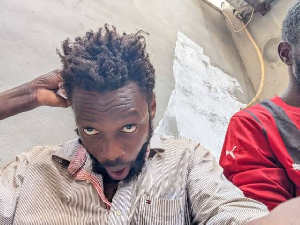 Investigative journalist, Fisayo Soyombo