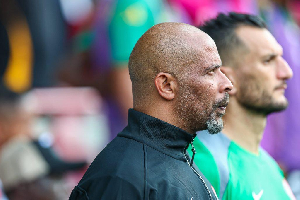
A Catholic priest, Rev, Fr Prince Chidi Philip, has advised Christians against setting fire to ancestral altars they have in their family.
According to him, despite the fact that they are redeemed from such, the altar might still contain certain powers that covers the life of other members of their family who aren't Christians.
In a post on Facebook, Philip revealed how he was confronted with a similar situation concerning his family's ancestral land.
Read his post:
Before You Destroy Your Ancestral Altar, Read This: You Destroyed the Ancestral Altar, But Who Will Face the Consequences?
In my village, Awka Etiti, my family, the Ezeani family, traditionally known as the Ezi Awka family, has historically been regarded as the custodians of the ancestral land of our forefathers. According to our family tradition, when our first ancestors came, they settled on a small piece of farmland known as Ana Awka. That land still exists in Awka Etiti today, and from time to time, people still go there to perform traditional rituals. Traditionally, only a member of the Ezeani family has the right to enter that land without seeking permission, because it is regarded as part of the ancestral heritage of our family.
After my priestly ordination, one of the elders in our kindred told me, “Now that you are a priest, it is your duty to pray over that land and destroy whatever is there so that people will stop performing rituals there.” I simply told him, “Leave that land the way it is.” It was not because I was afraid of the place. It was not because I believed I lacked spiritual authority. I believe in the power of God, and I know what my Catholic faith teaches me about Christ’s authority. But my concern was much bigger than myself. I asked myself: what about the other members of the Ezeani family? If I personally confront whatever spiritual reality people associate with that place, do all the other members of my family possess the same spiritual strength, faith and preparation to deal with whatever consequences they believe may follow? The answer is no. I may decide to confront something because of my personal spiritual conviction, but I cannot assume that everybody connected to me has the same spiritual preparation. That is why I refused to act recklessly. The land was there before I was born, and it will still be there after I die. Sometimes wisdom is not about proving how powerful you are, sometimes wisdom is knowing when not to provoke a battle that other people may have to face after you have left.
I am saying this because I want to give a small but serious teaching about the subject of destroying ancestral altars. If a spirit or deity was brought into a family through an agreement or covenant, there should also be an agreed process for ending that relationship. It shouldn’t be a one person decision and it's not about using force or blatublakas
I recently saw a video that someone sent to me asking whether a woman can destroy an ancestral altar. Traditionally, there are many cultural questions surrounding who has the authority to approach certain ancestral spaces, but that is not my particular line of ministry, so I will leave that discussion aside.
I am talking specifically about the small ancestral altar or shrine that may exist within a family compound and the practice of bringing a man or woman of God to “destroy” it through prayer and spiritual warfare. My concern is that some people treat this matter far too casually. They call a preacher, the preacher comes, prayers are shouted, the altar is declared destroyed, everybody goes home, and they believe the matter is finished. But if you genuinely believe that there is a spiritual power behind what you are confronting, then you should also ask yourself what happens after the prayer. You cannot approach spiritual warfare as if it were simply a physical object that you can break and walk away from.
You cannot bring someone to destroy what you believe is an ancestral spiritual power and then return to exactly the same lifestyle you were living before. If you believe that an ancestral practice is incompatible with your Christian faith, then your conversion must be genuine. The family needs prayer, repentance, forgiveness, faith, participation in the sacramental life of the Church and a serious commitment to Christ. It cannot be a one-day event where someone comes, shouts, breaks something and leaves. You cannot expect a lifetime of traditional spiritual practices to be resolved by one afternoon of dramatic prayers.
This is where the words of Jesus in Matthew 12: 43–45 become very important. Jesus says that when an unclean spirit leaves a person, it goes through dry places seeking rest, and when it returns and finds the house empty, swept and put in order, it brings seven other spirits more wicked than itself, and the final condition of that person becomes worse than the first. Jesus was specifically teaching about an unclean spirit and the danger of spiritual emptiness. But the principle is powerful: spiritual cleansing without spiritual occupation is dangerous. If you believe something has been removed from your family, then you must ask what has taken its place. If Christ has not truly taken possession of that family, what exactly have you accomplished? Christianity is not simply about removing demons, destroying altars or breaking ancestral objects. It is about conversion and belonging completely to Christ.
You cannot fight what you call an ancestral spirit while your own life remains spiritually empty. A family that refuses to pray, refuses to forgive, refuses to repent, refuses to live according to the Gospel and refuses to take its Christian faith seriously should not imagine that shouting at an ancestral altar is the beginning and end of spiritual warfare.
So before you bring a man of God to destroy an ancestral altar, ask yourself some serious questions. Is the family actually ready for the consequences of the decision it is making? Are they ready to live the Christian life seriously? Are they prepared to pray consistently? Are they prepared to renounce practices that contradict their faith? Are they prepared to seek reconciliation within the family? Are they prepared to allow Christ to occupy the place that they believe they are emptying? Because it is not enough to destroy something; you must also build something new.
I know some people will disagree with me, and that is fine. Some will say, “Father, just destroy it You are a priest; you have the authority!” But priesthood is not a license for spiritual recklessness. The fact that I believe in the power of Christ does not mean I should deliberately place other people in a situation I have not carefully considered. In my own case, I chose not to destroy the ancestral land simply because somebody expected me to prove my spiritual authority. The land existed before me, and I leave it in God’s hands. My responsibility is to preach Christ, to lead people to Christ and to help people understand their faith.
So, before you start talking about “destroying ancestral altars,” understand what you are actually doing. Do not turn spiritual warfare into a show. Do not assume that one dramatic prayer has solved a generational problem. Do not think that the man of God will fight everything for you and then disappear while your family continues exactly as before. And above all, remember this: the real question is not simply, “Can we destroy the altar?” The real question is, “After we believe it has been destroyed, is this family spiritually prepared to live completely under the lordship of Christ?” Because if you believe a spiritual battle is real, then you must also take spiritual preparation seriously.
If you are not spiritually prepared as a family, do not embark on the destruction of any shrine or ancestral altar. Spirits do not die; they are cast away. A man of God may come and pray, fast, and drive the spirit away, but if the family is not spiritually strong enough to keep the fire of Christ burning, that spirit may return, stronger and more wicked than before. It is not merely the man of God who destroys an ancestral altar; it is the spirituality of the entire family that ultimately breaks its influence and prevents the spirit from returning. Remember, spirits do not simply disappear, they are cast away, waiting for an opportunity to return.
ASA
General News of Monday, 24 August 2026
Source: www.mynigeria.com
Catholic priest gives reasons why Christians shouldn't burn ancestral altars because of spirits
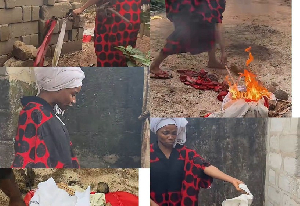 A lady burning an ancestral altar