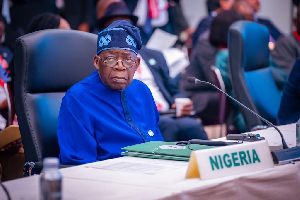
The Group Chief Executive Officer of the Nigerian National Petroleum Company Limited (NNPCL), Engr. Bashir Bayo Ojulari has stated that the Chinese partners contracted to work on the Port Harcourt and Warri Refineries will bear the cost.
Ojulari in a post on his X handle said prospective partners are covering the full cost, which keeps the process data-driven.”
Recall that the company had in May signed a Memorandum of Understanding (MoU) with two Chinese companies: Sanjiang Chemical Company Limited and Xingcheng (Fuzhou) Industrial Park Operation and Management Co. Ltd, for collaboration through a potential Technical Equity Partnership (TEP) in support of the completion and operation of the oil facilities.
This is coming after the two refineries gulped $2.39 billion (over N3.2 trillion) in rehabilitation for several years which the government had tried but failed to restore the state owned refineries.
NNPCL’s Chief Corporate Communications Officer, Andy Odeh, in a statement announcing the deal quoted Ojulari, as saying that the MoU execution serves as a significant milestone, following more than six months of concerted engagement between the technical and management teams of the NNPC and the two Chinese partners, Sanjiang and Xinganchen.
But the statement did not state how much Nigeria would pay for the new rehabilitation.
“All parties recognise mutually beneficial opportunities for the development and long-term sustainable profitability of NNPC’s refining assets in Nigeria, and the collective weight required for success,” Ojulari noted.
In the post he made on X, he said fixing a refinery takes more than pipes and pumps but takes the right partners.
“That’s the thinking behind the MoU recently signed for the Port Harcourt and Warri Refineries, now moving into a rigorous evaluation phase. We are Introducing a performance-based business partnership model, built for profitable and self-sustaining refineries.”
He added that the MoU is an agreement to explore working together, not a binding contract.
“Prospective partners are covering the full cost, which keeps the process data-driven and the vision includes expanding the petrochemicals value chain and investing in gas-based industries, including new methanol plants.”
He added that real change isn’t announced once but built through discipline applied consistently, at every stage, until it becomes how things are done.
Business News of Monday, 6 July 2026
Source: www.dailytrust.com
Chinese firms to bear full cost of refineries repairs – Ojulari
 Group Chief Executive Officer of the NNPCL, Engr. Bashir Bayo Ojulari