


At AfroTalks Kigali 2026, The voice of Pan -Africanism, Professor PLO Lumumba delivered what may become one of the most important Pan-African speeches of recent years.
His keynote address, titled "What We Don't Know About Africa," challenged one of the most enduring narratives about the continent: that Africa's primary challenge is a lack of resources, talent, or opportunity.
According to Lumumba, the opposite is true. Africa is rich in resources, culture, history, youth and ideas. Yet despite this abundance, many African nations continue to struggle with industrialisation, trade integration, economic transformation, and institutional effectiveness.
The reason, he argued, is simple. Africa's greatest deficit is not wealth but its systems. Throughout the keynote, Lumumba dismantled what he described as Africa's addiction to potential. For decades, the continent has been praised as the future, investors, governments and international reports speak of Africa's potential, but potential, he argued, is not achievement. A seed may contain potential, but unless it is planted, cultivated, protected, and organised, it remains only a possibility. The same is true for African nations.
Speaking under the theme "Beyond Borders: Building Systems for Africa's Integration," Lumumba argued that Africans have spent decades describing the continent while avoiding a more difficult task: organising it. He challenged delegates to move beyond admiration, beyond grievance, and beyond slogans into the discipline of construction.
His argument was simple but profound. Africa knows itself emotionally, culturally and historically. But Africa has not always known itself institutionally, economically, or strategically enough to transform possibility into power.
The keynote repeatedly returned to what he described as the African paradox. The continent possesses extraordinary wealth beneath its soil, yet captures only a fraction of the value generated from those resources. It has one of the youngest populations in the world, yet millions of young people struggle to find meaningful economic opportunity. It speaks passionately about unity, yet remains fragmented by disconnected markets, regulatory barriers, inefficient borders, and weak infrastructure.
Africa possesses minerals, but too often lacks the value chains that transform those minerals into industrial power. Africa possesses one of the youngest populations in the world, but youth alone does not create prosperity without education, skills, opportunity, and productive systems. Africa possesses cultural richness, but culture by itself does not build infrastructure, harmonise regulations, facilitate trade, or create jobs.
For Lumumba, the solution lies in what he called Systems Pan-Africanism. Not Pan-Africanism as sentiment, but Pan-Africanism as architecture. A deliberate effort to build the institutions, infrastructure, financial frameworks, legal systems, educational pathways, and technologies required for Africa to function as a connected continental force.
He argued that Africa's next phase of liberation must be measured not by speeches or declarations, but by systems that work. Systems that allow goods to move efficiently across borders. Systems that enable entrepreneurs to scale across African markets. Systems that connect payment networks, harmonise regulations, strengthen governance, and build trust between institutions.
According to Lumumba, Africa must urgently focus on five interconnected priorities: trade and production systems that move the continent up the value chain; infrastructure and mobility systems that connect markets and people; digital and financial systems that support innovation and commerce; governance and legal systems that create predictability and accountability; and education and knowledge systems designed to prepare Africans to solve African problems.
More importantly, he challenged the continent to move from the language of potential to the discipline of execution. Africa's future, he argued, will not be determined by what it possesses, but by how effectively it organises what it possesses. The first liberation delivered political independence. The next liberation must deliver systemic power.
AfroTalks Kigali was, in many ways, a practical demonstration of the very integration Lumumba was advocating. In many respects, AfroTalks Kigali embodied the transition Lumumba called for throughout his address: a movement away from conversation alone and toward coordinated action. A movement away from admiration of Africa's potential and toward the construction of the systems required to realise it.
If Pan-Africanism is the vision, platforms such as AfroTalks are part of the mechanism through which that vision begins to take shape.
General News of Friday, 12 June 2026
Source: www.mynigeria.com
PLO Lumumba's call for Africa's second liberation at AfroTalks Kigali
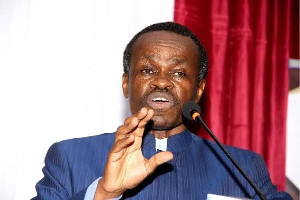 PLO Lumumba








Opinions
