Former Minister of Information and Culture, Lai Mohammed, has defended the Federal Government’s 2021 suspension of Twitter (now X), insisting that the move was aimed at safeguarding national security rather than suppressing dissent.
Mohammed made the clarification on Thursday while speaking to students at the University of Cambridge, United Kingdom, where he addressed concerns over whether the action contradicted democratic principles.
According to him, the decision was taken after careful consideration of the competing demands of freedom of expression, public interest and national security.
“Why did we suspend the operations of Twitter in Nigeria? It is a delicate balance for every government – balancing freedom of information, public interest and national security. Anytime you are faced with this… national security and public interest will come first,” he said.
He stressed that the government did not set out to silence critics, acknowledging concerns that the suspension could be perceived as a clampdown on free speech.
“I was worried that the message that would be sent out would be as if the Nigerian government is clamping down on freedom of expression. So, it was a difficult decision for me to make,” Mohammed stated.
The former minister maintained, however, that the action became necessary as certain groups, including the proscribed Indigenous People of Biafra (IPOB), were allegedly using the platform to incite unrest and threaten national unity.
“Twitter became a platform of choice for those who wanted to destabilise Nigeria… so we took the decision very painfully, but we believed that in the circumstances, national security trumps every other consideration,” he said.
Mohammed reiterated that the government did not impose a permanent ban on the social media platform but temporarily suspended its operations to allow for engagement and reforms.
“We did not ban Twitter. We simply suspended the operations to give them time to take measures to rid their platform of those elements,” he explained.
He added that the engagement with Twitter officials yielded positive outcomes, noting that the platform has since improved in its operations.
“Today, the Twitter (X) platform is by far more responsible; it is no longer a threat to national security and unity,” he said.
Speaking on the broader challenges posed by social media, Mohammed observed that the rapid evolution of digital communication has transformed the information landscape, empowering citizens to challenge official narratives and shape public discourse.
“Today, communication moves very fast… the public is no longer waiting for the government to get their information. They challenge government and even develop their own narratives,” he noted, adding that governments must respond swiftly while maintaining accuracy and consistency.
On youth participation in politics, Mohammed dismissed claims that Nigeria’s political space is dominated by older individuals, arguing that several state governors are under 60 years of age.
“We have a few governors who are probably 60 years. We have more governors who are under 50. As a matter of fact, the governor of my state in Kwara was under 60 seven years ago. The Kogi State governor is currently 48 years. The Ebonyi State governor is 51 years now. The Ekiti governor is 58 years old. Governor Zulum of Borno is 56 years old. Seyi Makinde is 58 years old and Fubara of Rivers is 51 years old,” he said.
“So, it is not correct to say that most governors in Nigeria are 60 years and above. We have a lot of them who have taken advantage of the system,” he added.
He also cautioned against what he described as a sense of entitlement among young Nigerians seeking political office.
“You cannot stay in Cambridge or Harvard and then come to Lagos or Anambra and say that you are entitled to be a senator or governor,” he said.
Mohammed concluded that leadership should be driven by service and commitment rather than privilege.
“The future of Africa will not be determined by status or privilege. It will be determined by commitment to the public good,” he said.
General News of Friday, 24 April 2026
Source: www.vanguardngr.com
Twitter Ban: We acted to safeguard unity, not silence critics – Lai Mohammed
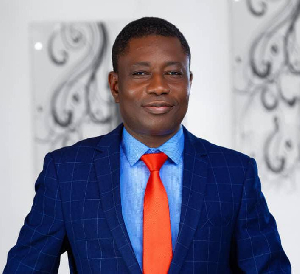
 Former Minister Lai Mohammed