


Experts have raised concerns over the huge amount budgeted for debt servicing in the 2026 Appropriation law as well as the continued implementation of the 2025 budget.
Daily Trust reports that President Bola Ahmed Tinubu last Friday assented to the 2026 Appropriation Bill, which provides for an aggregate expenditure of N68.32 trillion.
The President also signed the bill extending the implementation period for the 2025 budget from March 31, 2026, to June 30, 2026.
The N68.32 trillion budget for this year earmarks N4.799 trillion for statutory transfers and N15.8 trillion for debt service.
It allocates N15.4 trillion to recurrent expenditure and N32.2 trillion to the Development Fund for Capital Expenditure.
Additionally, the President has assented to the Appropriation (Repeal and Enactment) (Amendment) Bill, 2026, which extends the implementation period of the capital component of the 2025 Appropriation Act from March 31, 2026, to June 30, 2026.
However, reacting to the development, a member of Daily Trust Board of Economists, Prof Uche Uwaleke said the signing of the 2026 Appropriation Act by Bola Ahmed Tinubu, with a total expenditure of N68.32 trillion, represents a significant fiscal milestone and, in many respects, a more deliberate attempt to align public spending with the country’s long-term development priorities.
Giving context, he said perhaps the most notable structural shift in the 2026 budget is the allocation of N32.2 trillion, nearly 50 per cent of total expenditure, to capital projects.
On budget extension, Prof Uwaleke said, “In this context, the decision to extend the implementation of the capital component of the 2025 budget to June 2026 is both pragmatic and justified. Given that many projects are already at advanced stages of completion, this extension provides Ministries, Departments, and Agencies the opportunity to consolidate ongoing works, avoid waste, and maximize value for public expenditure.
“Abruptly terminating funding in March 2026 would have risked leaving critical infrastructure projects stranded, thereby undermining both fiscal efficiency and public confidence,” he added
Prof Uwaleke however raised concerns on the fiscal outlook saying that “The fiscal outlook is not without its concerns. The allocation of about N15.8 trillion to debt servicing is substantial and continues to crowd out resources that could otherwise be deployed to development priorities. Coupled with a budget deficit in excess of N31 trillion, this raises legitimate questions about fiscal sustainability and the growing burden of public debt.
“It is imperative that deliberate steps are taken to reduce both the size of the deficit and the overall debt stock over the medium term,”
Providing recommendations, he said “Any windfall gains from higher-than-expected oil revenues should be judiciously applied toward deficit reduction and lowering borrowing requirements, rather than expanding expenditure.
“This would not only ease pressure on public finances but also send a strong signal of fiscal discipline to investors and credit rating agencies.
“Equally important is the need to ensure that the ambitious capital allocations translate into tangible outcomes. Prioritization will be key. The FG should focus on high-impact, economically viable projects and ensure that funds are released in a timely manner to avoid implementation delays. One of the persistent weaknesses in Nigeria’s budget cycle has been the rollover of capital projects from one fiscal year to another. Breaking this cycle requires not just improved planning, but disciplined execution.
Also Speaking to Daily Trust on the development, a development expert and Executive Director at the Center for Fiscal Transparency and Public Integrity, Dr. Umar Yakubu noted that the failed promise to stop overlapping budgets makes it difficult to track budget spendings and also weakens investor confidence.
Dr. Yakubu said, “First, looking at this through the lens of transparency and institutional accountability: running concurrent budgets is a massive setback. It essentially breaks the predictable January-to-December financial cycle. When you have overlapping budgets, tracking capital releases and project execution becomes incredibly difficult for oversight agencies, civil society, and the public.
“It creates a very opaque environment in public procurement. How do you accurately monitor which project is being funded by which year’s budget? This kind of accounting ambiguity creates loopholes for the duplication of contracts, makes auditing a nightmare, and severely weakens fiscal discipline.
“You cannot build a resilient economy or attract serious investor confidence when the fundamental rules of public expenditure are constantly being shifted to accommodate administrative delays,” he said.
Business News of Monday, 20 April 2026
Source: www.dailytrust.com
2026 budget: Experts raise concerns over N15.8trn debt service
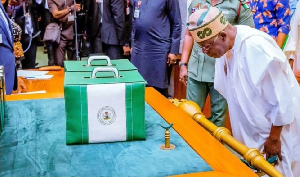 The photo used to illustrate the story








Opinions
