As Nigerians continue to grapple with rising petrol prices amid global oil market volatility, energy experts have outlined a mix of immediate, medium-term, and long-term measures the federal government can adopt to ease the burden on citizens without distorting the market.
The consensus among analysts is clear: while Nigeria cannot completely insulate itself from global crude oil shocks, it can deploy smart policy tools to moderate the impact and reduce structural inefficiencies that keep prices high.
The experts’ suggestions are coming amidst the surging PMS prices triggered by the Middle East hostilities.
At the moment, a litre of PMS is sold at N1,300 to N1,400 per litre even as crude oil prices continue to surge amidst escalating hostilities in the Middle East.
Nigeria, despite being an oil producing nation with a functional refinery operated by Dangote, has continued to report higher petrol prices, thereby worsening the cost of living in Nigeria.
A Nigerian energy expert and economist, Dr. Marcel Okeke outlined a series of urgent and structural measures the federal government can adopt to reduce the soaring cost of petrol, warning that the current crisis is largely the result of long-standing policy failures rather than external shocks alone.
Speaking on the state of the downstream sector, the expert said the persistent rise in petrol prices reflects deep-rooted vulnerabilities in Nigeria’s oil and gas framework, particularly the failure to sustain functional domestic refining capacity.
“I have told you, I believe I’ve told you before, whatever we are seeing now, it is the outcome of policies. That’s what we are seeing. Because if you check, not all oil producing countries are equally affected or affected to the same degree… so if our Nigerian refineries have been working, functioning, do you think we will have it like this? You know? So that is peculiar with us.”
The expert also faulted the implementation of the naira-for-crude policy, describing it as a missed opportunity that could have stabilised the domestic fuel market.
“If the naira for crude… had been working the way it ought to be working, we would also not get here,” he said.
Explaining how the policy is intended to function, he said local refineries are supposed to purchase crude oil in naira, thereby easing pressure on foreign exchange demand.
“Well, how it is supposed to work is that Dangote will be getting crude oil here, and local refineries will be getting crude oil here, and be paying in naira.”
However, he noted that Nigeria’s crude oil output has been heavily committed to servicing past debts, leaving little supply for domestic refining.
“But the situation now is such that even the crude that is being produced here… has been mortgaged to take loans… so that even as they are being produced, they are being used to service those loans. And that is why Dangote, instead of getting the crude here locally, is importing from other places.”
To address the crisis, the expert called for decisive executive action, including temporary policy adjustments to prioritise domestic supply.
He specifically recommended invoking force majeure — a widely recognised mechanism in the oil industry — to temporarily suspend certain obligations and redirect resources to local needs.
“You can declare what is called a force majeure… that you are unable to meet this… because of this situation… so that you can meet this local contingency now.”
He, however, expressed concern that the government has yet to adopt such an approach despite the severity of the crisis.
“But the President is not looking in that direction. He doesn’t seem to be thinking in that regard.”
The expert warned that if urgent steps are not taken, the rising cost of petrol could trigger widespread economic disruption, including business closures, reduced productivity, and worsening inflation.
Speaking with Daily Trust, Prof. Dayo Ayoade, an energy law expert at the University of Lagos, said expectations that the government can fully shield Nigerians from global price swings are unrealistic.
According to him, petrol price fluctuations are largely driven by international developments rather than domestic dynamics, including operations of the Dangote Refinery.
He said there are no easy solutions or answers in which the federal government can use to insulate Nigeria from a global crisis.
He said this fluctuating price is driven by international events and not local events in Nigeria and not with Dangote refineries.
“But having said that, an immediate thing that governments can do is to get the Nigerian midstream and downstream petroleum regulatory agency to investigate, do a competition investigation to ensure that there is no profiteering, or excessive profiteering on the part of Dangote refineries. And if the government wants to go beyond that, you could look at targeted subsidies. But if you do subsidies, you are returning us back to the stone and dark ages, which we have been very fortunate to escape from after a lot of political will and power on the part of the federal government,” he said.
He added that the government can, however, set up a price stabilisation fund to ensure that in this kind of crisis, “we would have money to limit the price. But it would be abused, as usual, in Nigeria with our limited governance.”
“So therefore, it’s not a good idea, in my view. We’ve been talking about shifting to CNG. So, we can continue to invest in CNG. That would be fine. Also, the PIA 2021 has actually told us to set up strategic reserves, petroleum reserves, So, if you set up a 60-day PMS stock reserve, that will limit some of the price shocks. Now, if we look at the more medium term, because the upstream oil is not like a tap you can turn on and turn off, if we increase oil production, it will mean we have access to more production and we can allocate to Dangote refinery and local refineries a larger amount of crude oil for their business.”
The Petroleum Industry Act 2021, he noted, already provides a framework for strategic reserves, but implementation has remained slow.
In a similar vein, Prof. Wumi Iledare, a renowned professor of petroleum economics, reinforced the argument that Nigeria operates within a global oil market system and cannot isolate itself from international price trends.
He said Nigeria cannot fully insulate PMS prices from global crude oil volatility because petroleum products are internationally traded commodities.
However, he emphasised that the government still has room to reduce the severity of price shocks through carefully designed, non-distortionary policies.
“First, tax and pricing policy flexibility can help. Temporary suspension or adjustment of VAT and selected levies during extreme price spikes can provide short-term relief without permanently distorting market signals. Second, targeted demand-side measures are more efficient than price controls. Transport vouchers for low-income commuters, support for mass transit systems, and staggered or remote work policies can reduce fuel demand pressure in the short run.”
These measures, he explained, would provide relief to vulnerable groups without undermining the broader market structure.
According to him, one of the most critical areas requiring attention is domestic supply resilience, which remains weak despite Nigeria’s status as a major oil producer.
“Third, the government should deepen domestic supply resilience. Ensuring reliable crude supply to local refineries (including Dangote), improving logistics, pipeline security, and storage capacity can reduce supply bottlenecks that amplify price spikes. Fourth, policy must focus on foreign exchange stability and market confidence. Even with local refining, exchange rate volatility influences replacement cost expectations and downstream pricing behaviour.”
Iledare further pointed out that Nigeria’s long-term strategy must go beyond petroleum if it hopes to achieve sustainable price stability.
Business News of Wednesday, 25 March 2026
Source: www.dailytrust.com
What FG can do to bring down petrol price
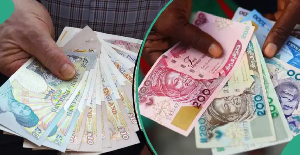
 The photo used to illustrate the story