A resurgence of coordinated attacks by Boko Haram and the Islamic State West Africa Province on military formations and civilian communities in parts of northern Nigeria has raised fresh concerns about the country sliding back into a dangerous phase of insurgency.
In the last three weeks, no fewer than 65 Nigerian soldiers have been killed in a series of assaults on military bases and surrounding communities across Borno and Katsina states.
Security sources and analysts describe the situation as a calculated campaign by insurgents to reclaim territory and reassert operational control in parts of the North-East.
Communities and military formations across parts of Borno and Katsina states have in recent weeks come under sustained assaults by Boko Haram and ISWAP.
Some of the towns attacked in Borno State were Jakana, Kawuri and Dalori in Konduga Local Government Area; Mainok in Kaga LGA; and Marte LGA.
Those killed in the attacks include Lt Col Umar Farouk, who died in the attack on Chukka military base on March 9; Lt Col SI Iliyasu, who was killed in the attack on 222 Battalion in Konduga on March 6; Major U. I. Mairiga, who died in the attack on a military base in Mayenti in Bama LGA on March 1; Lt Ismaeel Baba; and Maj Segun Amusan.
According to Amaq News Agency, a media outlet known for reporting on activities related to the Islamic State, ISWAP launched a series of attacks on military bases in Konduga LGA of Borno State.
In one of the attacks, ISWAP claimed it killed a senior military officer and two junior soldiers.
The militants also burnt down the base and 11 military vehicles.
ISWAP also claimed it seized 68 motorcycles from the base and razed a police station, killing four officers.
The group claimed responsibility for an attack on a military base in Marte LGA, killing three military officers and injuring several others.
The military base in Jakana town of Konduga LGA was also attacked by ISWAP on March 5. Three military officers died.
ISWAP attacked a military base in Mainok town of Kaga LGA, killing an undisclosed number of military officers.
The group further attacked military bases in Kawuri and Dalori communities in Konduga LGA, burning down the bases and driving away military personnel.
Meanwhile, Boko Haram claimed responsibility for the March 5 attack on Ngoshe community in Gwoza LGA of the state, where scores of soldiers and civilians were killed and over 300 abducted.
But troops, in collaboration with members of the Civilian Joint Task Force, local vigilantes and hunters’ groups, successfully recaptured the base in Ngoshe town, killing many Boko Haram terrorists.
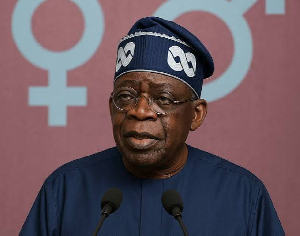
Following the attacks, President Bola Tinubu on Thursday convened a security meeting with service chiefs at the Presidential Villa, Abuja.
Details of the meeting, which lasted for almost two hours, were not made public.
Why attacks on military bases have increased
Speaking after a meeting with Tinubu, the Minister of Defence, Christopher Musa, attributed the surge in attacks to terrorists’ belief that dying during warfare would grant them passage to paradise, particularly during the holy month of Ramadan.
“As usual with the terrorists during the Ramadan period, they believe that when they die, they are going to heaven. So, they are ready to commit any offence or get killed because they feel they will be rewarded,” he said.
Musa disclosed that the military had adjusted its strategy and was making progress in the fight against insurgency.
“But we have adjusted our strategies. In the past few days, we have taken over those locations, killed their commanders and seized their assets. We will continue to do more. Mr President has approved many measures that are already in the pipeline, and we are working together as a team,” he added.
However, security sources and residents of the affected communities stated that fighters linked to Boko Haram and ISWAP were targeting military formations to weaken government presence and create operational space in the reclaimed areas.
Such territorial influence, Sunday PUNCH learnt, is central to the groups’ long-term objective of entrenching their extremist ideology and rebuilding the kind of enclaves they once controlled in parts of the North-East at the height of the insurgency.
A security expert and fellow of the Institute of Security Nigeria, Chigozie Ubani, said the insurgents were determined to reclaim and control territories as part of their jihadist campaign.
“Their target is to terrorise, maim and displace people. Once they displace them, of course, they occupy the space. So, for as long as that is not achieved, they can only retreat and come back,” he added.
According to him, the strategy of repeated raids on communities and military formations is aimed at forcing residents to flee, thereby creating space for militants to establish influence in abandoned areas.
Ubani further noted that the militants’ goal goes beyond sporadic attacks, stressing that their broader ambition is to entrench extremist control over territories where they can enforce their interpretation of religious authority.
“Their goal is to take over our territories. When they take over, everybody there will submit to their religious authority. That’s what it is,” he added.
On February 3, terrorists attacked the Muslim-dominated Woro community in Kaiama LGA of Kwara State, killing no fewer than 176 people and abducting close to 200 residents.
The attack came days after the terrorists wrote to the community to preach their extremist ideology, which was rejected by the leadership of the town.
The consequence of the community’s rejection was death, abduction and destruction.
“That they are attacking Muslims does not matter. What they want is control because these moderate Muslims are not giving them what they want. So, they hit everybody.
“They want to radicalise Islam. They want to be in control. That is the agenda. So, they have to sustain it. They don’t give up. They won’t give up unless you give them firepower and take control of your own territory,” Ubani added.
He urged the Federal Government to concentrate on protecting and reclaiming territories.
“Leave them in their territory, but take control of your own territory. So, if we believe that this geographic space called Nigeria is ours, we have to fight these insurgents,” he stated.
Residents of Borno State who also spoke with Sunday PUNCH expressed concern over what they described as an “intentional effort towards territorial control” by insurgents as the rationale for targeting civilian populations and military formations.
Locals and security agents in the state analysed the pattern of the attacks and concluded that the terrorists were more concerned about domination of territory.
“I think what they want is control. They never hide it; you can confirm it from the series of attacks and the videos they mostly release. Take a look at what happened in Ngoshe last week; they killed a number of people and, after that, released a video where they said themselves that they wanted to make the town their province,” a leader of one of the communities in Gwoza LGA, Modu Hassan, said.
He explained that the activities of the terrorists were un-Islamic.
“Let me say this clearly: this is not Islam, even if they use it as an umbrella to cover themselves. Killing and displacing people has no root in Islam,” Hassan added.
Killing of military personnel
Top security sources told Sunday PUNCH in confidence that the killing of troops by insurgents is rooted in several factors.
One of the operatives said, “Here in the North-East, the entry and exit points of most communities are manned by soldiers. This means that we are an obstruction to them. There is no way for them to go and cause mayhem without passing through us. That is why they always want to come for us first.
“It is a pattern. They mobilise en masse, hit a base, and when they succeed, they gain entry. In most cases we repel them. Let me add that the recent attacks were mostly targeted at resettled communities — those communities that were initially under their control.”
But Brig. Gen. George Emdin (rtd) attributed some of the military’s setbacks in the fight against terrorism to internal sabotage, warning that “enemies within” often pose a greater threat than those on the battlefield.
According to him, the presence of moles leaking operational details to terrorists has made counter-terrorism operations more difficult for the troops.
“There are many saboteurs, and the enemies from within are always the most difficult to fight,” he said, recalling the killing of a senior military officer last year.
Emdin alleged that the officer had initially escaped an attack but was later tracked and killed after sensitive information about his location and movements was leaked.
“How can that happen if there are no saboteurs in the system? The enemies within are worse than those outside. That is our problem,” he said.
The retired military officer stressed that success in warfare depends on several strategic factors, particularly timing, noting that once operational plans and movement schedules are exposed, even a small group of attackers can successfully carry out an ambush.
“In warfare, there are many things you consider to maximise your strategy. Some of them seem small but are very important, and one of them is timing. If you know the timing of your adversary, you are as good as winning the war,” he said.
Emdin added that when insiders disclose operational timing and plans to adversaries, it leaves troops vulnerable to attacks regardless of their numerical strength.
Political undercurrents
Meanwhile, security personnel knowledgeable about the situation also linked it to political undercurrents, suggesting that the renewed violence might also be aimed at undermining public confidence in the government ahead of the 2027 general elections.
A senior officer of the Department of State Services told Sunday PUNCH that the insurgents often exploit politically sensitive periods to intensify attacks, noting that a similar pattern was observed in the run-up to the 2015 elections during the administration of former President Goodluck Jonathan.
According to him, the frequency of attacks places additional pressure on security agencies, as fresh incidents continue to emerge even as operatives struggle to contain ongoing threats across the region.
“All these attacks are to make the government unpopular. As security operatives are trying to address these issues, another one is coming up, so they are overstretched.
“They did the same thing in 2015 during the time of former President Goodluck Jonathan. What is going on now is similar to what happened back in 2014 and 2015,” the source said.
Speaking with Sunday PUNCH, Brig. Gen. Bashir Adewinbi (retd.) also attributed the recent surge in attacks to political manoeuvres, arguing that some incidents were orchestrated to portray the government as ineffective.
Adewinbi said the insecurity is often amplified by the politics of “do-or-die,” with certain actors exploiting attacks to send negative signals about the administration of President Bola Tinubu.
He noted that while the military continues to apply effective strategies against insurgents, the lack of cooperation from local communities undermines efforts.
“The bottom line is that some of the attacks are man-made; they are politically motivated,” he said.
He urged Nigerians to support security forces with actionable intelligence and emphasising that political change should only come through the ballot box, not violence.
Change of tactics needed
A retired brigadier geenral, Peter Aro, called for a change in tactics by the military, saying the spike in attacks reflects both the adaptability of insurgent groups and the urgent need for security forces to modernise their response.
He noted that insurgents’ ability to overrun positions and even kill commanding officers points to gaps in preparedness, equipment distribution, intelligence, and battlefield adaptation.
Aro stressed the psychological aspect of the conflict, warning that reports of soldiers abandoning positions indicate problems with morale and confidence.
“What we are witnessing is not merely a resurgence of terrorist activity, but a reflection of how adaptive insurgent groups can be when state responses fail to evolve at the same pace.
“Over the years, Boko Haram, its splinter factions, and other terrorist groups have shifted tactics: from large territorial seizures to more mobile and coordinated attacks on military bases and vulnerable communities.
“When insurgents are able to overrun positions and even kill commanding officers, it suggests not only boldness on their part but also gaps in preparedness, equipment distribution, intelligence, and battlefield adaptation. Insurgencies thrive where the state appears predictable, slow to adjust doctrine, or constrained by institutional inertia.
“Another dimension of the problem lies in the mismatch between the nature of the war and the tools often deployed to fight it. Asymmetric warfare demands flexible tactics, well-equipped small units, effective surveillance, counter-IED capabilities, and rapid response systems.
“If the Table of Equipment and operational doctrine remain influenced by conventional warfare assumptions, soldiers may find themselves confronting insurgents who are lighter, more mobile, heavily armed, and increasingly innovative in their use of terrain and surprise. Training programmes must therefore reflect these realities so that troops are properly prepared for the type of engagements they encounter daily in the forests, villages, and open terrains of the North-East,” he said.
The Chairman of Civil Society Organisations in the North-East, Ahmed Shehu, said the absence of accountability was responsible for the assaults.
He called for the deployment of technology to address communication gaps between agencies and to prevent further losses on the part of Nigerian troops.
“We should be talking about technology. It is an area the military must look towards to prevent the loss of our men. Such technology could be used in terms of inter-agency communication and in the war,” he said.
The Director, Defence Media Operations, Maj. Gen. Michael Onoja, said the miliary was working to curtail the attacks.
“Definitely, actions will be implemented to curtail these attacks. The results will soon show,” he said in a chat with one of our correspondents.
General News of Sunday, 15 March 2026
Source: www.punchng.com
Why B’Haram, ISWAP are after military bases
 ISWAP, Boko Haram