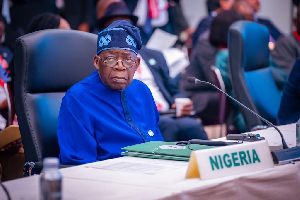
Developing economies under the umbrella of the Intergovernmental Group of Twenty-Four (G-24) have raised fresh concerns over mounting debt burdens, shrinking fiscal space, and structural financing pressures threatening sustainable growth across Africa.
The warning was delivered at the G-24 Technical Group Meetings in Abuja, where policymakers, central bankers, and finance ministers examined the growing strain debt servicing is placing on national budgets in emerging markets.
In her opening remarks, Iyabo Masha, Director and Head of the G-24 Secretariat, disclosed that external debt service payments by developing countries reached $487 billion in 2023.
She noted that rising debt costs are crowding out critical spending on infrastructure, education, healthcare, and climate resilience.
According to her, many lower-rated economies continue to face elevated borrowing costs despite some easing in global financial conditions.
Daily Trust reports that Nigeria’s total public debt reached N152.40 trillion ($99.66 billion) as of June 30, 2025, driven by increased domestic and external borrowing for fiscal deficits.
It is projected that the debt profile would reach N160 trillion for the fourth quarter of 2025 amidst fresh borrowing by the federal government and the sub-nationals with stakeholders calling for caution over excessive borrowings.
The G-24 is however warning that high debt service obligations are compressing fiscal space at a time when countries need to invest in job creation, social protection, and long-term productivity.
Masha said lower-rated countries still face high borrowing costs despite some easing in global financial conditions, and warned policymakers to watch key risks such as renewed inflation shocks, sudden capital outflows, trade fragmentation, prolonged debt restructuring, and declining human capital.
She said weakening education and health outcomes in some low-income countries could reduce long-term productivity and fiscal sustainability.
She explained that the theme of the 2026 meeting focuses on promoting sustainable, inclusive, and job-rich economic transformation and urged policymakers to adopt strong macroeconomic frameworks, expand domestic revenue, invest in infrastructure and human capital, support climate-related investments, and deepen regional trade partnerships.
According to her, these policies directly affect everyday life for citizens across major cities in developing countries and will determine whether economies can move from slow growth to lasting development.
Millions shut out due to slow, expensive cross-border payments – CBN
The Central Bank of Nigeria (CBN) expressed concerns over expensive, slow and distorted cross-border payment systems which are hindering financial inclusion and economic opportunities for millions of citizens in developing countries.
CBN Governor, Olayemi Cardoso while speaking at the meeting stated that global payment systems still pose serious challenges for individuals and small businesses trying to participate in international trade and finance.
The G24 group comprises many emerging economies in Africa, Asia, and Latin America. Africa – Algeria, Congo, Cote d’Ivoire, Egypt, Ethiopia, Gabon, Ghana, Guatemala, Kenya, Morocco, Nigeria, South Africa. Asia – India, Iran, Lebanon, Pakistan, Philippines, Sri Lanka, Syria.
Latin America – Argentina, Brazil, Colombia, Ecuador, Guatemela, Mexico, Peru, Trinidad and Tobago, Venezuela.
The CBN governor disclosed that remittance corridors currently cost more than six percent on average, settlement can take several days, and strict compliance requirements often shut out micro, small, and medium-sized enterprises.
“If people cannot move money easily, affordably, and safely, across towns, borders, and continents, then they cannot fully participate in modern economic life,” he said.
Speaking further, Cardoso said cross-border payments have become central to the global financial system, and inefficiencies in them translate into higher costs for remittances, foreign exchange transactions, and trade settlements for developing economies.
He said improving these systems is not just a technical matter but a major economic and development priority because payment channels now play a key role in global financial stability.
He explained that digital innovation offers a major opportunity to solve these problems.
He said modern payment infrastructure, instant payment systems, interoperable digital platforms, distributed ledger technology, and strong digital identity systems can lower costs, speed up transactions, improve transparency, and widen access for households and small businesses that have long been excluded from formal finance.
The CBN Governor noted that Nigeria’s experience shows that such progress is possible with deliberate policy steps.
According to him, the CBN has modernised its regulatory and supervisory systems, strengthened oversight of payment infrastructure providers, improved rules for agent banking to address money-laundering risks, and enhanced interoperability across payment channels.
CBN’s reforms
He disclosed that the apex bank is finalising a new Payment System Vision 2028 developed with industry stakeholders to promote innovation, strengthen system resilience, and increase financial inclusion. He said improving cross-border payments is a major part of that plan and noted that Nigeria has already made measurable progress.
He explained that the CBN simplified Know-Your-Customer and anti-money-laundering requirements for low-value cross-border transactions to encourage participation in the Pan-African Payment and Settlement System, which has reduced paperwork and made intra-African trade payments easier for Nigerian small businesses.
He also said the bank’s regulatory sandbox allows fintech companies to test cross-border payment solutions under supervision, so innovation can grow without threatening financial stability.
The governor said Nigeria launched its National Payment Stack in June 2025, a real-time payment platform built on ISO 20022 messaging that supports multi-currency and cross-border transactions.
He added that stronger anti-money-laundering rules aligned with global standards now require strict dual screening of international transactions to reduce risks.
Bank targets $1bn annual remittance
He said reforms carried out with local and international partners in 2024 removed long-standing obstacles to remittances and opened new payment channels.
These measures include the Non-Resident Nigerian Ordinary Account for remittances and family support, the Non-Resident Nigerian Investment Account for diaspora investments, and the Non-Resident BVN platform that allows Nigerians abroad to open and manage accounts digitally. According to him, remittance inflows now average about 600 million dollars monthly, and the country expects to reach one billion dollars per month soon.
Cardoso also said Nigeria has been active globally, including through fintech discussions at the International Monetary Fund meetings
He said digital financial reforms have already brought millions of Nigerians into the formal financial system and improved confidence and integrity in the market, adding that extending these benefits across borders is the next step for inclusive growth.
He cited global experiments such as multi-central-bank digital currency platforms as proof that real-time local-currency settlement is becoming more realistic, especially for developing economies seeking a more balanced international payment system.
Cardoso said Africa’s experience with PAPSS shows how regions can build their own payment infrastructure that reduces reliance on foreign correspondent banks, lowers costs, and enables instant local-currency transactions.
He noted that the system is strengthening regional value chains, supporting small businesses under continental trade agreements, and improving economic resilience through wider use of local currencies.
He cautioned that digital payments also come with risks, including currency substitution, foreign-exchange volatility, systemic risks from non-bank payment providers, and regulatory gaps. Without coordination, he warned, digital cross-border systems could become fragmented, increase costs, and weaken the ability of developing countries to protect their monetary systems.
He said central banks must therefore remain at the centre of payment reforms, noting that their responsibilities include protecting financial stability, modernising settlement systems, operating key financial infrastructure, and maintaining public trust.
In developing countries, he added, central banks must also support job creation, productive investment, and real-sector growth through coordinated monetary, fiscal, and financial policies.
Also in his address, the Minister of Finance and Coordinating Minister of the Economy, Mr. Wale Edun, also addressed the meeting, saying the country is pursuing a domestic revenue drive built on efficiency, transparency, and technology.
He said Nigeria plans to raise its tax-to-GDP ratio to 18 per cent in the medium term through reforms that include modernised tax laws, improved compliance systems, automation, and initiatives such as the National Single Window.
He added that measures like RevOp, Federal Treasury receipts, a Central Billing System, and stopping direct deductions by payment portals are meant to build a fair and growth-supporting revenue structure.
Edun said stronger South-South cooperation is necessary in a changing global environment, noting that trade among developing countries remains underused despite its potential to stabilise supply chains and diversify markets. He said Africa’s continental free trade arrangement provides an opportunity to build regional value chains in sectors such as food, pharmaceuticals, digital services, and energy, which can help countries withstand global shocks and improve competitiveness.
Business News of Friday, 20 February 2026
Source: www.dailytrust.com
Nigeria, others burdened with debt crisis - G-24 Group
 The photo used to illustrate the photo