Nigeria has purchased at least 1.37 million electricity meters in China under the $500m World Bank-funded Nigeria Distribution Sector Recovery Programme, as the Federal Government steps up efforts to close a metering gap affecting millions of electricity consumers.
This was according to a restructuring paper released by the bank on its website and obtained by Saturday PUNCH on Friday. The World Bank’s restructuring paper shows that a contract for the first batch of 1.44 million meters was signed in August 2024 and became effective in February 2025.
The bank noted, “The contract for the procurement of the first batch of 1.44 million meters was signed in August 2024, and the contract has been effective since February 2025.
“To date, 408,000 meters have arrived in Nigeria, of which 130,000 meters have been installed. Almost all meters in this first batch (95 per cent) have been manufactured, and they are either in China or in transit to Nigeria.”
Ninety-five per cent of 1.44 million amounts to 1,368,000 meters. Rounded up, this translates to about 1.37 million units already manufactured in China and either shipped or awaiting shipment to Nigeria under the loan programme.
Saturday PUNCH observed that the Nigeria Distribution Sector Recovery Programme was approved on February 4, 2021, with a total commitment of $500m. According to the document, “The Programme Development Objective is to improve financial and technical performance of the electricity distribution companies.”
A disbursement summary in the report shows that of the $500m commitment from the International Bank for Reconstruction and Development, only $69.09m had been disbursed, leaving $404.72m undisbursed, representing a 13.82 per cent disbursement rate as of the reporting date.
The programme is structured as a hybrid operation combining a $250m Program-for-Results component and a $250m Investment Project Financing component. The IPF component funds bulk procurement of meters and meter data management systems to reduce the metering gap, alongside a Data Aggregation Platform, technical assistance, and capacity building.
The bank noted that “currently close to 60 per cent of electricity customers connected to the national grid are unmetered and closing the metering gap is a top priority of DisCos that suffer from significant losses, the majority of which come from non-technical issues.”
The restructuring paper also links the programme to the Presidential Metering Initiative approved in November 2023, which aims to deploy over five million smart meters by 2027 and reduce Aggregate Technical, Commercial and Collection losses from over 40 per cent to 20 per cent within three years.
According to the document, “The DISREP Program supports the PMI by procuring an additional 3.2 million meters.” It was disclosed that Nigeria has over seven million unmetered customers and an estimated three million cascading connections, bringing the total metering gap to about 10 million customers.
Beyond the first 1.44 million meters, the bank stated that 217,000 domestically procured smart meters are expected to have contracts signed by the end of January 2026, while procurement of a second batch of 1.5 million smart meters was launched on January 12, 2026.
The restructuring introduces a new intermediate results indicator on the number of people provided with direct access to electricity through new connections. The bank estimates that, based on an average household size of 4.1 persons, the 3.2 million meters to be installed under the programme will provide access to about four million people.
The Association of Meter Manufacturers of Nigeria earlier kicked against the award of meter contracts to Chinese firms despite in-country production capacity. The association said it supports President Bola Tinubu’s ‘Nigeria First Policy’, which bans the importation of goods that can be produced locally.
According to AMMON, a group of 40 certified local meter manufacturers and assemblers, the policy will unlock the full potential of Nigerian industries. In a statement, the President of AMMON, Durosola Omogbengun, expressed concerns about contracts with Chinese firms, citing slow delivery and high costs, and urged the government to prioritise local manufacturing to stimulate industrial growth and job creation.
AMMON urged the government to fully operationalise the policy in the Distribution Sector Recovery Programme and Presidential Metering Initiative, adopting National Competitive Bidding as the default mechanism to ensure local content inclusion.
The PUNCH earlier reported that only about 200,000 smart meters have been installed so far under the Federal Government’s $500m World Bank-supported Distribution Sector Recovery Programme, DISREP, with officials admitting on Wednesday that the deployment pace remains slow.
At a press briefing in Abuja led by the Director-General of the BPE, Ayodeji Gbeleyi, stakeholders, including the Nigerian Electricity Regulatory Commission, the Ministry of Power, the National Mass Metering Initiative, and managing directors of DisCos, reviewed progress and addressed public concerns around funding and deployment.
Gbeleyi explained that DISREP aims to roll out 3.2 million smart meters over four years through international and local competitive bidding. Phase one involved importing 1,437,500 meters, both single- and three-phase, with about 700,000 already in the country, while local manufacturers are supplying another 217,000 meters. Phase two will see an additional 1.55 million meters imported.
However, the Chief Technical Adviser to the Minister of Power, Adedayo Olowoniyi, described the installation numbers as “not an encouraging statistic,” noting that just 150,000 to 200,000 meters had been deployed so far.
He said the programme was critical to fixing the distribution segment, widely regarded as the weakest link in the power value chain.
Business News of Saturday, 14 February 2026
Source: www.punchng.com
Nigeria buys 1.37m Chinese meters under $500m W’Bank loan
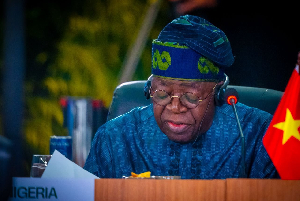 President Bola Ahmed Tinubu