The Dangote Petroleum Refinery has shifted to processing lighter crude oil in a strategic move to minimise production disruptions arising from the prolonged unavailability of its Residual Fluid Catalytic Cracker, according to a new report by global commodities intelligence firm Kpler.
The report, obtained by our correspondent and titled “Dangote H1 2026 Outlook: RFCC challenges keep runs capped and ramp-up uneven”, said the refinery has increasingly processed lighter crude grades with API gravity of about 37–39 since the fourth quarter of 2025, allowing it to preserve feedstock availability for key CDU-linked secondary units and sustain output of gasoline and middle distillates.
Kpler noted that the shift has helped keep units such as the Continuous Catalytic Reformer, isomerisation, and hydrocracking units operational, thereby reducing the risk of major supply disruptions at a time when the 200,000-barrel-per-day RFCC remains offline.
According to the report, the lighter crude slate has played a critical role in stabilising operations, even as repeated outages at the RFCC continue to cap overall refinery runs and slow the pace of ramp-up.
The report read, “To minimise the impact of RFCC unavailability, the refinery has shifted toward a lighter crude slate (API gravity around ~39–37 since Q4 2025), helping preserve feed availability to CDU-linked secondary units (CCR, Isom, HCK) and reducing the risk of major disruptions to gasoline and middle distillate output. Looking ahead, we expect refinery runs to hover around 300–320 kbd into February, with the base case assuming RFCC ramp-up begins from the third week of February.”
Despite the operational constraints, Dangote Refinery has continued producing gasoline through alternative conversion units, supported by increased imports of gasoline blending components.
Kpler estimates that gasoline imports into the refinery rose to about 45,000 barrels per day in January, helping to maintain supply levels amid limited internal conversion capacity.
The report added that crude runs in January were estimated at between 280,000 and 300,000 barrels per day and are expected to remain around 300,000 to 320,000 barrels per day into February, reflecting the ongoing impact of RFCC downtime.
It added, “Dangote’s operational outlook remains uncertain as the RFCC restart has been pushed to 10 February and could slip further. The 200 kbd RFCC remains the key bottleneck, keeping runs capped after repeated outages since April 2025. January crude runs are estimated at ~280–300 kbd and are likely to stay around 300–320 kbd into February, with gasoline output partly supported by imported blendstocks. Overall stabilisation remains months away, and RFCC reliability risks should keep the gasoline ramp-up constrained into H1 2026.
“Dangote Refinery’s operational status continues to show mixed signals, with the key uncertainty centred on the duration of RFCC downtime and the refinery’s ability to sustain a stable ramp-up. While IIR initially expected the RFCC to restart in early February following maintenance that began in December, the start-up has now been pushed to 10 February. A short one-week CDU maintenance is also expected in early February. Market sources indicate ongoing issues within the RFCC work scope, which increases the risk of further timeline extensions, given the complexity and reliability sensitivity of RFCC units.
“In January, crude imports have slowed materially, while LSSR exports have increased in frequency, averaging around ~120 kbd month-to-date. Based on our refinery model, January crude runs are estimated at ~280–300 kbd, with implied production of approximately ~95 kbd of gasoline and close to ~120 kbd of middle distillates.
“Despite reduced operating rates and RFCC maintenance, Dangote has continued producing gasoline through other units such as CCR and isomerisation, supported by increased imports of gasoline and blending components. Dangote’s gasoline imports in January are estimated to have surged to around ~45 kbd, helping sustain supply even as internal conversion capacity remains constrained.”
While maintenance on the RFCC began in December, market sources cited by Kpler said the restart has now been pushed to February 10, with lingering technical issues raising the risk of further delays.
A short maintenance on the crude distillation unit is also expected in early February. Looking ahead, Kpler said refinery runs could average about 350,000 barrels per day in the first quarter of 2026 and around 400,000 barrels per day in the first half of the year, assuming a gradual RFCC ramp-up from the third week of February.
Under this scenario, gasoline production could average about 120,000 barrels per day in the first quarter and rise to roughly 150,000 barrels per day in the first half of 2026.
However, the firm warned that risks remain tilted to the downside, stressing that refinery stabilisation is still months away as RFCC reliability remains the key swing factor.
“Refinery stabilisation is still likely months away, as RFCC reliability remains the key swing factor. This type of extended ramp-up is common for mega-refineries and can take 24–36 months to reach steady operations. Dangote is following a familiar pattern seen at other large start-ups, where critical conversion units often delay normalisation, meaning a sustained ramp-up is unlikely in the near term,” it concluded.
The Dangote Petroleum Refinery, Africa’s largest single-train refinery, is expected to play a pivotal role in reducing Nigeria’s reliance on imported refined petroleum products and easing pressure on foreign exchange. Analysts note that extended ramp-up periods are common for mega-refineries globally, with full operational stability often taking between 24 and 36 months, particularly where critical conversion units face reliability challenges.
Business News of Monday, 26 January 2026
Source: www.punchng.com
Dangote switches to lighter crude amid cracker downtime
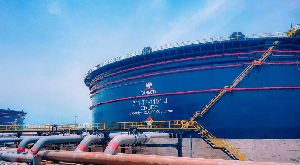 Dangote Refinery