Stakeholders on Tuesday warned that Nigeria is sliding deeper into a cycle of “debt without development,” raising concerns that the country’s $152bn debt burden is failing to produce visible improvements in the lives of young people, businesses and climate-vulnerable communities.
The warnings were issued at a national dialogue themed Youths, Climate Change, and Nigeria’s Development Crisis, with the agenda focused on the “True Cost of Debt.”
The event was organised by the Centre for Inclusion and Social Development (CISD) in partnership with the Heinrich Böll Foundation.
Speaking at the dialogue, the Executive Director of CISD, Mr Folahan Johnson, said “the true cost of Nigeria’s rising debt is not in spreadsheets, but in the lives of vulnerable citizens.”
He said, “our borrowing spree is undermining education, health care and business productivity,” adding that “every loan taken without accountability becomes a burden on future generations.”
He noted that Nigeria’s mounting liabilities are already visible in the rising number of out-of-school children, failing health systems and the increasing population of young Nigerians forced into street survival.
He explained that the dialogue was convened to spark public action around the economic consequences of debt accumulation and the need for stronger transparency from government institutions.
A representative of the Heinrich Boll Foundation, Mr Ikenna Donald Ofoegbu, said Nigeria’s debt servicing level, now consuming an estimated 60 to 70 percent of government revenue, is squeezing out funds needed for infrastructure, agriculture and small businesses.
He said, “The 27 per cent Monetary Policy Rate has pushed lending completely out of the reach of ordinary Nigerians,” noting that “a N10 million loan now costs nearly double that amount in repayment.”
He added that climate-driven shocks, such as the 2022 floods that caused losses estimated at $9.12bn continue to worsen the country’s fiscal position without corresponding investments in resilience.
Delivering the keynote, Mr Joseph Idahosa Amenaghawon said, “Nigeria is trapped in a disturbing pattern where borrowing keeps rising but development outcomes remain stagnant.”
He said “we are experiencing debt without development because loans are going into recurrent spending instead of transformative capital projects.”
Business News of Wednesday, 10 December 2025
Source: www.dailytrust.com
Nigeria’s $152bn debt not translating to development
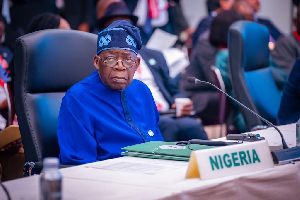
 The photo used to illustrate the story