


Nigeria’s public debt could approach N200 trillion following President Bola Tinubu’s request for additional foreign loans, raising concerns about debt sustainability, rising repayment obligations and funding for essential public services.
Tinubu has asked the Senate to approve a supplementary external borrowing plan comprising $20.52 billion and €1.05 billion for 2026–2027.
The proposal comes as Nigeria’s debt stock continues to climb, putting pressure on government finances.
Tinubu seeks Senate approval for loans
In a letter addressed to Senate President Godswill Akpabio and read during Tuesday’s plenary, Tinubu explained that the proposed borrowing would finance critical infrastructure and development projects.
The funds would support electricity, transportation, healthcare, agriculture, education, water supply, security and employment generation.
According to the President, the projects would cover all 36 states and the Federal Capital Territory.
Akpabio referred the request to the Senate Committee on Local and Foreign Debts for consideration, directing it to report within one week.
He also indicated that the proposal featured in the government's previously approved borrowing programme.
Nigeria's public debt approaches N200 trillion
Figures from the Debt Management Office (DMO) show that Nigeria’s public debt increased to N166.79 trillion in June 2026, compared with N159.35 trillion in March.
The figure represents a substantial increase from N87.38 trillion recorded in June 2023.
Domestic borrowing accounted for N91.59 trillion, while external obligations stood at N75.20 trillion.
Using illustrative exchange rates of N1,500 per dollar and N1,750 per euro, the proposed loans would amount to approximately N32.62 trillion.
If entirely additional to existing obligations, the borrowing could push Nigeria’s debt stock to approximately N199.41 trillion.
However, this remains a hypothetical calculation rather than an official forecast, particularly because some financing may already fall within approved borrowing plans.
IMF warns about rising debt costs
The International Monetary Fund (IMF) estimated that interest payments would consume 53.7% of Federal Government revenue in 2026, compared with 53.2% in 2025.
The projections highlight the pressure debt servicing places on resources available for healthcare, education, infrastructure and security.
The IMF also identified weak revenue mobilisation and potential spending overruns as fiscal risks, while assessing Nigeria’s sovereign debt stress risk as moderate.
Analysts highlight foreign loan repayment risks
Vice Chairman of Highcap Securities, David Adonri, warned that foreign-currency borrowing exposes Nigeria to exchange-rate volatility.
A weaker naira could increase the domestic cost of servicing dollar- and euro-denominated obligations.
Although infrastructure investment could stimulate economic growth, poorly executed projects risk leaving taxpayers with substantial repayment obligations without corresponding benefits.
The Senate’s review will therefore be crucial in clarifying whether the loans represent fresh commitments and how the government intends to manage repayment costs.
Ultimately, the proposed borrowing will be judged by its contribution to infrastructure, employment and public services, alongside its implications for Nigeria’s long-term fiscal stability.
Business News of Thursday, 29 October 2026
Source: www.legit.ng
Tinubu seeks fresh $21.7 billion loans as Nigeria’s debt nears ₦200 trillion
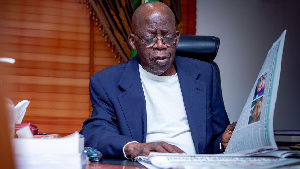 President Bola Ahmed Tinubu


Opinions
