Business News of Wednesday, 4 February 2026
Source: www.dailytrust.com
Nigerians to partly bear cost of electricity subsidy — FG

The Budget Office of the Federation says it is working on an adoptive framework to share the cost of electricity subsidies across the federation so that the burden is not laid on the federal government alone.
Speaking on Monday in Abuja at a training for staff of Ministries, Departments and Agencies (MDAs) on the 2026 post-budget preparation using the Government Integrated Financial Management Information System, Director-General, Budget Office, Tanimu Yakubu, stated that if Nigerians want stable power, they must be ready to pay for it.
“If we want a stable power sector, we must pay for the choices we make. When tariffs are held below cost, a gap is created. That gap is a subsidy. And a subsidy is a bill. In 2026, we will stop pretending that this bill can be left to the Federal Government alone—especially where the policy choice or the political benefit is shared across tiers of government.
“The president’s directive is to invoke the electricity-sector legal framework to make burden-sharing practical and transparent. This means subsidy costs must be explicit, tracked and funded—so they do not return as arrears, liquidity crises or hidden liabilities in the market.
“It also means that if any tier of government chooses affordability interventions, the funding responsibilities must be clear, agreed and enforceable. This is not punishment. It is alignment. When everyone carries a fair share of the cost, everyone also has an incentive to support cost-reflective efficiency, targeted protection for the vulnerable and a power market that can actually deliver,” the DG stated.
Tanimu, who was represented by the Director, Expenditure, Budget Office, Mr Yusuf Muhammed, told 2026 budget planners to make subsidy-related costs visible in their planning and submissions, urging them not to push liabilities into the market as arrears or unfunded commitments.
“Support transparent, rules-based attribution and financing of affordability decisions,” he charged.
Tanimu also decried that rollover budgeting and fragmented project lists have weakened execution, adding that such policy reduces clarity, dilutes accountability and creates hidden obligations, noting that the 2026 budget has corrected the anomaly.
“Rollover budgeting and fragmented project lists have weakened execution. They reduce clarity. They dilute accountability. They create hidden obligations.
“The 2026 Budget corrects this. It is built as one coherent implementation framework. In line with Mr President’s directive, the approach is to consolidate commitments into a single, visible pipeline and manage them as a disciplined programme of delivery. This is what I call the ‘single-train’ approach,” he said.
Back story
Nigeria’s electricity subsidy has been an issue of debate for a long period of time now.
Experts say although it provided affordable power for consumers, but it has also created massive fiscal burdens and accumulated debt
The federal government has subsidised electricity since the pre-privatisation era under the National Electric Power Authority (NEPA), later the Power Holding Company of Nigeria (PHCN). Tariffs were kept artificially low—often below 30% of true costs—to shield households and businesses from high generation expenses driven by gas shortages, transmission losses, and currency volatility.
Post-2013 privatisation into generation (GenCos) and distribution companies (DisCos), the Nigerian Bulk Electricity Trader (NBET) bridges the gap between cost-reflective rates and approved tariffs, with the government funding shortfalls.
Unpaid subsidies have risen into trillions of naira in arrears: N1.94 trillion by the end of 2024, N1.98 trillion over the 12 months to late 2025, and monthly outflows hitting N200 billion by early 2026.
These debts owed throughNBET to GenCos and DisCos—stem from frozen tariffs since late 2022 amid naira devaluation and gas price hikes, crowding out infrastructure investment and fuelling grid collapses. Q1 2025 alone saw N536 billion spent, covering 59 per cent of NBET bills.
As a result, the federal government in April 2024 began a phased subsidy withdrawal with the introduction of the higher tariff for Band A customers (20+ hours supply) at N209-N225/kWh, which helped reduce its obligations by about 35 per cent.
What govt has done so far
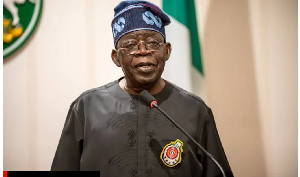
Under the government of President Bola Ahmed Tinubu, the government said it is making frantic efforts to clear subsidy debts.
Subsequently, it launched a major bond programme in late 2025 to tackle power sector debts, issuing its first tranche of bonds in January 2026 to settle verified arrears to GenCos and gas suppliers.
Under President Tinubu’s Presidential Power Sector Debt Reduction Programme (PPSDRP), the government authorised up to N4 trillion in bonds to clear legacy debts crippling liquidity and investment. The initiative targets payments for electricity supplied since February 2015, impacting 4,483 MW capacity and 12 million customers.
The debut Series 1 bond raised N501 billion (N300 billion from capital markets via seven-year 17.50% notes; N201 billion allotted to GenCos), achieving 100 per cent subscription from pension funds, banks, and investors. Phase one aims for N1.23 trillion by Q1 2026, with five GenCos (e.g., Geregu, First Independent Power) signing settlements totalling N501.02 billion.
Implication for Nigerians
Cost-reflective tariffs could push rates to N225/kWh or higher across all bands, thereby tripling monthly spending for many (e.g., Band A households saw a 98% rise to N34,942, average post-2024 hikes).
Subsequently, low income families are likely to bear the brunt without proportional service gains, which reignites the pains of fuel subsidies.






Opinions