There are growing concerns over the implementation and effectiveness of World Bank-funded electricity projects in Nigeria, with stakeholders frowning at delays, poor execution, and rising debt and other hiccups.
Besides, many Nigerians say the progress on the projects has been at snail speed and outcomes remain below expectations, despite demand for improved power supply in the country.
Daily Trust reports that the projects aim to among others, increase electricity access, improve reliability, support renewable energy, attract private investors, and reform the sector so Nigerians spend less time in blackout and less resources on alternative energy generation.
Observers emphasise the need for increased transparency to ensure the projects deliver improved power supply and value for money, rather than adding to the country’s debt burden.
President of the Nigeria Consumer Protection Network, Kunle Olubiyo, noted that not less than $20 billion has been borrowed as World Bank loans before and after privatisation and channelled to the Nigerian electricity ecosystem, without commensurate value for money/resources.
Daily Trust reports that the Nigerian Electricity Sector Performance Improvement Plan in the last 15 years of the Transmission Company of Nigeria has been lifted with funding from the World Bank, African Development Bank (AfDB), Central Bank of Nigeria (CBN), and other Development Finance Institutions.
“The question is: how far has the Nigerian Government gone in achieving these highlighted projects?
What mechanisms are in place for project monitoring, evaluation, KPIs, and tracking of these critical transmission infrastructure projects?, Olubiyo queried.
Corroborating him, another source disclosed that the implementation framework of many World Bank-funded projects has not translated into sustainable industrial and economic benefits.
He confirmed limited involvement of established indigenous manufacturers despite the fact that huge funds were committed to expanding electricity infrastructure, procurement structures.
World Bank-funded projects operate under internationally recognized procurement guidelines designed to promote transparency and competition.
These are stronger than many conventional public procurement processes.
But an industry player said transparency alone does not guarantee equitable participation.
Stakeholders expressed mixed reactions over the value of World Bank power projects. Some said the projects have delivered improvements in infrastructure, network modernization, metering, and institutional reforms.
A source said because these are loans to be repaid by Nigeria, value for money must be assessed from a broader economic perspective.
He also raised concerns over the long-term performance of some imported meters and equipment that failed before their warranty period. Because many foreign manufacturers have limited presence in Nigeria, warranty and technical support is often difficult.
“Equally important is that meters and transformers are the responsibility of Discos. Yet many consumers still bear costs through meter acquisition schemes while experiencing inadequate supply,” he added.
Observers also alleged that the Presidential Power Initiative, Power Sector Recovery Programme, and other World Bank projects were designed without proper needs assessment or input from Discos, TCN, and Gencos.
Olubiyo noted that several World Bank-funded intervention projects have started failing including World Bank funded poles mounted meters in Kano, Abuja and Karu.
Uket Ubonga, Executive Secretary, Power and Consumers Advocates Network (PECAN), an Energy And Consumer Advocacy Group, said, “The only thing that has come out of the various interactions with the World Bank is the ongoing DISREP metering programme.”
But some stakeholders said it’s wrong to heap the blame of the alleged failed funded power projects on the Bretton Wood institution.
A top source in the country’s power sector told Daily Trust that similar projects executed and funded by the international bank worked and made impacts in other parts of the world without blame.
He advised that Nigerians should search themselves for their shortcomings which may have dwarfed the impacts of the projects in the sector.
He hinted that some years ago similar loans were sought by the country to build critical infrastructure in the power sector, which is still adding value to the country.
However, another stakeholder who spoke in confidence said World Bank financing over the past 16 years has supported reforms and infrastructure across generation, transmission, and distribution.
He added that these include Distribution Network Expansion, PIPs by Discos, Mass Metering Programmes, Transformer Deployment, Transmission Reinforcement, and SCADA/Feeder Telemetry Systems.
“Collectively, these projects are intended to reduce AT&C (Aggregate Technical & Commercial) losses, improve reliability, expand access, and increase revenue collection,” he said, adding that while many have produced measurable improvements, their broader developmental impact would have been greater if procurement had been structured to maximize indigenous manufacturing participation.”
Stakeholders further said true measure of value should go beyond projects executed to include how financing strengthens industrial capacity and creates jobs.
Uket Ubonga emphasised the need for priority funding for metering and distribution to tackle the 47% AT&C losses, and for comprehensive customer enumeration as emphasized in the 2018 revised PSRP.
He added: “We suggested the Bank put in place a monitoring team to track projects executed with credit facilities. Our position was that FGN allocation does not align with the immediate needs of the power sector.”
He said they pushed for priority funding for metering and distribution to tackle the 47% AT&C losses, and for comprehensive customer enumeration as emphasized in the 2018 revised PSRP.
Olubiyo advised the World Bank Nigeria Country Office to align with local content, prevent dumping of finished products, and raise KPI benchmarks.
He added: “The bank also needs to ensure probity, accountability, and transparency, and end poor management and near-zero standards that have continued to shortchange the citizenry and the Nigerian Government in these badly packaged World Bank credit facilities.”
Business News of Monday, 13 July 2026
Source: www.dailytrust.com
Nigeria’s power crisis lingers despite $20bn World Bank loans
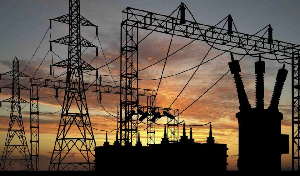 The photo used to illustrate the story



Entertainment