Soccer News of Friday, 27 March 2026
Source: www.punchng.com
Nigeria battle Iran in Antalya friendly

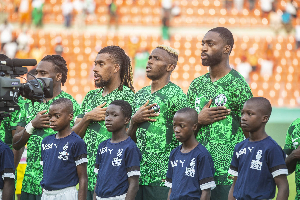
The Super Eagles of Nigeria will return to action for the first time since securing a bronze medal at the 2025 Africa Cup of Nations when they face Iran in an international friendly at the Antalya Stadium in Turkey on Friday, with the fixture offering an early glimpse into the team’s rebuilding process under Eric Chelle, The PUNCH reports.
The encounter marks only the third meeting between both nations, with Nigeria holding a slight advantage from previous clashes, having recorded one win and one draw.
Ahmed Garba scored a second half goal that separated both teams at the Carlsberg Cup in Hong Kong in January 1998, while the two teams’ group F clash in Curitiba at the 2014 FIFA World Cup finals in Brazil ended goalless.
Their latest meeting arrives within the context of a four-nation invitational tournament that also features Jordan and Costa Rica.
Nigeria head into the game from a position of cautious optimism despite the lingering disappointment of failing to qualify for the 2026 FIFA World Cup after FIFA rejected the NFF’s request to disqualify DR Congo from the play-offs over the use of ineligible players.
Their campaign ended in dramatic fashion following a defeat on penalties to the Leopards, but the team have since responded with a measure of stability, culminating in a third-place finish at the 2025 AFCON after overcoming Egypt via a shootout in the third-place medal match.
That recovery has extended into recent form, with the Super Eagles technically unbeaten in all their 15 competitive matches under Chelle, suggesting a side gradually regaining balance as the Franco-Malian begins to imprint his ideas on the squad.
For Chelle, this friendly represents more than a routine exercise, serving instead as a platform to test combinations, assess depth and introduce new personnel into the national setup.
Iran, by contrast, arrive in Antalya under more complicated circumstances. Despite being among the earliest teams to secure qualification for the 2026 World Cup, their preparations have been overshadowed by geopolitical tensions in the Middle East, which have raised uncertainties around logistics, particularly concerning fixtures scheduled to be played in the United States.
Drawn alongside Belgium, Egypt and New Zealand, Team Melli face off-field concerns even as they attempt to stabilise performances on the pitch.
Their recent form has been unconvincing, with the side winless in their last three outings, including a 2-1 defeat to Russia and goalless draws against Cape Verde and Uzbekistan, leaving coach Amir Ghalenoei searching for renewed momentum and cohesion within his squad.
Nigeria’s own preparations have been shaped by a number of key absences, most notably Victor Osimhen, who is unavailable even before his fractured forearm, depriving the team of its most potent attacking outlet.
Defensive options have also been affected, with Ola Aina sidelined through fitness concerns, while Calvin Bassey withdrawn from the squad on Wednesday.
First-choice goalkeeper Stanley Nwabali is also absent following a period of inactivity as a free agent.
Several other members of the AFCON pool, including Cyriel Dessers and Chidozie Awaziem, Amas Obasogie, Ryan Alebiosu, Ebenezer Akinsanmiro, Salim Fago Lawal and Tochukwu Nnadi have been omitted, further underlining the extent of the reshuffle, but those absences have opened the door for fresh faces and renewed competition within the squad.
Midfielder Alex Iwobi is expected to play a pivotal role, as he closes in on his 100th international appearance, bringing experience and creative influence to a team that will rely on leadership in the absence of several established figures.
In defence, Semi Ajayi is likely to anchor the back line, tasked with providing organisation and aerial strength.
Chelle has also handed opportunities to four uncapped players, Emmanuel Fernandez, Philip Otele, Yira Sor and Chibuike Nwaiwu, with the latter receiving a late call-up on Thursday following Bassey’s withdrawal.
In attack, Ademola Lookman is expected to provide the creative spark, while Paul Onuachu is set to lead the line in Osimhen’s absence, offering a different dimension with his physical presence and recent club form.
The contest is less about immediate results and more about direction for Nigeria, as they attempt to turn a period of transition into a foundation for long-term stability, while Iran, navigating uncertainty off the pitch and inconsistency on it, will view the fixture as an opportunity to restore confidence ahead of a World Cup campaign already clouded by external concerns.