Sanwo-olu, Umahi Says Coastal Highway Didn’t Worsen Lagos Floods by SlavaUkraini(op): 9:31am
Babajide Sanwo-Olu, governor of Lagos, and David Umahi, minister of works, have dismissed claims that the ongoing Lagos-Calabar coastal highway is responsible for flooding in parts of the state.
The duo spoke on Monday during a courtesy visit by the minister and members of the national assembly to the Lagos governor.
Umahi said President Bola Tinubu directed an inspection of the project following reports on social media alleging that the highway had triggered flooding in Lagos.
Severe flooding caused by days of persistent rainfall has inundated roads, homes and vehicles across parts of Lagos, with some residents attributing the situation to the ongoing Lagos-Calabar coastal highway project.
However, the minister of works described the claims as false, noting that flooding had been recorded in several parts of Nigeria and had already been forecast in at least 22 states across the country.
“We were concerned about the negative narrative on social media claiming that the coastal highway caused flooding in Lagos,” Umahi said.
The president directed us to come with members of the national assembly to assess the situation ourselves.”
He noted that the highway was intentionally elevated to withstand ocean surges and protect the corridor from flooding for the next two to three decades.
He added that the affected communities were swampy before construction began, arguing that buildings erected below approved flood levels would remain vulnerable regardless of the highway project.
The minister commended the Lagos government’s drainage master plan, noting that more than 80 percent of the drainage channels leading into lagoons had been completed.
He said the federal and Lagos governments would collaborate on additional drainage infrastructure and service lanes along the highway corridor, adding that some structures would have to be removed to accommodate the projects.
Umahi added that stakeholders’ engagements would be held with affected residents, while modern facilities such as surveillance cameras, wind stations, parking areas and tourism infrastructure would also be developed along the corridor.
‘LAGOS IS A COASTAL CITY’
Speaking during the visit, Sanwo-Olu said flooding in Lagos is largely a consequence of the state’s coastal geography rather than the ongoing highway construction.
He said Lagos occupies less than 0.4 percent of Nigeria’s landmass, with about one-third of the state covered by water, making seasonal flooding an environmental reality.
The governor said heavy rainfall could temporarily overwhelm drainage systems but noted that floodwaters often recede after a short period.
“Lagos is a coastal city. When people say Lagos has flooded, without mincing words, we will always experience some level of flooding. We only pray that it will not be severe,” he said.
He accused some social media users of circulating images taken during peak flooding to create a misleading impression of the situation.
The governor also blamed indiscriminate waste disposal for worsening flooding, saying blocked drainage channels remain one of the leading causes of urban floods in the state.
He said the state government would continue enforcing environmental regulations, including its ban on styrofoam, while introducing additional measures to protect drainage infrastructure.
“We cannot allow social media to define who we are. That does not mean we ignore our challenges. Whenever there are problems, we must confront them and solve them, but we must also understand the realities of our environment,” he said.
Sanwo-Olu noted that the state had begun a clean-up of the Lagos-Badagry expressway and signed an agreement with a mechanised street-cleaning company to deploy six-lane sweeping machines for the daily maintenance of the coastal highway.
He added that service roads would be constructed alongside the highway to improve access for residents and businesses, although some properties would have to be removed to make way for the infrastructure.
The governor commended the federal government for the coastal highway project, describing it as a transformative investment that would boost economic growth and improve the quality of life of Nigerians.
General News of Tuesday, 7 July 2026
Source: www.thecable.ng
Lagos-Calabar.coastal highway didn't worsen flooding - Sanwo-Olu, Umahi
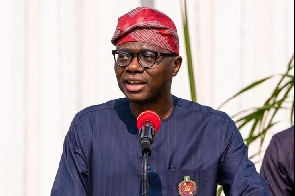 Governor Babajide Sanwo-Olu