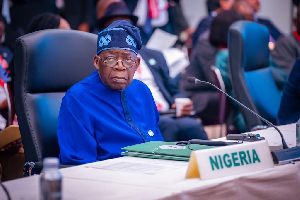
The Federal Government has said Nigeria’s free trade zones have attracted more than $200bn in foreign investment and over N900bn in domestic investment, while generating more than 100,000 direct jobs and over 500,000 jobs across supply chains, logistics networks and host communities.
The Minister of Industry, Trade and Investment, Dr Jumoke Oduwole, disclosed this at a meeting of Special Economic Zones stakeholders held virtually in September, as the government moves to modernise the regulatory framework governing the zones and strengthen their role in driving investment and non-oil exports.
Oduwole said the government was revising the Nigeria Export Processing Zones Authority regulations to make the scheme more responsive to the changing nature of businesses and investment, including digital operations.
She said the revised framework would recognise Digital Free Zones and Digital Special Economic Zones, support technology-enabled and non-physical operations, modernise corporate and registry provisions and strengthen dispute-resolution mechanisms.
“Across the scheme, the authorities record over $200bn of foreign investment and over N900bn of domestic investment, more than 100,000 direct jobs, and over 500,000 when the supply chains, the logistics networks and the host communities are counted. So you are all, indeed, valuable investors and contributors to the Nigerian economy. This has not and will not change,” Oduwole said.
The minister said the government’s latest regulatory reforms sought to build on the investments and jobs already created by the zones while addressing weaknesses that had affected the integrity and competitiveness of the scheme.
She said the reforms followed extensive consultations with government agencies, lawmakers and private-sector stakeholders and were designed to preserve Nigeria’s attractiveness as an investment destination while strengthening fiscal accountability.
Oduwole said the government had identified the diversion of goods produced in free zones into the Nigerian Customs Territory while retaining fiscal incentives intended for export-oriented activities as a major concern.
She said the revised framework would restore the export orientation of the scheme by clarifying the 75 per cent export and 25 per cent domestic-sales structure and aligning domestic sales with applicable Nigerian tax laws.
The minister said the reforms would also clarify the responsibilities of the agencies overseeing the zones, taxation and customs, with NEPZA and the Oil and Gas Free Zones Authority retaining responsibility for licensing and operational oversight.
She said the Nigeria Revenue Service would retain responsibility for tax administration, while the Nigeria Customs Service would handle customs control, valuation, classification and enforcement.
Oduwole said the modernised framework would also accommodate businesses that did not require conventional physical zones, particularly technology-driven enterprises.
“The Revised NEPZA Regulations and Operational Guidelines create, for the first time in Nigeria, Digital Free Zones and Digital Special Economic Zones – zones that operate on a platform rather than a perimeter, with no requirement of physical presence,” she said.
She added that the framework would introduce licence categories, including an Innovator Licence for enterprises operating in areas where regulatory frameworks were still developing, while reporting and fee structures would reflect the way digital businesses generate revenue.
The Executive Secretary of NEPZA, Toyin Elegbede, said operators welcomed the reforms but wanted the government to protect businesses that had already invested under the existing regulatory regime.
“Our members recognise the need for a strong, transparent and well-regulated Special Economic Zones regime, and we welcome the opportunity to engage the government before the framework is finalised. Our priority is to ensure that the reforms address genuine gaps without creating new uncertainty for operators who have invested and modelled their investment on the strength of the existing regime at the time of investment,” Elegbede said.
He said stakeholders wanted a competitive free zones ecosystem that would attract more investment, protect legitimate businesses and increase production and exports.
Meanwhile, the Chairman of NEPZA, Hadi Mutallab, said the government must ensure that the transition to the new framework did not undermine existing investments.
“The reform of Nigeria’s Special Economic Zones is necessary to strengthen the integrity of the scheme and ensure that the incentives provided deliver the investment, production, jobs and exports for which they were intended. At the same time, we must protect legitimate operators who have invested in our Zones and ensure that the transition to the new framework is clear, predictable and does not undermine existing investments,” Mutallab said.
Further, Oduwole said the government would continue to support lawful incentives that served the purpose of the zones while demanding compliance from operators.
She said the government’s objective remained to position the zones as engines of non-oil export growth and support President Bola Tinubu’s target of building a $1tn economy by 2030.
Business News of Friday, 2 October 2026
Source: www.punchng.com
Free zones attract $200bn FDI, create 500,000 jobs – FG
 Nigeria’s Minister of Industry, Trade and Investment, Jumoke Oduwole




Entertainment