The Federal Government has attracted more than $2 billion in investments for the development of Compressed Natural Gas (CNG) infrastructure and related value chains as it intensifies efforts to reduce transportation costs and promote cleaner energy.
Minister of State for Petroleum Resources (Gas), Ekperikpe Ekpo, said the government was determined to expand CNG adoption as a cheaper, cleaner and more sustainable alternative to conventional fuels.
Ekpo disclosed this in a statement issued on Tuesday by his spokesperson, Louis Ibah. He said the investments had contributed significantly to the rapid growth of CNG infrastructure since the launch of the Presidential Initiative on Compressed Natural Gas (Pi-CNG) in 2023.
CNG conversion centres, refueling stations expand
According to the minister, the investment has supported the expansion of refueling stations, vehicle conversion centres, technical manpower and other critical components required to build a nationwide CNG ecosystem.
He revealed that more than 120,000 vehicles had been converted to CNG through over 400 certified conversion centres, while more than 90 refueling stations had been established across the country.
Ekpo added that the initiative had trained over 7,700 automotive technicians and generated more than 10,000 direct and indirect jobs.
The programme has also facilitated the procurement and deployment of 655 CNG-powered buses and 5,123 CNG tricycles, alongside thousands of privately converted vehicles currently operating within Nigeria’s commercial and public transport networks.
The minister said the figures showed that CNG had moved beyond being a proposed alternative fuel and was increasingly becoming a practical option for Nigerians. FG links CNG adoption to lower transport costs.
Ekpo said the CNG programme formed a key part of the Federal Government’s response to rising transportation and living costs following the removal of the petrol subsidy.
He noted that increasing adoption among commercial transport operators, private motorists and fleet managers had resulted in significant fuel savings and improved profitability. According to him, commuters using CNG-powered buses were also beginning to benefit through lower transport fares.
“The objective is not simply to increase the number of CNG vehicles and refueling stations, but to translate fuel savings into lower transportation and logistics costs, ease the cost of living and improve economic productivity,” he said.
Ekpo explained that reduced vehicle operating costs could have wider economic benefits for commuters, businesses, farmers, traders and other productive sectors.
FG plans 500 more CNG stations
The minister also praised President Bola Ahmed Tinubu for approving the establishment of an additional 500 CNG refueling stations.
He said the planned facilities would increase the national network to 1,000 stations, significantly improving access to CNG and encouraging more Nigerians to switch from conventional transport fuels.
Ekpo said the continued expansion of infrastructure would be crucial to sustaining the momentum of CNG adoption and ensuring that the benefits of cheaper fuel translate into reduced transportation costs across the economy.
FG opens portal for Nigerians to get CNG tricycles
Legit.ng earlier reported that the Nigerian government launched a portal that allows youths to access compressed natural gas (CNG)- powered tricycles, popularly known as Keke.
The Minister of State for Youth Development, Ayodele Olawande, disclosed this on Monday, October 7, 2024.
Business News of Wednesday, 2 September 2026
Source: www.legit.ng
FG targets cheaper fuel, affordable transportation with $2bn CNG investment
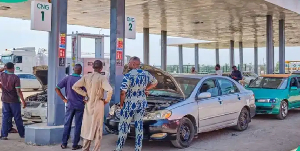 FG targets cheaper fuel, affordable transportation with $2bn CNG investment