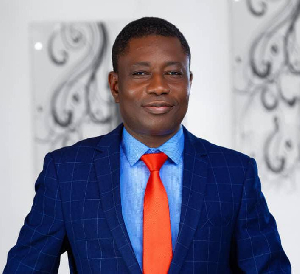
President of the Dangote Group, Alhaji Aliko Dangote, on Sunday alleged that the Chief Executive Officer of the Nigerian Midstream and Downstream Petroleum Regulatory Authority (NMDPRA), Farouk Ahmed, spent about $5 million on the secondary school education of his four children in Switzerland, calling for a full investigation and a public explanation.
Dangote made the allegation during a press briefing at the Dangote Petroleum Refinery in Lekki, Lagos, where he spoke extensively on what he described as regulatory failures and alleged corruption in Nigeria’s downstream petroleum sector.
According to Dangote, the alleged expenditure is inconsistent with the earnings of a career public servant and, if left unaddressed, could undermine public trust and investor confidence in the sector.
“I’ve actually had people making complaints about a regulator who has put his children in secondary school abroad,” Dangote said.
“That secondary school education, which is six years for four children, allegedly cost about $5 million. You cannot imagine somebody paying $5 million just to educate four children in secondary school.”
The billionaire businessman said such spending would ordinarily attract scrutiny from tax and anti-corruption authorities.
“When you look at his income, his income does not match paying this kind of fee,” Dangote added.
“Even if it’s me paying $5 million over six years for my four children, the taxman has to look at my taxes and how much I pay.”
Dangote further questioned the contrast between the alleged expenditure and the economic hardship faced by ordinary Nigerians, particularly in Ahmed’s home state.
“From Sokoto, where he comes from, people are struggling to pay ₦100,000 for school fees,” he said.
“A lot of children are at home, not going to school because of ₦100,000. I cannot understand why somebody who has worked all his life in government would have four children whose school fees amount to $5 million.”
He also stressed that his remarks were not a personal attack but a call for accountability
“I am not calling for his removal,” Dangote said.
“What I am asking for is a proper investigation. He should be required to account for his actions and demonstrate that he has not compromised his position to the detriment of Nigerians. What is happening amounts to economic sabotage.”
Dangote said relevant authorities, including the Code of Conduct Bureau or the Code of Conduct Tribunal, should investigate the matter.
“If he denies it, I will not only publish what was paid as tuition in those secondary schools, but I will also take legal steps to compel the schools to disclose the payments made by Farouk,” he stated.
He also disclosed that, unlike the alleged case, his own children attended secondary school in Nigeria.
“Even my own children didn’t go to those schools,” he said. “My children went to a Nigerian secondary school. They didn’t go outside Nigeria to attend secondary school.”
The allegation is not new. In July, a group accused Ahmed of spending over $5.5 million on the foreign education of his four children, an amount it said was grossly inconsistent with the earnings of a public official. At the time, the NMDPRA dismissed the claims, describing them as “false allegations” and an “orchestrated smear campaign” against Ahmed and the agency’s leadership.
Beyond the personal allegations, Dangote used the briefing to criticise what he described as entrenched interests in the downstream petroleum sector, accusing regulators of enabling excessive fuel imports at the expense of local refining.
“There are powerful interests in the oil sector,” he said.
“It is troubling that African countries continue to import refined products despite long-standing calls for value addition and domestic refining. The volume of imports being allowed into the country is unethical and does a disservice to Nigeria.”
Dangote warned against the overlap of regulatory and commercial interests in the sector.
“A trader should never be a regulator,” he said.
“Forty-seven licences have been issued, yet no new refineries are being built because the environment is not conducive.”
He maintained that Nigerians would ultimately benefit from domestic refining, even if fuel importers incur losses, adding that his refinery was working to ensure recent reductions in gantry prices were reflected at retail outlets nationwide.
General News of Monday, 15 December 2025
Source: www.saharareporters.com
Dangote accuses NMDPRA boss Farouk Ahmed of spending $5m on children’s Swiss education, demands probe
 Aliko Dangote