The raging debate over continued importation of petroleum products despite the existence of Dangote Refinery and Petrochemicals has resurfaced again as marketers differed sharply with the refinery.
They insisted that importation would continue as envisaged by the Petroleum Industry Act (PIA) to meet product shortfall in the domestic market.
Some major marketers spoke with Daily Trust yesterday following a statement by Dangote Refinery blaming rising fuel imports as the reason behind the recent increase in export by the refinery.
According to the refinery, the focus on export “should not be interpreted as a lack of commitment to the Nigerian market.”
“Rather, exports are a prudent operational response to the realities of a market where imported products continue to compete with locally refined fuel despite the availability of sufficient domestic refining capacity,” the refinery added.
Daily Trust reports that a recent report by the Nigerian Midstream and Downstream Petroleum Regulatory Authority (NMDPRA) showed that supply of Premium Motor Spirit (PMS), popularly known as petroleum by Dangote Refinery to the local market dropped by 21 per cent to 25.8 million litres per day in July.
According to the monthly factsheet, the refinery produced 25.9 million litres of PMS per day and exported 3.4 million litres per day compared to 32.5m litres per day supplied in June.
The July figure is the lowest the refinery supplied to the domestic market in 2026.
On the other hand, importation of the product increased by nine per cent to 19.7 million barrels per day from the 18.1 million litres imported in June.
In a statement over the recent development, Dangote expressed concern over the continued issuance of petroleum product import licences, insisting that the refinery has ‘proven capacity to meet and exceed Nigeria’s domestic Premium Motor Spirit (PMS) requirements.”
The refinery noted that while it remains fully committed to supporting Nigeria’s energy security and ensuring uninterrupted fuel availability across the country, the volume of imported PMS entering the market has created uncertainty in domestic demand planning and inventory management.
The refinery reiterated that since commencing operations, it has consistently maintained sufficient inventory levels and reserved product volumes to guarantee steady supply to the Nigerian market.
“This commitment has required significant investment in storage, logistics, and working capital, all aimed at protecting Nigerians from supply disruptions and market volatility,” it said.
‘Why we focus on exports’
The refinery however stated that the absence of transparency regarding the actual volume of imported products expected into the country makes effective production and inventory planning increasingly challenging.
The statement added that maintaining large stock positions without clear visibility into import volumes imposes substantial carrying costs on the refinery and ultimately undermines efficient market operations.
“As a responsible energy provider, we have always endeavoured to keep adequate reserves to satisfy local demand at all times. However, in an environment where significant volumes of imported PMS continue to enter the market through licences issued by the regulator, and where there is limited visibility on future import volumes, it becomes commercially unsustainable to continue holding excess inventory indefinitely,” it said.
The refinery explained that, under these circumstances, any surplus products not immediately absorbed by the domestic market must be exported to regional and international markets. Consequently, DPRP’s export volumes have increased in recent months, not because local demand cannot be met, but because excess inventory generated by market uncertainty must be evacuated to avoid unnecessary storage and financing costs.
The company reiterated that it remains ready, willing, and able to meet and surpass Nigeria’s petroleum product requirements and continues to invest heavily in ensuring reliable supply across the country.
The refinery further stated that should any supply shortfalls arise as a result of market distortions created by excessive importation and the inability of local producers to accurately forecast domestic demand, such shortages should not be attributed to Dangote Refinery, which has consistently demonstrated its capacity and commitment to serving the Nigerian market.
However, one of the major marketers and depot owners in a chat with Daily Trust, said issuance of import permit is a provision of the PIA under section 317.
“We are not going to be engaging in words. There was a time when Dangote did not load for one week but we didn’t feel it at the pump. If he wants to supply all his products abroad, Goodluck to him. You cannot collect crude oil in naira and refine and sell crude abroad,” he said.
The marketer said section 317 (9) and 10 empowers the regulator to continue to issue import licenses.
What the sections say
Section 317, sub-section 9 said, “Pursuant to subsection (8), licence to import any product shortfalls may be assigned to companies with active local refining licences or proven track records of international crude Oil and petroleum products trading.
Sub-section 10 added, “Import volume to be allocated between participants shall be based on criteria to be set by the Authority taking into account the respective refining output in the preceding quarter, share of active wholesale customers competitive pricing and prudent supply, storage and distribution track records.”
Dangote’s transparency concern genuine – Expert
In his intervention, oil and gas expert, Dr. Ayodele Oni said Dangote Refinery’s transparency concern is legitimate.
According to him, Section 317 of the Petroleum Industry Act contemplates import licensing tied to a demonstrable shortfall, adding, “a shortfall determination that is never published is not a determination anyone can test.”
“NMDPRA should publish, ex ante, the aggregate volume of import authorisations it has approved for each quarter and the shortfall assessment behind them. That is a modest reform and it costs the regulator nothing,” he added.
On whether imports should be curtailed, he objected, saying, “NNPC’s three refineries produced nothing in July. A single plant supplying nearly the entire national market, with imports switched off, is a structural risk, not an achievement. The Federal Competition and Consumer Protection Act exists precisely for that scenario. Regulatory policy cannot be built on the assumption that one asset never has an unplanned outage.
“Both parties are arguing from selective months. The fix is structural: published shortfall methodology, published quarterly import quotas, and a genuine second and third domestic refiner. Everything else is noise.”
Another industry analyst and former MD of 11PLC (formerly Mobil), Otunba Adetunji Oyebanji said Dangote is free to export, adding, “I believe the government knows that they need to have the flexibility to import to meet any potential shortfall. This is an internationally traded product. America, despite having many refineries working, still imports. We heard that Dangote exported to America, don’t they have refineries? So pricing is the determinant.”
Business News of Friday, 28 August 2026
Source: www.dailytrust.com
Again, marketers, Dangote Refinery differ amidst rising export volume
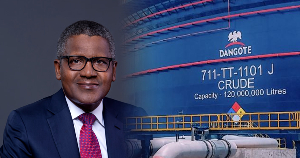 Billionaire Aliko Dangote